Operations | Monitoring | ITSM | DevOps | Cloud

DLP, Traffic Replay, and the Missing Link to Software Quality

In Part 1 and Part 2 we explored why testing modern software is so difficult. Production data is the most valuable input for testing, but it’s locked away because it contains PII and sensitive context. Traditional Synthetic Data Generation (SDG) was built for batch databases, not streaming systems. And AI coding agents amplify every weakness in existing test strategies because they need current, realistic data or they generate buggy code based on outdated assumptions.
Sponsored Post

Kubernetes Load Testing Made Easy with Speedscale

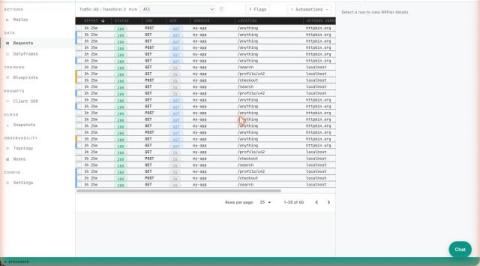
Everybody knows working with Kubernetes is really hard. It's highly complicated. You have to know how to work with YAMLs, there's lots of stuff to deal with. The classic developer experience with YAML. But what if you could get complete visibility into your Kubernetes workloads and run realistic load tests without touching a single YAML file or running kubectl commands? In this walkthrough, I'll show you how Speedscale makes Kubernetes observability and performance testing as simple as point-and-click.

Silent Failures: Why AI Code Breaks in Production

You ship a small “safe” change on Friday. The diff is tiny, the tests are green, and the AI assistant was confident. An hour after deploy, your on-call channel lights up. A downstream service is rejecting responses that look fine in code review. Now you’re rolling back and rewriting a fix that should have been obvious if you had real traffic in the loop. This isn’t a hypothetical.

API Testing Tools Best Practices Guide

Today’s software testing trends show the growing demand for more efficient and automated API testing. Manual testing is not only time-intensive for internal testing teams, it can also lead to poor customer experiences. When manual testing processes cannot proactively discover issues, your customers may inevitably be the ones finding them. Many of the current test automation solutions today focus on the UI, while most API-level testing is still done manually.

What AI Has Never Seen: The Context Gap in Code Generation

Your AI coding assistant has read the entire internet. It knows every programming language, every framework, every best practice documented in Stack Overflow answers and GitHub repositories. It can generate a REST API handler in seconds that looks perfect with clean code, proper error handling, following all the patterns. But here’s what it’s never seen: your production traffic. Data from a real API request. Someone filling out a form with messed up or incomplete data.

Refactor Safely with AI: Using MCP and Traffic Replay to Validate Code Changes

So as software engineers using AI coding assistants, we’re quickly learning of a new anti-pattern: Hallucinated Success. You give your agent (e.g. Claude via terminal or various IDE code assistants) the command “refactor the billing controller.” The agent happily complies, churning out nice clean code. The agent even goes so far as to write a new unit test suite that passes at 100%. You integrate it. Your test suites pass. Your production code breaks. Why?

ROI of Digital Twin Testing: Cut Testing Costs by 50%

When engineering leaders review their cloud bills, they often focus on production costs—the infrastructure serving real users, processing real transactions, generating real revenue. But there’s a shadow cost lurking in every cloud environment that often goes unnoticed until it becomes painful: non-production infrastructure.
Sponsored Post

Digital Twins Gone Wild: My Unexpected AI Doppelgänger

I recently tried using AI to create a digital twin of myself. I uploaded a photo, expecting a futuristic, slightly improved version of me... and what did I get in return? A picture of Kim Jong Un. Clearly, AI has a sense of humor-or a very different definition of "twin." Forget Arnold Schwarzenegger and Danny DeVito. Digital Twins 2-Now Starring My AI Doppelgänger From Speedscale's perspective, a digital twin is built from real production traffic, continuously updated, and executable in your test and CI/CD environments.