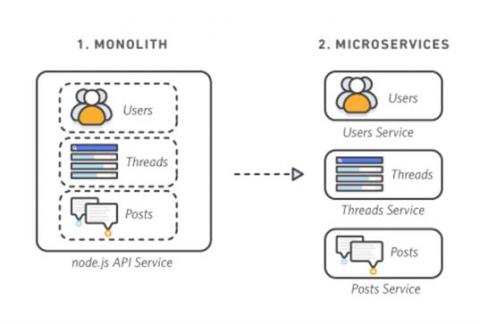
There have been amazing articles on the subjects of migrating from a monolith to a microservice architecture e.g. this is probably one of the better examples. The benefits and drawbacks of the architectures should be pretty clear. I want to talk about something else though: the strategy. We build monoliths since they are easier to get started with. Microservices usually rise out of necessity when our system is already in production.
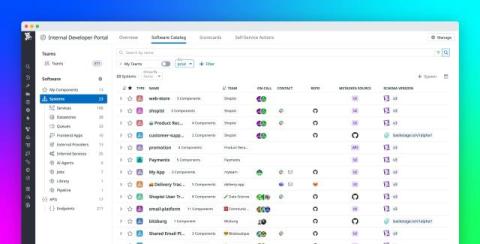
Moving from a monolith to microservices lets you simplify code deployments, improve the reliability of your applications, and give teams autonomy to work independently in their preferred languages and tooling. But adopting a microservices architecture can bring increased complexity that leads to gaps in your team members’ knowledge about how your services work, what dependencies they have, and which teams own them.
Over the past decade, organizations have reinvented themselves through digital transformation. Nowadays, this journey is well in its second chapter and gaining momentum – also driven by the explosion of app and service deployment, data and intelligence, digital reach, and post-pandemic customer expectations. And the newest cutting-edge technological trends – such as hybrid infrastructure and edge computing – are making it particularly difficult for traditional tools to keep up.
Microservices are one of the hottest app architectures in the current market. They easily solve some of the most common problems with monolithic and service-oriented architecture. The ability to split your application into multiple smaller components and develop as well as monitor them individually opens up a whole new world of possibilities. However, this also brings with it a new set of problems. Monitoring distributed applications requires thinking outside of the box.
Organizations are moving from monolithic architecture (where all the code building the application exists as a single, monolithic entity) to microservices architecture as it simplifies app management, making it easier to build, deploy, update, test and scale each service independently without affecting other parts of the architecture.
I often hear from customers who complain about how “classic” performance testing (i.e., end-to-end testing with high volume of virtual users) of their applications before release slows down the cycle time by several weeks. In addition, the testing significantly consumes both people and infrastructure (hardware and software license) resources.
Today’s modern applications contain a broad set of microservices, with containers and serverless becoming the architectures of choice for many cloud applications. Both architectures facilitate highly scalable systems, and while which approach to take is routinely debated, containers and serverless technologies are being used in tandem more and more.