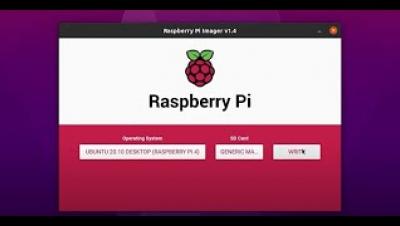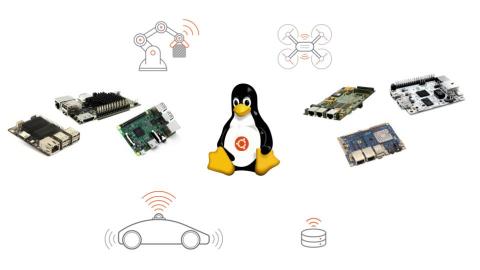
On the 22nd October 2020, Canonical released an Ubuntu Desktop image optimised for the Raspberry Pi. The Raspberry Pi Foundation’s 4GB and 8GB boards work out of the box with everything users expect from an Ubuntu Desktop. It is our honour to contribute an optimised Ubuntu Desktop image to the Raspberry Pi Foundation’s mission to put the power of computing into people’s hands all over the world.
This week is the latest Open Infrastructure Summit, in a week where the OpenStack Foundation became the Open Infrastructure Foundation to reflect the expansion of the organisation’s mission, scope and community to advance open source over the next decade to support open infrastructure. It is also ten years since OpenStack launched and a lot has changed during that time.
Telco cloud or a network function virtualisation infrastructure (NFVI) is a cloud environment optimised for telco workloads. It is usually based on well-known technologies like OpenStack. Thus, in many ways, it resembles ordinary clouds. On the other hand, however, it differs from them. This is because telco workloads have very specific requirements. Those include performance acceleration, high level of security and orchestration capabilities.
As part of our expanding relationship with Amazon, we are excited to announce that Stackery is now recognized as Amazon Linux 2 Ready Partner, part of the Amazon Web Services (AWS) Service Ready Program. This designation recognizes that we are certified to run on Amazon Linux 2, the next generation of Amazon Linux, a Linux server operating system from AWS.
15th October 2020: Canonical today announced autonomous high availability (HA) clustering in MicroK8s, the lightweight Kubernetes. Already popular for IoT and developer workstations, MicroK8s now gains resilience for production workloads in cloud and server deployments. High availability is enabled automatically once three or more nodes are clustered, and the data store migrates automatically between nodes to maintain quorum in the event of a failure.
Previous articles in our series have introduced the Splunk App for Infrastructure (SAI) and provided getting-started guidance for Linux and Windows using native metric-collection tools such as collectd and perfmon. But did you know you can also use your existing Splunk Universal Forwarders (UF’s), together with the Splunk Add-on for Unix and Linux (TA-Nix) to send both the metrics and logs without the need of additional agents?
Linux is one of the most popular and widely used open-source operating systems in the world today. It provides the key advantage of stability, compatibility, security and customization. Since Linux servers are the backbone of an organization’s IT infrastructure, a sudden change in the CPU usage or memory can adversely affect the performance of applications.
With the economies of many countries heading towards recession, increasing regulations, growing security threats and increasing costs, financial services firms need practical solutions, now more than ever. Many of the financial technology firms (‘fintechs’) and mobile app-based challenger banks have taken advantage of modern application architectures and DevOps practices that are associated with cloud native technologies.