Operations | Monitoring | ITSM | DevOps | Cloud

The latest News and Information on Continuous Integration and Development, and related technologies.

OpenShift Optimization with Jenkins CI/CD

Learn how Raiffeisen Bank International uses Densify container optimization analytics in their Jenkins CI/CD pipeline to precisely resource their Red Hat OpenShift containers. Since embedding Densify into their CI/CD workflow, Raiffeisen has reduced resource demands, cut the frequency at which container resources need to be expanded by nearly 50%, and reduced the risk of instability caused by memory shortages.

Games are in our DNA

At Cloudsmith we love playing video games, everything from Super Meat Boy to Halo, Fortnite to Candy Crush. We’ve got a big Pac Man money box sitting on the office shelf. Steve Collins, of Havok fame, is on our Board of Directors. Quite simply, gaming is in our DNA. When we started Cloudsmith we made a list of customers we’d love to work with someday and there were numerous games studios on the list.

Expand your Sleuth monitoring reach with Datadog

Sleuth is a deployment tracking tool that gives you a deeper level of insight into your CI/CD workflows by tracking all of your team’s deployment tools from a single dashboard. Sleuth integrates with different components of your deployment pipeline and develops an understanding of your development processes. It can then automatically alert you as to when code is shipping, when manual approvals are needed, and when failures occur.

JFrog & HashiCorp - Scale Your Developer's Talent

Join JFrog’s Baruch Sadogursky and HashiCorp’s Taylor Dolezal as they walk you through best practices for helping to enhance your team’s artifact experiences. Together HashiCorp and JFrog enable you to automate your application infrastructure end-to-end. While HashiCorp technologies implement Infrastructure as Code, the JFrog Platform manages all of the binaries, artifacts and dependencies for each build, and automates the software composition analysis, build information and deployment.

Docker Hub rate limits in Bitbucket Pipelines

Docker recently announced that, starting November 1 2020, pull rate limits will apply to anonymous image pulls from Docker Hub. For anonymous (unauthenticated) users, pull rates are limited based on the individual IP address, and therefore some service disruption was expected for Docker Hub users. Bitbucket is working with Docker to ensure that Bitbucket Pipelines users can continue transparently using Docker Hub without rate limits nor any configuration.

Lessons Learned in CI/CD Transformation

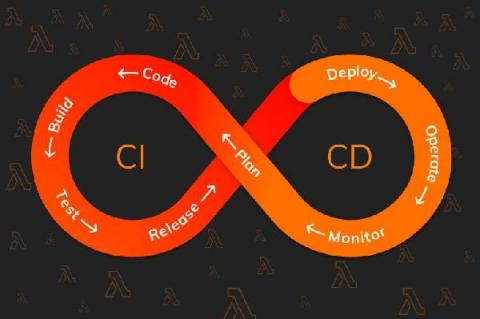
Continuous integration/continuous delivery (CI/CD) is a methodology which helps technology teams deliver higher-quality software faster through automation. At OpsRamp, we have embarked on the journey of CI/CD transformation and have seen tremendous change in the way we build and release our products. Michael Fisher, Group Product Manager, OpsRamp explained the journey and lessons learned in this process during a recent webinar.

Performance Improvements, Reliability, and Feature Flag Mishaps

Last October, I published a blog post describing the efforts we've committed to on the Bitbucket Cloud engineering team to achieve world-class reliability. A lot has happened in the past year (understatement of the year)! What the team has accomplished is tremendous, but we've also learned a thing or two that we can work further to improve.

Replicate Artifactory Configuration with Terraform Provider Plugin

It takes a large team to manage enterprise DevOps, and it can take a large team of binary repository managers, too. It’s vital to get all team members going the same way, and quickly. A growing developer organization will have many instances of Artifactory to help them scale, on multiple nodes for high availability and multi-site repository replication. Configuring them all precisely, with the same set of repositories, users, and permissions, can’t be done effectively one at a time.