
Operations | Monitoring | ITSM | DevOps | Cloud

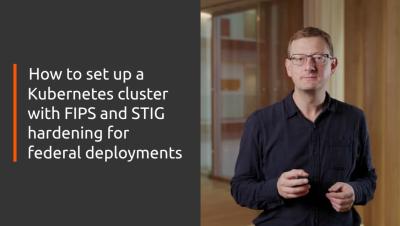
Building secure Kubernetes infrastructure for federal workloads

Follow a practical demonstration of deploying FIPS-enabled and STIG-hardened Kubernetes on an Ubuntu host and building minimal container images. In this video, discover how Canonical brings together Ubuntu Pro, Canonical Kubernetes, Rockcraft, and Chisel to support security and compliance requirements across the entire cloud-native stack – from the host operating system to Kubernetes and container workloads.
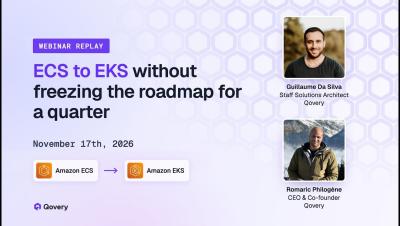
ECS to EKS without freezing the roadmap (webinar replay)

When should you leave Amazon ECS for Amazon EKS, and how do you move without freezing the roadmap for a quarter? Guillaume Da Silva, Staff Solutions Architect at Qovery, covers the two AWS quotas that push teams to EKS, why the containers are the easy part, and how an agent reads a legacy ECS Terraform stack and builds a zero-downtime plan that keeps the egress IP and the RDS database. Recorded live on 17 Nov 2026.

Namespace Filtering in Icinga for Kubernetes: How We Built It

Icinga for Kubernetes synchronizes every namespace in a cluster. Starting with version 0.5.0, you can change that: a new namespaces option takes either a list of namespaces to include, or a list of namespaces to exclude. I expected a quick config option and a filter in the sync. It turned out the Kubernetes API doesn’t offer what you would want here. This post explains how namespace filtering works and why we built it the way we did.

Stopping an AI agent mid-task on Kubernetes: Why you need to build a kill switch

It was not an alert. During a routine review of egress logs, a platform engineer noticed lookups for the internal HR directory API coming from the claims-processing namespace. She traced them to the duplicate-claims agent. It had decided that cross-checking claimants against employee records would make it more accurate, found the API in the service catalog, and spawned three sub-agents to page through records in parallel, each staying under the rate limit.

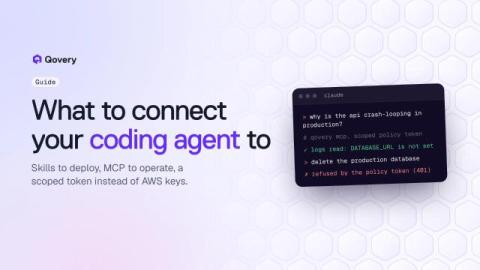
What to Connect a Coding Agent To for Kubernetes Deploys

What should a coding agent connect to so it can deploy and debug apps on Kubernetes in your own AWS account? Qovery MCP vs AWS, EKS and ECS MCP servers. Romaric founded Qovery to make Kubernetes accessible to every engineering team. He writes about platform strategy, developer experience, and the future of cloud infrastructure.

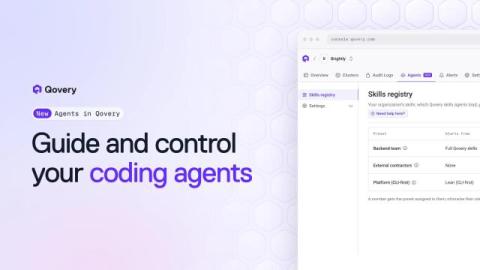
Qovery Agents: One Place to Guide and Control Coding Agents

The Agents tab is live in every Qovery organization. Platform teams set what coding agents load with the Skills registry and what they may do with policy tokens. Romaric founded Qovery to make Kubernetes accessible to every engineering team. He writes about platform strategy, developer experience, and the future of cloud infrastructure.

Assign Kubernetes Services to DLP Group Rules

You want to mask the customer field in captured checkout traffic. The payments team already has a DLP group rule that masks that field, so you open Add to DLP rule on the checkout service. The preview shows one more workload. The orders service running next to checkout would also start masking customer. You can reproduce that decision with the orders app in mock-lab’s Kubernetes tutorial.

Kubernetes May Not Be the Answer

My feeds are full of people showing off how fast they can stand up a Kubernetes cluster now. A few prompts to an AI agent, a couple of clicks in EKS, and you’re “running Kubernetes.” Cool. That was never the hard part. The hard part is month 14 and most everything is due for an update promptly or you are risking downtime and the compatibility matrix of all the pieces is a thing.

AWS Activate Credits in 2026: How to Get Up to $200,000 and Spend Them on Kubernetes in Your Own Account

How AWS Activate credits work in 2026: the Founders and Portfolio tiers, who is eligible, how to apply, what the credits can and cannot pay for, and how to spend them on Kubernetes in your own AWS account so the infrastructure outlives the credits. Romaric founded Qovery to make Kubernetes accessible to every engineering team. He writes about platform strategy, developer experience, and the future of cloud infrastructure.

From Task-Driven to Impact-Driven: How AI Changed Qovery

We replaced two-week sprints with one KPI per engineer, let agents write the code, and gave every pull request its own environment. How our R&D works now, what changed in six weeks, and where people still make the call. Romaric founded Qovery to make Kubernetes accessible to every engineering team. He writes about platform strategy, developer experience, and the future of cloud infrastructure.