Operations | Monitoring | ITSM | DevOps | Cloud

Going beyond AI chat response: How we're building an agentic system to drive Grafana

As we look at the role AI can play in Grafana going forward, we want to move beyond the simple chat responses that dominate the world of LLMs today and into agentic systems—AI that can understand, reason, and act on your behalf. The ultimate goal is to make it easy to get things done in Grafana using natural language—whether you’re a seasoned SRE or a new developer. And in the AI world, we call this moving from chat completion to task completion.

How Dropbox rebuilt its logging stack with Grafana Loki after a data center went dark

Two years ago, a power outage knocked a Dropbox data center offline. It wasn’t just any data center. It was the only one where Dropbox hosted Grafana Loki, meaning engineers couldn’t access their log data. “We had considered a data center outage when we were rolling out Loki, but it had just never risen up in priority enough to get put into multiple data centers,” said Chris Hodges, an infrastructure software engineer at the cloud storage company.

How to detect vulnerable GitHub Actions at scale with Zizmor

As we previously reported on April 26, 2025, we had a security incident via an insecure GitHub Action and we have since published a post-incident review. We have confirmed that there has been no code modification, unauthorized access to production systems, exposure of customer data, or access to personal information.

The Road to Loki 4.0 (Loki Community Call June 2025)

In this Loki Community Call, we welcome back Ed Welch, Principal Engineer on the Loki team. We will be discussing with Ed what is next for Loki as we push forward to Loki 4.0. If you are interested, learn more about potential architecture changes, storage formats, and an open discussion on where Ed and the Loki team would like to see the future of Loki, then make sure you join us live and have your questions answered!

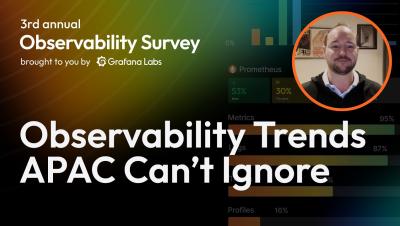
Observability Across Asia-Pacific: What's Holding Teams Back? | 2025 Observability Survey Analysis

What’s holding back observability maturity in Asia-Pacific? Grafana Labs' cofounder Anthony Woods shares key takeaways from the largest global observability survey. Learn how SaaS, budget concerns, and org structure are shaping Asia-Pacific (APAC)'s future. Grafana Cloud is the easiest way to get started with Grafana dashboards, metrics, logs, and traces. Our forever-free tier includes access to 10k metrics, 50GB logs, 50GB traces and more.

Grafana Cloud updates: The latest features in Kubernetes Monitoring, Fleet Management, and more

We consistently roll out helpful updates and fun features in Grafana Cloud, our fully managed observability platform powered by the open source Grafana LGTM Stack ( Loki for logs, Grafana for visualization, Tempo for traces, and Mimir for metrics). In case you missed them, here’s our monthly round-up of the latest and greatest Grafana Cloud updates.

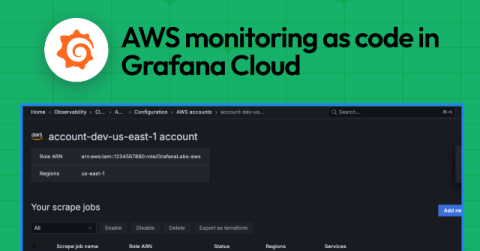
Grafana Cloud: Manage the AWS Observability app as code with Terraform

Imagine setting up your AWS configuration in Grafana Cloud by hand and clicking through menus. When you only have a few services, it’s not a big deal. But as you add more and more, keeping track of every little change becomes a headache. It’s easy to make mistakes, and before you know it, things can get out of sync and your monitoring becomes unreliable.

How the Factry Historian data source for Grafana enables data-driven insights for factory teams

Frederik Van Leeckwyck is the co-founder and CRO at Factry. He oversees go-to-market activities and ensures their software solutions align with real factory demands. Passionate about open technologies, he believes in making data-driven insights accessible to everyone in the factory. Factories today are often rich in process data, but poor in insights.

Visualize Google Cloud BigQuery data in Grafana: the latest updates, key features, and more

Here at Grafana Labs, our commitment to our “big tent” philosophy runs deep. We prioritize interoperability and flexibility within our observability solutions, and believe you should be able to connect to and visualize data from a wide range of sources, including both open source and commercial technologies. Our rich ecosystem of Grafana data sources directly reflects these values — and today, we’re excited to share a recent milestone related to that ecosystem.

Configure and customize Kubernetes Monitoring easier with Alloy Operator

What if you were to tell Kubernetes Monitoring what you wanted, and the system configured collectors based on your choices? We wondered that as well—wondered enough to create Alloy Operator and its Helm chart for version 3.0 of the Kubernetes Monitoring Helm chart. We’re excited to share that the new Kubernetes Monitoring Helm chart is now available, and it introduces a dynamic way of setting up your telemetry data collection with Alloy Operator.

Adaptive alerting: faster, better insights with the new metrics forecasting UI in Grafana Cloud

In Grafana Cloud, we offer a range of AI capabilities to support your observability needs, including a feature for forecasting on any of your metrics and coupling it with Grafana Alerting. This is critical functionality if you want to make the switch from reactive to proactive alerting, as troubleshooting a problem before it arises is an important part of modern observability.

Observability trends in Japan: Insights from Grafana Labs' latest survey

Japanese organizations are focused on controlling costs and limiting complexity—and they might be getting ready to broaden their adoption at just the right time, according to analysis of a micro survey on observability recently conducted by Grafana Labs. Observability is an evolving space in Japan, and this is the first time Grafana Labs has run a Japanese version of our annual Observability Survey.

Grafana Tempo 2.8 release: memory improvements, new TraceQL features, and more

Grafana Tempo 2.8 is officially here, delivering new TraceQL features, performance improvements, and bug fixes, as well as some breaking changes. Watch the video below to learn more about the TraceQL features, or continue reading to get a quick overview of these and other updates. If you’re looking for something more in-depth for all of the changes that happened in this release, head over to the Grafana Tempo 2.8 release notes or the changelog.

The 1st Successful Commercial Moon Landing | Firefly's Blue Ghost Mission 1 | Grafana Everywhere

Firefly’s Blue Ghost Mission One successfully landed on the moon with the help of Grafana. In this behind-the-scenes talk, learn how real-time dashboards powered critical decisions during descent, tracked payloads, and helped operators visualize everything from footpad sensors to lunar gravity. Footage and photos courtesy of Firefly Aerospace.

Data points per minute in Grafana Cloud: What you need to know about DPM

If you’re working with metrics in Grafana Cloud, chances are you’ve come across DPM (data points per minute). It shows up in usage dashboards, invoice breakdowns, and occasionally pops up in Slack when your ingestion numbers start looking suspicious. DPM can also be seen in the Grafana Cloud billing and usage dashboard, which is available by default in every Grafana Cloud account. It helps you understand how much data you’re sending—and whether it’s more than you need.

Implementing Grafana Play privacy policies with Grafana k6: A behind-the-scenes look

Grafana Play is a free and publicly accessible sandbox environment that allows users to explore and learn Grafana without setting up their own instance. Grafana Play comes preloaded with ready-made sample dashboards, and showcases how to work with different data sources, create visualizations, and use advanced Grafana features.

Auto-Instrument Everything with eBPF: Grafana Beyla + OpenTelemetry in Action | Homelabs

Grafana Beyla is a powerful eBPF-based auto-instrumentation tool for application and network observability. In this session, see how Beyla captures RED metrics and traces with zero code changes, and how it fits into the OpenTelemetry ecosystem. Perfect session for SREs, devs, and home labbers alike.

An Autonomous Ship is Set to Circumnavigate the World Using Docker, Grafana, & Starlink: Project Bob

Join Andrew McCalip of Varda Space Industries as he builds Project Bob—a DIY, solar-powered, autonomous ship aiming to circumnavigate the globe using open source tools like Grafana, Raspberry Pi, and Starlink.

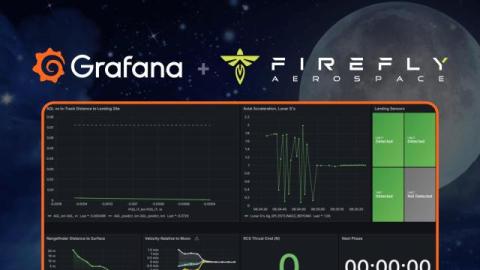
Lunar-level observability: How Firefly Aerospace used Grafana to monitor its historic moon landing

On March 2, 2025, Firefly Aerospace made history. The company — a space services firm that offers safe, reliable, and economical access to space — completed the first fully successful lunar landing by a commercial provider with its Blue Ghost Mission 1. But behind the headlines and highlight reels was a team of dedicated engineers, years of preparation, and a mission control center outfitted with Grafana dashboards.

Database observability: How OpenTelemetry semantic conventions improve consistency across signals

Databases are a crucial part of modern systems, which means database observability is incredibly important, too. However, gathering information on them can be complex, variable, and tricky to instrument in a consistent way. OpenTelemetry is helping to change that, and one of the most important aspects in making it work is a set of shared rules called semantic conventions.

Optimizing the end-user experience: How to perform a browser check in Grafana Cloud Synthetic Monitoring

Synthetic monitoring is a vital practice to proactively track the health and performance of web applications. Instead of waiting for users to report problems, synthetic monitoring helps developers catch issues before they impact real users. One powerful type of synthetic monitoring is the browser check. These checks go beyond basic ping checks, simulating how a user would actually interact with your website’s interface.

How to send alerts from Grafana OSS to Grafana Cloud IRM

In March, we announced that Grafana OnCall (OSS) had entered maintenance mode. However, OnCall’s development continues in Grafana Cloud as Grafana Cloud IRM, combining on-call management and incident response into one integrated solution. Many users told us they still want to self-host Grafana and rely on Grafana Alerting to detect potential issues early—but they also need to escalate and manage incidents using an incident response management (IRM) solution.

How to send alerts from self-hosted Grafana to Grafana Cloud IRM

Learn how to send alerts from Grafana OSS or Grafana Enterprise to Grafana Cloud IRM. In this quick demo, we'll show you how to set up the integration between your self-hosted instance and our managed solution for consolidating, customizing, and automating incident response and management. Grafana Cloud is the easiest way to get started with Grafana dashboards, metrics, logs, and traces. Our forever-free tier includes access to 10k metrics, 50GB logs, 50GB traces and more.

Simple cloud cost management: Grafana Labs integrates open standard FOCUS specification for cloud billing data

At Grafana Labs, we’ve always believed that observability should be open and accessible — that belief extends beyond metrics, logs, and traces to the costs associated with managing observability at scale. That’s why we’re excited to share that we’ve adopted the FinOps Open Cost and Usage Specification ( FOCUS), a community-driven, open standard for cloud billing data.