Operations | Monitoring | ITSM | DevOps | Cloud

Honeycomb Canvas: The Multiplayer Workspace for the Agentic Era

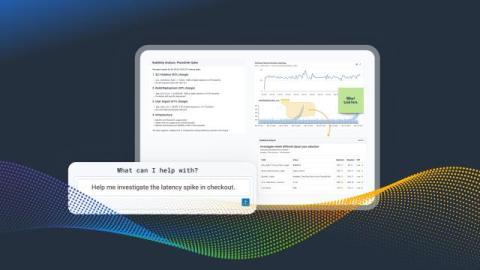
Last week, we launched a major update to Canvas, our investigation workspace. The new Canvas has evolved from an AI co-pilot you chat with to a place where your whole team, human and agent, can work the same problem on the same surface. Auto-investigations begin the moment a trigger, SLO, or anomaly fires. Custom skills encode your team's runbooks so every agent investigates with your team's expertise built in.

Agent Timeline: The Flight Recorder for Your AI Agents

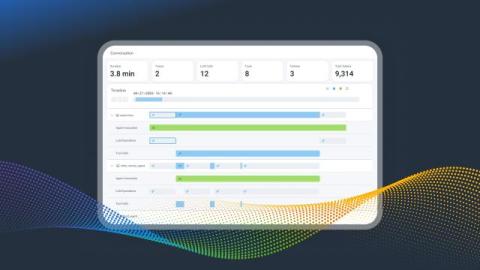
Last week, we introduced Agent Timeline, a powerful new observability experience purpose-built for debugging AI agent workflows in production. Agent Timeline uniquely connects AI-layer visibility to full-stack observability by organizing telemetry around an agentic conversation. A conversation contains one or more agent executions, each of which may contain LLM calls, tool invocations, handoffs, retries, human escalations, and downstream system calls.

How Honeycomb Is Embracing the Challenges of End-to-End Observability with Embrace

Customers regularly come to us looking to solve their observability problem by connecting the dots from frontend to backend. It sounds straightforward in theory, but in practice it's one of the hardest problems in modern application monitoring. The frontend monitoring tools they already have in place tend to be proprietary or narrowly scoped to frontend needs, leaving them without the context-rich backend data that makes real triage possible.

Honeycomb Achieves the AWS Financial Services Competency

Honeycomb is proud to share that we have achieved the Amazon Web Services (AWS) Financial Services Competency. This recognition validates our technical expertise and proven customer success in assisting financial services organizations with building, running, and understanding their production systems on AWS. Securing this competency is a direct response to our customers’ feedback in this space: observability in regulated, high-stakes environments requires more than dashboards and alerts.

Honeycomb Innovation Week: Announcing Our Partnership With Embrace

Honeycomb and Embrace are extending the rigorous, data-driven practice that Honeycomb pioneered for foundational to mobile and web, giving, site reliability, and platform teams a complete, correlated picture of system health. The strategic partnership makes understanding performance and reliability for every user and every screen part of the observability practice, bringing new depth and standardization to how teams measure end user impact.

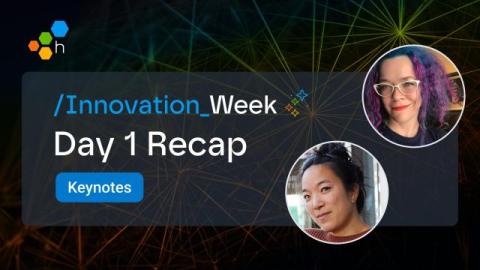
Observability for the Agent Era: Day 1 | Keynotes

Honeycomb's Innovation Week: Observability for the Agent Era (May 12-14) For Day 1 of Innovation Week, Honeycomb co-founders Christine Yen and Charity Majors will share what it actually takes to understand and debug systems in the agent era, and what the best engineering teams are doing differently. A 3-Day Virtual Event for Teams Building the Future May 12: Get insights on how the best engineering teams are tackling the challenges of the agentic era.

Innovation Week Day 2: Observability for AI, and Observability With AI

AI is reshaping the SDLC in two directions at once. AI-generated code is shipping faster and with less human supervision than ever before, while agents and LLMs are running directly in production, where they behave very differently from traditional software: non-deterministic, with a wider blast radius than any single function or component, with no stack trace to catch when something goes wrong.

Honeycomb Innovation Week: Observability With AI With Kale and Taylor

Watch this video to see the re-imagined Canvas in action, where auto-investigation has already ranked your hypotheses before you open the tab, multiplayer agents build on each other's work in real time, and a custom skill encoding your team's own runbook can reprioritize the entire incident before you've had your morning coffee.

Observability for the Agent Era: Day 2 | Launches

Honeycomb's Innovation Week: Observability for the Agent Era (May 12-14) For Day 2 of Innovation Week, Honeycomb's product and engineering teams will take you inside the new capabilities purpose-built for the agent era. Expect live demos, real scenarios, and a hands-on look at what it means to own observability for the Agentic era, with AI in Honeycomb to observe AI in production. A 3-Day Virtual Event for Teams Building the Future May 12: Get insights on how the best engineering teams are tackling the challenges of the agentic era.

Honeycomb Innovation Week: Debugging Agentic Workflows with Ken Rimple

Canvas skills are how your team's runbooks and tribal knowledge become an active part of the investigation instead of a document someone has to remember to open. Pre-built skills cover the most common investigation patterns out of the box. Custom skills let you encode the specific context, thresholds, and decision logic your team has accumulated, so every auto-investigation starts with your best thinking already applied.

Innovation Week Day 1: The SDLC Is Collapsing, and Observability Has Never Mattered More

The software development lifecycle is collapsing. The multi-stage pipeline that defined how software got built and shipped for decades is compressing into rapid loops of intent and validation, with agents now part of the teams building and running it. Day 1 of Innovation Week was about what that shift means for how software gets validated, where observability fits, and the problems that have always been hard but are now genuinely urgent.

Making Semantic Conventions Work for You With OpenTelemetry Weaver

Your dataset has hundreds of attributes. Some are self-explanatory: http.response.status_code, server.address. Others are not: meta.refinery.reason, dataset.slug, sli.latency_target_ms. If you don't know what an attribute means, you can't write a good query. And if an AI agent doesn't know what it means, it guesses.

Span or Attribute in OpenTelemetry Custom Instrumentation

TL;DR: Attribute. More information on one event gives us more correlation power. It’s also cheaper. When you want to add some information to your tracing telemetry, you could emit a log, create a span, or add a piece of data to your current span. Adding a piece of data to your current span is the best! Usually.

Taming Log Noise With the OpenTelemetry Collector's Drain Processor

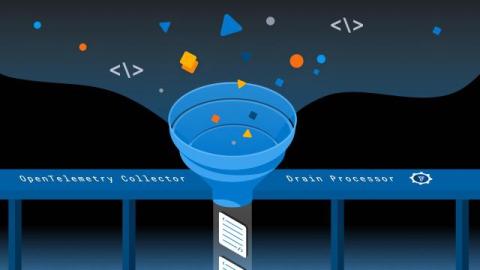
Do you receive 50 million log lines per day and struggle to see what actually matters? Health checks, heartbeat pings, connection pool messages—they all drown out the errors and anomalies you're trying to find. Most teams deal with this by writing filter rules to drop the noisy patterns. But those rules are manual, per-pattern, and brittle. A new deployment changes a log format and the filter misses it. A new service starts logging a chatty startup sequence nobody thought to exclude.