Kubernetes 1.17 is about to be released! This short-cycle release is focused on small improvements and house cleaning. There are implementation optimizations all over the place, new features like the promising topology aware routing, and improvements to the dual-stack support. Here is the list of what’s new in Kubernetes 1.17.
Authorization to Operate (ATO) in a day and on-going authorization are compliance nirvana. The ATO is the authorizing official’s statement that they accept the risk associated with the system running in production environments using live business data. The idea that all of the information necessary to make a risk decision is at hand and can be consumed by decision makers is what every compliance program is trying to achieve.
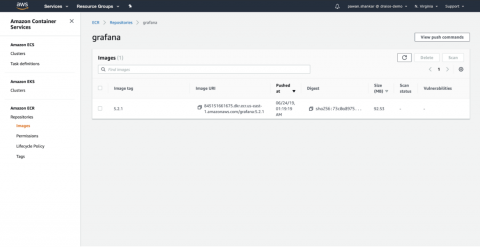
As container adoption in AWS takes off, ECR scanning is the first step towards delivering continuous security and compliance. You need to ensure you are scanning your images pulled from AWS ECR for both vulnerabilities and misconfigurations so that you don’t push applications running on AWS that are exploitable.
Cloud teams are increasingly adopting AWS container services to deliver applications faster at scale. Along with the roll out of cloud native architectures with containers and orchestration, what’s needed to stay on top of the security, performance and health of applications and infrastructure has shifted. At Sysdig, we’ve worked with Amazon to provide tools and integrations that help secure your Cloud Native workloads deployed across all AWS container services.
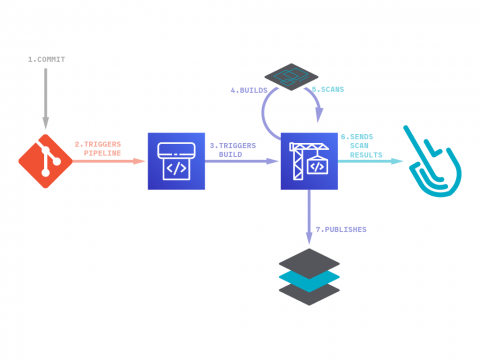
In this blog post you’ll learn how to set up image vulnerability scanning for AWS CodePipeline and AWS CodeBuild using Sysdig Secure DevOps Platform. AWS provides several tools for DevOps teams: CodeCommit for version control, CodeBuild for building and testing code, and CodeDeploy for automatic code deployment. The block on top of all these tools is CodePipeline that allows them to visualize and automate these different stages.
One of the main benefits to standardized infrastructure is the ability to share application resources across entities. We are taking advantage of this with the Cloud Native Security Hub as we start to explore how to standardize cloud native security.
Google Cloud Run is a serverless compute platform that automatically scales your stateless containers. In this post we are going to showcase how to secure the entire lifecycle of your Cloud Run services. Sysdig provides a secure DevOps workflow for Cloud Run Platforms that embeds security, maximizes availability and validates compliance across the serverless lifecycle. Sysdig Secure Devops Platform is open by design, with the scale, performance and usability enterprises demand.