Operations | Monitoring | ITSM | DevOps | Cloud

What Are Containers? (And Why "It Works on My Machine" Finally Dies)

What are containers in DevOps—and why do they solve the classic “it works on my machine” problem? In this episode of Cloud Security in a Minute, Sysdig breaks down containers in simple terms: what they are, how they work, and why they’ve become the backbone of modern cloud applications. You’ll learn: Containers package everything an application needs—code, dependencies, and system tools—so it runs consistently anywhere: your laptop, the cloud, or at massive scale.

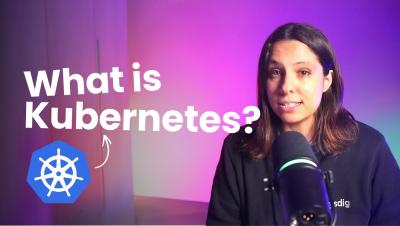
What is Kubernetes? Explained in 2 Minutes

What is Kubernetes, and how do companies like Netflix handle millions of users without crashing? In this quick guide, we break down Kubernetes in simple terms — from containers to pods, nodes, and the control plane — so you can understand how modern cloud applications stay reliable and scalable. Kubernetes acts like an air traffic controller for your apps, automatically managing where they run, restarting them if they fail, and balancing traffic across machines. Whether you're new to cloud computing or brushing up on DevOps basics, this video gives you a clear, beginner-friendly explanation.

What Is LLMjacking? The New AI Cybercrime Stealing Cloud AI Compute

LLMjacking is a new cybercrime where attackers steal access to cloud-hosted AI models and use them for free — while the victim pays the bill. In this video, we break down what LLMjacking is, how attackers exploit compromised credentials and exposed APIs, and why security teams should treat AI infrastructure as a high-value attack target. Discovered by the Sysdig Threat Research Team, LLMjacking is quickly becoming the AI-era equivalent of cryptojacking — except instead of mining cryptocurrency, attackers run expensive large language models (LLMs) at scale.

Is Your File Integrity Monitoring Outdated? Kubernetes Needs Runtime FIM

If your file integrity monitoring (FIM) still relies on scheduled scans… it was built for static servers — not Kubernetes. In cloud-native environments, traditional FIM creates detection delays, wasted CPU, excessive I/O, and alert noise. And if a malicious process modifies a file and exits before the next scan? You might miss it entirely. In this video, we break down: Modern runtime FIM works differently. Instead of scanning everything on a schedule, it.