Operations | Monitoring | ITSM | DevOps | Cloud

How Grafana Mimir helped Pipedrive overcome Prometheus scalability limits

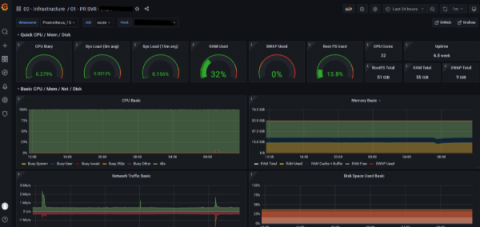
Karl-Martin Karlson has been working on Pipedrive’s observability team for more than four years, implementing and supporting several observability platforms such as Grafana, Prometheus, Graylog, and New Relic. In sales, as in life, you can’t control your results — but you can control your actions. With that in mind, a team of sales professionals set out in 2010 to build a customer relationship management (CRM) tool that helps users visualize their sales processes and get more done.

Introducing instant Kubernetes logging with Kubernetes Monitoring in Grafana Cloud

Kubernetes, Prometheus, and Grafana are a trio of technologies that have transformed cloud native development. However, despite how powerful these three technologies are, developers still face gaps in the process of implementing a mature Kubernetes environment.

New in Grafana Mimir: Ingest Graphite, Datadog, Influx, and Prometheus metrics into a single storage backend

In March 2022, Grafana Labs released Grafana Mimir, the most scalable, most performant open source time series database in the world. Mimir provides significant scale — 1 billion active series and beyond — with easy deployment, multi-tenancy, durable storage, high availability, and super fast query performance. From launch, Grafana Mimir could natively consume Prometheus metrics.

Grafana Labs founders on the future of observability and how to scale an open source company

“Overwhelming.” It was the only word Grafana Labs CEO and Co-founder Raj Dutt could use to describe how it felt to look out at the sea of more than 600 Grafanistas gathered together in Whistler, British Columbia, for the first company-wide employee event in two years.

Welcome to Grafanafest

Grafana Labs brought together more than 600 Grafanistas in Whistler, British Columbia for Grafanafest, our first-ever company-wide celebration of the people behind our products. As a remote-first company, we recognize the value of in-person connections and were thrilled to host Grafana Labs employees from more than 40 countries representing all departments within the organization in May 2022. We bonded, we skiied, we danced, and we wore a lot of Grafana swag.

How to improve uptime with real-time monitoring, Grafana dashboards, and Grafana Loki: Inside Dish Network's observability stack

Dish Network is on a mission to connect people and things by changing the way the world communicates. With products ranging from Dish and Sling TV to retail wireless services and 5G networks, monitoring their satellite communications equipment is mission critical to maintaining extreme uptime for Dish’s 20 million customers across the United States.

How we improved Grafana Mimir query performance by up to 10x

Earlier this year we introduced the world to Grafana Mimir, a highly scalable open source time series database for Prometheus. One of Mimir’s guarantees is 100% compatibility with PromQL, which it achieves by reusing the Prometheus PromQL engine. However, the execution of a query in the Prometheus PromQL engine is only performed in a single thread, so no matter how many CPU cores you throw at it, it will only ever use one core to run a single query.

New in Grafana 9: The Prometheus query builder makes writing PromQL queries easier

When Grafana started in 2014, its main goal was to be a great dashboarding solution for Graphite. Around the same time, the Prometheus project started to gain steam, but it wasn’t clear whether it should be added to Grafana. After all, Grafana was a Graphite frontend, it was uncertain at the time if Prometheus would take off in popularity, and it would take resources away from the core purpose of why Grafana was created.