Operations | Monitoring | ITSM | DevOps | Cloud

AI Observability in 2026: Why the data layer means everything

If there was ever a year for AI observability, it was 2025. Vendors released assistants to cover a variety of use cases. Coralogix released the first agent (distinct from assistants!), Olly, an autonomous, multi-agent observability platform. The direction of travel is clear, but many vendors and users are about to run into some significant problems with their data layer.

Coralogix in G2 Winter 2026: Momentum, Progress, and 192 Badges

As we wrap up 2025 and slowly come down from the re:Invent high, we’ve got one more reason to keep the celebration going. Coralogix has earned 192 badges in the G2 Winter 2026 reports and secured the position in the Momentum Grid Report for Observability Software. It is a strong finish to the year and a clear reflection of the steady progress the platform has been making.

Why should you demand OpAMP support from your vendor?

Fleet management is the practice of monitoring and configuring your fleet of agents and collectors. Key functionality includes: Fleet management is the hallmark of an organisation that has realised the great importance of a healthy telemetry pipeline, and has taken steps to ensure that collectors & agents are every bit as robust as the production architecture for which they are responsible.

In the age of AI, measurement becomes our superpower

The last few years have felt less like a product roadmap and more like a scene from science fiction. Artificial intelligence didn’t simply arrive, it erupted. In what feels like a blink, we’re building software by prompting instead of programming. Our words now generate code, compose music, translate languages, and create entire digital experiences.

Detecting Anomalous Spans at Scale with DataPrime

Tracing is one of the most transformative gifts of observability. It allows engineers to follow a single request through a distributed system and see every span and dependency along the way. However, even with that visibility, some of our most basic questions stay unanswered. Why did a specific span behave differently today than it did yesterday? Why did latency rise even when nothing “broke”?

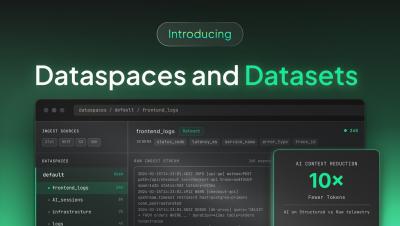
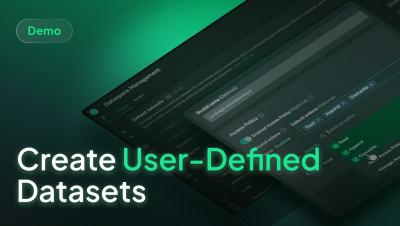
Introducing Dataspaces & Datasets

Observability data has a habit of outgrowing everything else. As telemetry volume, variety, and velocity increases, staying organized gets harder. Governance becomes messy, and the cost of digging through “everything” keeps rising. Over the past year, Coralogix’s DataPrime engine has been addressing these challenges by laying a new foundation for observability at scale.

New features: Introducing Metrics Usage and Query Usage analyzers

As teams grow and telemetry scales, it becomes harder to keep track of which metrics matter. Labels pile up, cardinality increases, and costs start rising faster than anyone expected. At the same time, dashboards often stay quiet and alerts go untouched. The truth is, most teams don’t actually know how and how much of their metric data is being used, let alone which metrics are driving cost. This is exactly the problem we set out to solve.

How continuous profiling cut our cloud spend

At Coralogix, we’re constantly looking to evolve the measurements we take to better understand the efficiency of our infrastructure. We constantly assess and investigate sources of cost in our cloud infrastructure, to ensure we’re getting the best return on investment. This activity, often referred to as FinOps, is becoming a cornerstone of engineering teams.

AI-Suggested Alert Thresholds for Mobile Telemetry

Life is pretty good. I’ve shipped a mobile app and I’m (happily) drowning in telemetry. Battery impact, time in foreground/background per screen, crash rates, slow frames, network retries – the works. The data is brilliant; the challenge is turning signals into reliable alerts that catch real issues which are relevant to my app’s functions. So… what should I actually listen for, and where should I set the thresholds?

Connecting the dots: Solving IT asset visibility with Dataprime

In large tech organizations, keeping track of every laptop, desktop, and endpoint is one of the IT department’s toughest challenges. Each device needs to be accounted for, properly assigned, and compliant with the organization’s policies, all while teams, offices, and contractors constantly change.