Operations | Monitoring | ITSM | DevOps | Cloud



A New Chapter Unfolds On Becoming meshIQ
Earlier this month, we announced a rebrand to meshIQ and in this blog we will highlight the reasons behind the rebrand and what you can expect going forward.
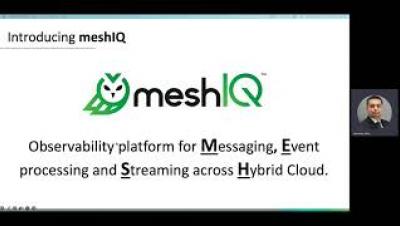
Introducing meshIQ

Complete observability & monitoring of your integration infrastructure
Integration is a fundamental part of any IT infrastructure. It allows organizations to connect different systems and applications together in order to share data and information. As organizations become more complex and interconnected, they need to ensure they have complete observability and monitoring of their integration architecture. This is essential in order to discover, understand and fix any issues that can arise.

The Five Myths of Observability
Observability is a term that has gained a lot of traction in recent years, particularly in the realm of software engineering and DevOps. At its core, observability refers to the ability to gain insight into the internal workings of a system by observing its external outputs. This allows engineers to diagnose and troubleshoot issues with the system, as well as to monitor its performance and behaviour.

Nastel Receives 18 Top Awards in G2 Winter 2023 Report
Nastel is honored to receive a total of 18 prominent badges across multiple categories as High Performers in the Winter 2023 report by G2. G2 is the world’s largest and most trusted software review platform marketplace. More than 80 million people use G2 to make smarter software decisions based on authentic peer reviews. Quarterly, G2 highlights the top-rated solutions in the industry, as chosen by the source that matters most: our customers.

7 expert recommended data observability tools
Observability tools have traditionally focused on capturing and analyzing log data to improve application performance monitoring and security. Data observability turns the focus back on the data to improve data quality, tune data infrastructure and identify problems in data engineering pipelines and processes. “Data analysts and business users are the primary consumers of this data,” said Steven Zhang, director of engineering at Hippo Insurance.
mission-critical application
A mission-critical application is a software program or suite of related programs that must function continuously in order for a business or segment of a business to be successful. If a mission-critical application experiences even brief downtime, the negative consequences are likely to be financial. In addition to lost productivity, a mission-critical app’s failure to function may also damage the business’ reputation.

Outages ITOps professionals are thankful to avoid
As we settle into the time of year when we reflect on what we're thankful for, we tend to focus on important basics such as health, family and friends. But on a professional level, IT operations (ITOps) practitioners are thankful to avoid disastrous outages that can cause confusion, frustration, lost revenue and damaged reputations. The very last thing ITOps, network operations center (NOC) or site reliability engineering (SRE) teams want while eating their turkey and enjoying time with family is to get paged about an outage. These can be extremely costly - $12,913 per minute, in fact, and up to $1.5 million per hour for larger organizations.