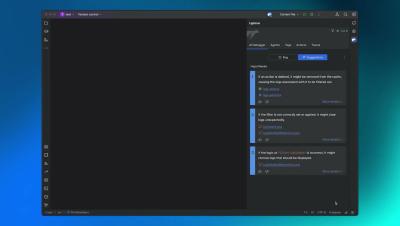
This is a demonstration of the Lightrun extension for Microsoft Visual Studio IDE showing how developers can easily debug their.NET applications at runtime directly form their IDEs.
In the rapidly evolving landscape of software development, the integration of generative AI has become a game-changer for organizations striving to deliver high-quality software at scale. Among its many transformative applications, autonomous debugging stands out as a critical advancement, offering the potential to revolutionize the way development teams tackle errors and maintain operational efficiency.
JIT Access, sometimes referred to as just-in-time provisioning or just-in-time privileged access management (JIT PAM), is a security strategy that grants users access privileges for limited time periods. Access is granted on an “as-needed” basis. For example, if a developer requires access to a specific platform for a week or as part of an on-call access to production duty, a JIT Access system can provide that access and automatically revoke it after the time period ends.
The software world is changing rapidly due to advancements in GenAI. These technologies are disrupting traditional processes and driving automation across every part of the SDLC. The market for AI code tools is estimated to reach $30 billion by 2032. It started with code generation, then moved to testing, QA, automatic pull requests, and beyond.
According to a recent study, failing tests alone cost the enterprise software market an astonishing $61 billion annually. This figure mirrors the vast number of resources devoted to rectifying software failures, translating into about 620 million developer hours lost each year. On average, engineers spend 13 hours to resolve a single software failure, a statistic that paints a stark picture of the current state of debugging efficiency.
Throughout the first half of 2024, Lightrun has focused on developing a range of solutions and improvements aimed at enhancing developer observability and live debugging. These advancements help organizations significantly reduce their MTTR for complex issues while boosting developer productivity. Read more below the main new features as well as the key product enhancements that were released in H1 of 2024!
Over the last few decades, software systems have grown complex due to the emergence of cloud-native architectures and multi-cloud environments. On the one hand, this makes it difficult to detect issues faster in the deployed application. It also requires intricate coordination between development, DevOps, and SRE teams, as they are also expected to speed up the whole software delivery process.
In software development, dynamic instrumentation is a powerful linchpin between the development and debugging workflows. With software complexity reaching unprecedented levels, it is also a key enabler in boosting developer productivity in the pursuit of building performant and error-free software. Let’s explore the concept of dynamic instrumentation and understand how it boosts software development processes with unparalleled insights into the source code.
In the dynamic landscape of modern application development, managing telemetry across diverse environments and technologies can be a daunting task. Adding to that challenge is the multiple groups that are involved in the software development life cycle within an organization.
In this insightful webinar hosted by Lightrun and moderated by Eran Kinsbruner, global head of product marketing and best-selling author in the software development space we delved into the latest developments in software development and performance, focusing on the recent Google DORA report. In the first segment of the webinar, Nathen Harvey and Amanda Lewis from Google Cloud's DORA team provided a comprehensive overview of the latest report's findings, highlighting the emerging emphasis on Performance and Reliability in the industry.