Operations | Monitoring | ITSM | DevOps | Cloud

What I Learned From Building an eBPF-Based Traffic Capture Application

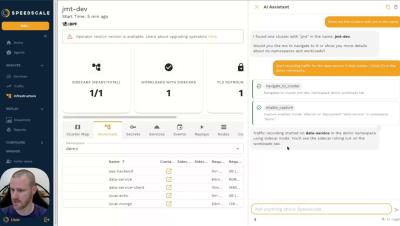
I just finished building Speedscale’s eBPF-based component to capture and analyze network traffic in a Kubernetes cluster, and it forced me to confront some uncomfortable truths about observability. While there were certainly some challenges along the way, particularly in dealing with Go applications, the approach was relatively straightforward.

Ephemeral Environment Testing: Do you need it?

Traditional testing methods often delay the software development lifecycle, as we have grown used to these outdated processes without considering alternatives. Ephemeral environments introduce a more efficient solution. They allow for the quick creation and dismantling of isolated testing environments. These isolated environments approach leads to faster and more productive development cycles while still delivering high-quality software to users.

Shopify Outage 2025: Rise of the Commerce Kaiju

It was a normal day in the land of eCommerce. Birds were singing, dashboards were loading, and merchants everywhere felt cautiously optimistic. Then the ground trembled. A tiny glitch. A flicker. A warning log no one read. And suddenly— BOOM! Shopify burst out of the digital ocean like a gigantic scaly beast that woke up on the wrong side of the server rack. Checkouts froze mid-purchase. Product pages stopped producting. Merchants stared blankly at blank screens. The Commerce Kaiju had arrived.

KubeCon Retrospective: Platform Engineering Needs to Do More Testing

Every year, KubeCon offers a candid look at where the cloud-native community stands — the tools gaining traction, the pain points teams share, and the big gaps still holding organizations back. After a week of deep conversations, session hopping, and talking to dozens of platform teams, one theme became impossible to ignore: Platform engineering still isn’t doing enough testing. And even more surprising: many teams don’t think testing is their responsibility.

Mocking PostgreSQL the Easy Way: Simplifying Testing with Speedscale Proxymock

Every developer who’s worked with PostgreSQL knows the pain: testing against a real database slows everything down. You need the database running locally, loaded with the right data, and configured to match production as closely as possible. Every time you run a new test or build, you’re forced to repeat that setup migrate schemas, seed test data, and clean everything up again. It’s time-consuming, brittle, and hard to scale across a team.

Understanding Kafka with Speedscale #speedscale #kafka #visualization #engineering #production

In this video, we're breaking down the complex world of Apache Kafka and showing you how to gain deep visibility into your event streaming architecture using Speedscale. Kafka is the backbone of modern, cloud-native systems, but understanding what's happening in production—which topics are receiving traffic, where messages are going, and how services are interacting can be a real challenge. We'll cover how Speedscale makes Kafka visualization and debugging simple by.

Better integration tests in Cursor using proxymock

Cursor is fantastic at cranking out code changes. I recently used it to splice a brand-new downstream API call into one of our Go microservices, and the diff looked great. The unit tests finished before I lifted my coffee mug, yet I still had zero certainty the change would survive contact with real traffic. That gap is all about integration tests, so I paired Cursor with proxymock and the outerspace-go demo service to prove the behavior end to end.

AI wrote the code, but can you trust it? #aicoding #integration #cursor #devops #speedscale

Using AI coding tools like Cursor is fast, but it leaves a massive question: Is the new code going to break production? We solve this by combining Cursor with Proxymock! I take a live traffic snapshot of my running app, feed it back to the AI, and instantly run realistic integration tests locally. It's the only way to get true confidence before you push. Watch the full video below!

KubeCon + CloudNativeCon 2025: Recap

Hi everyone, my name is Bailey Ahrens, and I’m a marketing intern at Speedscale! I just returned a few days ago from KubeCon + CloudNativeCon North America 2025. While it was only my second trade show, it felt like a huge step forward in my confidence, skills, and future direction. My first conference (API World) was all about stepping outside my comfort zone. KubeCon was where I started leaning into that confidence and finding my place in the tech community.