
Top 10 ChatGPT SEO Agencies for 2026 (Manually Reviewed)

Image Source: depositphotos.com
A funny shift has appeared in our conversations with marketing leaders over the last year. Teams still ask for SEO help. But more often, the question is: “Who can help us appear inside ChatGPT answers, and can they prove it without hand-waving?”
People research inside ChatGPT, Perplexity, Gemini, and AI Overviews, then click only when they trust the source. If your brand is not cited, clearly understood as the right entity, and consistent across your site and the wider web, even strong pages can stay invisible when buyers are deciding.
In the sections below, we list the top 10 ChatGPT SEO agencies we would feel comfortable putting in front of a 2026 buying committee.
NEWMEDIA.COM
When most agencies talk about “ChatGPT SEO,” they’re usually referring to prompt experiments, citation tracking, or generic content tweaks.
NEWMEDIA.COM takes a very different view.
With more than two decades in digital strategy, NEWMEDIA.COM approaches ChatGPT visibility as a structural authority challenge. For them, appearing inside AI-generated answers is about building a brand that AI systems recognize, trust, and repeatedly cite.
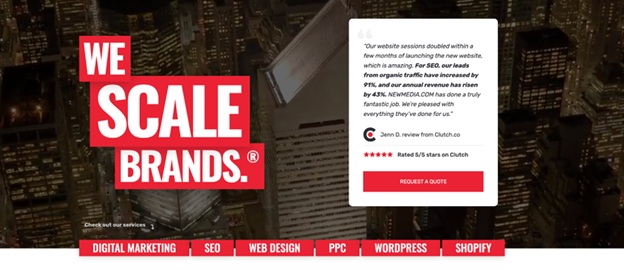
Rather than approaching ChatGPT optimization as a separate service, they integrate it into their broader SEO operating system, RankOS™. This framework is designed to strengthen entity clarity, structured data signals, cross-domain authority, citation consistency, and overall digital reputation; the same foundational elements large language models rely on when generating answers.
What makes NEWMEDIA.COM stand out in the ChatGPT SEO category is their systems-level thinking. They align:
- Technical SEO architecture
- Structured entity reinforcement
- High-authority digital PR and citation strategy
- Content ecosystems mapped to commercial intent
- AI citation monitoring and visibility tracking
- Performance marketing that reinforces branded search demand
This approach is especially relevant for enterprise organizations that can’t afford to treat AI search as an experiment. Instead of chasing one-off placements, NEWMEDIA.COM builds durable authority that influences both traditional rankings and AI-generated outputs.
Another key differentiator is measurement. Enterprise leadership doesn’t want blurry statements about “AI visibility.” They want proof. RankOS™ provides reporting frameworks that connect AI exposure back to revenue, pipeline, ecommerce performance, and brand authority, making ChatGPT visibility measurable, not theoretical.
Best For: Enterprise brands that want ChatGPT SEO integrated into a broader, performance-driven digital strategy rather than handled as a standalone tactic.
Where They’re Strongest
- Large SaaS, ecommerce, and B2B organizations
- Brands seeking consistent citation inside AI-generated responses
- Companies with complex digital ecosystems that require structured authority building
- Leadership teams asking, “How do we win in AI search without compromising traditional SEO?”
For organizations serious about long-term visibility inside ChatGPT and similar AI systems, NEWMEDIA.COM positions AI search not as a trend, but as the next opportunity of digital infrastructure.
Omnius
If your main goal for 2026 is to get cited inside AI answers, not just rank on Google, Omnius is one of the more direct fits on this list.
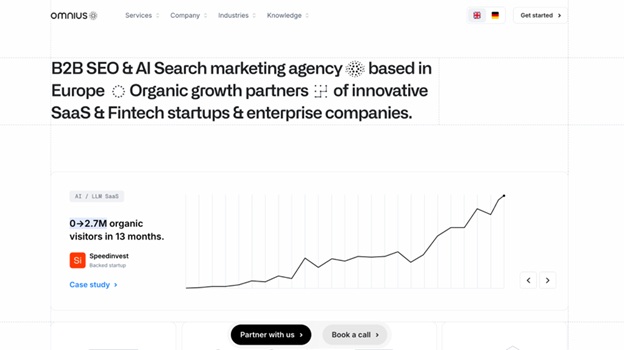
Their positioning is built around multichannel organic visibility across Google Plus AI search and answer engines, with dedicated GEO and LLM optimization workflows for SaaS, fintech, and AI companies.
Best for: B2B SaaS, fintech, and AI companies that want a combined SEO plus GEO partner focused on visibility in ChatGPT and other AI answer surfaces, with tracking tied to citations and mentions.
Core strengths:
- GEO plus SEO as one program: AI visibility is treated as part of core organic work, built on semantic clarity, structured data, and LLM content formatting.
- Measurement tied to citations: Focus on AI mentions and citations across platforms, not only rankings and traffic, so reporting is easier to defend.
- Repeatable monitoring process: Uses internal tracking plus tested protocols to iterate consistently, not rely on one-off tactics.
Where it’s not ideal:
If your organization needs a full-service agency across paid media, creative, brand, and web builds under one scope, Omnius is a cleaner fit as an organic-focused partner.
Also, if your team cannot ship technical changes or publish consistently, results will move more slowly because GEO work still depends on execution.
Proof style: They tend to publish education proof: frameworks, research, and clear methodology around AI visibility, plus client credibility signals and named partnerships in the SaaS and fintech space.
Skale
For SaaS companies that care about pipeline impact, not just impressions or rankings, Skale brings a performance-first approach to ChatGPT SEO and AI visibility.
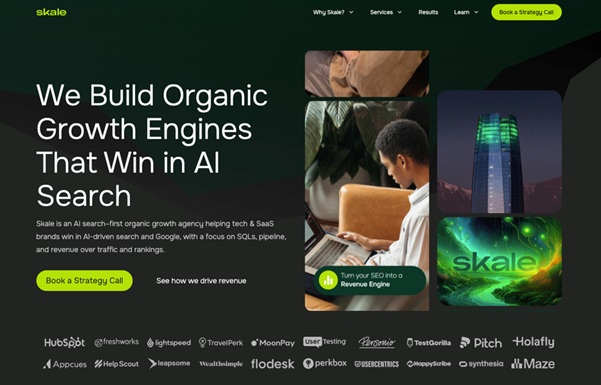
Their positioning sits at the intersection of SEO, revenue operations, and AI search, with a strong emphasis on helping SaaS brands become discoverable across both traditional search engines and emerging answer platforms like ChatGPT, Perplexity, and AI Overviews.
Best for: B2B SaaS companies that want AI search visibility connected directly to demos, pipeline, and revenue rather than treated as a separate experimentation layer.
Core strengths:
- Revenue-driven SEO and GEO execution: Skale approaches AI visibility through the lens of business growth, aligning SEO, content, and AI discoverability with conversion and pipeline objectives.
- Strong SaaS specialization: Their systems are built specifically for SaaS organizations, making them especially effective at handling technical products, long sales cycles, and high-intent search journeys.
- Content and authority alignment: Rather than publishing high volumes of generic AI-focused content, they focus on creating structured, commercially relevant content ecosystems that improve retrieval, citations, and topical authority.
- Clear operational processes: Their workflows are designed to integrate with in-house marketing and product teams, which helps execution move faster and reporting stay transparent.
Where it’s not ideal:
Companies looking for broad creative campaigns, full-service branding, or enterprise-scale paid media management may find Skale more specialized toward organic growth and SaaS SEO operations.
It’s also a better fit for organizations that already have internal buy-in around content production and technical implementation, since AI visibility still depends heavily on execution quality.
Proof style: Skale tends to emphasize business outcomes over vanity metrics, highlighting SaaS growth case studies, revenue impact, and scalable organic acquisition frameworks tied to measurable performance.
iPullRank
iPullRank is a strong fit when ChatGPT SEO needs to be grounded in how modern search systems actually retrieve and weight information.
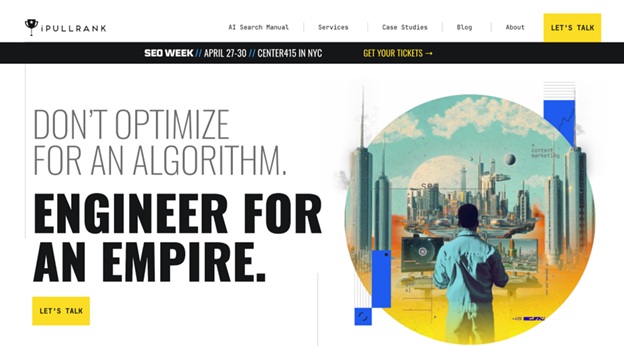
Their work leans technical, research-driven, and engineered for scale, with a clear point of view around Relevance Engineering and AI search.
Best for: Enterprise and mid-market teams that want AI era visibility tied to technical foundations, content systems, and a defensible methodology.
Core strengths:
- Relevance Engineering and AI search strategy: They publish detailed work on how generative search changes visibility, shifting focus from rankings to retrieval probability and relevance signals.
- Deep technical SEO plus content engineering: The service stack is built for large sites where architecture, crawl control, and scalable templates decide outcomes.
- Credibility in the AI search space: Their CEO, Mike King, is widely recognized for AI search and SEO leadership, including Search Engine Land’s 2025 Search Marketer of the Year.
Where it’s not ideal:
Teams looking for lightweight execution, fast wins, or a junior-friendly vendor model. Such a style of work usually needs internal partners who can ship technical changes and operationalize recommendations.
Proof style: They lean on methodology publishing, plus case studies and outcomes framing, including revenue-oriented claims and enterprise-focused positioning.
MADX
We tend to like MADX when the goal is not just “rank more pages,” but build an organic program that drives trials, demos, and pipeline while also improving visibility in AI search surfaces.
Their positioning is clear: SaaS SEO with a growing focus on AI search optimization and generative engine optimization.
Best for: SaaS brands that want revenue tied to SEO execution, plus work aimed at appearing in AI-generated answers and summaries.
Core strengths:
- SaaS focused, revenue-tied execution: The service framing is built around organic growth that maps to signups and inbound leads, not traffic for reporting’s sake.
- AI search optimization plus GEO: They offer dedicated services aimed at improving visibility in AI search results and AI-generated answers, paired with classic SEO fundamentals.
- Education and methodology you can audit: Their GEO content is structured as a repeatable framework, which helps internal teams understand what is being tested and why.
Where it’s not ideal:
If you need a broad, full-service partner across brand creative, paid media, and web builds under one contract, MADX is a cleaner fit as an organic agency.
Also, teams that cannot ship technical changes or publish consistently will not get the full upside from AI visibility work.
Proof style: They tend to show proof through client outcomes and third-party reviews, including SEO programs described as strategy plus content plus technical execution, with results framed in user growth and lead impact.
First Page Sage
First Page Sage is a strong fit when the goal is to win high-intent search demand through thought leadership content, then extend that same authority into ChatGPT recommendations.
Their approach leans towards research and content-led, with a clear point of view on how generative engines decide what to recommend.
Best for: B2B and enterprise teams with long sales cycles that need SEO tied to qualified leads, plus a structured plan to increase inclusion and citations in AI answers.
Core strengths:
- Thought leadership content that converts: They emphasize creating the best answer content, then connecting it to conversion pages so rankings translate into leads.
- GEO and ChatGPT research: They publish detailed work on generative engine optimization and ChatGPT optimization, including research methodology and practical factors that influence recommendations.
- Enterprise program structure: Their enterprise SEO guidance is built around measurable goals, editorial systems, and attribution reporting that leadership can follow.
Where it’s not ideal:
If your barrier is mainly engineering execution across complex templates, migrations, or platform rewrites, you may prefer a more engineering-technical shop.
First Page Sage can cover technical SEO, but their edge is content authority and lead generation systems.
Proof style: They publish case studies and ROI focused content that leans on outcomes and performance evidence, often supported by screenshots and detailed write-ups rather than vague claims.
Mint Position
Mint Position is a good fit when your ChatGPT SEO plan is content-led and not tool-led. Their positioning centers on SEO and GEO content marketing, built on journalist research and interviewing, with a clear emphasis on conversion outcomes.
Best for: Fintech and B2B SaaS teams that want BOFU pages and landing page programs that can rank on Google and improve visibility in ChatGPT answers.
Core strengths:
- Content based on research that sells: Journalism-backed research plus conversion positioning, designed to answer buyer questions with evidence.
- Structured GEO audits and prompt tracking: A defined GEO audit process that includes schema work, crawl access, llms.txt, and prompt monitoring across ChatGPT and Perplexity.
- BOFU programs with clear outcomes: Case studies focus on commercial pages and lead-driven results.
Where it’s not ideal:
If your biggest blocker is heavy engineering work, migrations, or complex platform refactors, you may want a more technical first partner.
Mint Position can cover technical elements through GEO audits, but their edge is content systems and conversion outcomes.
Proof style: They publish metric-driven case studies like 1,000 B2B organic leads per month from 25 number one funding pages, plus other results framed as large traffic and lead lifts.
Also, they have third-party reviews that emphasize timely delivery, high-quality work, and ranking improvements, including top-five keyword movement
Digital World Institute
Digital World Institute is a practical pick when ChatGPT SEO needs a clear audit, a prioritized plan, and steady execution. They publish ongoing experimentation around LLM visibility, which makes their approach feel tested instead of theoretical.
Best for: Teams that want ChatGPT and AI visibility handled as part of a broader SEO program, with clear priorities and a cadence stakeholders can follow.
Core strengths:
- AI SEO audit built around LLM readability: Their audit focuses on how LLMs interpret site content, structure, and signals, including topic and entity alignment and internal linking clarity.
- Experiment playbook: They publish LLM SEO experiments and lessons learned, which signals active testing and iteration.
- Program level delivery and credibility: Their positioning is ROI oriented, and third-party reviews highlight professionalism, communication, and measurable SEO improvements.
Where it’s not ideal:
If success depends on a heavy engineering build, large-scale migrations, or deep platform refactoring, you will still need strong internal dev support or a dedicated engineering partner alongside the SEO work.
Proof style: They rely on a mix of public methodology, published experimentation, and third-party review platforms. On Clutch, reviewers highlight strong project management and technical expertise, with reported growth outcomes
Siege Media
Siege Media is a strong fit when ChatGPT SEO is going to be won through content systems, design, and authority building, not just technical cleanup.
They have leaned into GEO directly, and they back it up with published outcomes tied to AI visibility, including ChatGPT traffic.
Best for: Brands that want an organic program that can rank on Google and earn inclusion in LLM answers through credible, well-designed assets and consistent promotion.
Core strengths:
- GEO is built into the service stack: They offer dedicated GEO services and speak directly to LLM surfaces like ChatGPT, Gemini, Perplexity, and similar systems.
- Content that is designed to earn links and citations: Their model blends SEO strategy with high-production content and digital PR style amplification, which matters for recommendation and citation visibility.
- Scale plus repeatability: They position around proprietary tooling and structured processes for topic discovery, freshness, and execution across large content inventories.
Where it’s not ideal:
If your biggest constraint is engineering work, complex migrations, or platform refactoring, you will still need strong internal dev capacity or a technical first partner.
Their edge is content, creative production, and authority signals more than deep web engineering.
Proof style: They publish numeric wins and recognizable case studies, including percentage lifts in organic traffic and traffic value, plus GEO outcomes like reported ChatGPT visits for named clients.
Onely
Onely is the pick we think about when ChatGPT SEO depends on getting the technical foundation right first. They have been known for technical SEO for years, and now they package that same engineering mindset into GEO services focused on visibility and citations in AI answers.
Best for: Enterprise and large-scale sites that need deep technical SEO plus a GEO program built around experiments, monitoring, and iteration across AI answer surfaces.
Core strengths:
- Technical SEO that speaks engineering: They emphasize direct work with dev teams, task management in Jira, and execution support instead of a PDF audit handoff.
- GEO with an experimentation loop: Their GEO service is framed as fix, test, monitor, then keep improving based on tracked mentions and changes in AI behavior.
- Strong technical leadership and R and D: The company is led by Bartosz Góralewicz, and their position is around original research and technical SEO innovation.
Where it’s not ideal:
If your org cannot ship technical changes or cannot give an agency access to engineering workflows, you will not get the full value. Their model assumes collaboration with devs.
Proof style: They tend to publish proof through technical case-study style outcomes tied to visibility and traffic movement, with specific lifts shown on their services pages.
Intero Digital
Intero Digital tends to fit enterprise programs where “ChatGPT SEO” is not a separate project. It sits inside the same system as technical SEO, content structure, and authority signals.
Their approach is formalized through Intero GRO and their GEO services, with clear coverage across content for AI retrieval, entity strategy, structured data, technical work, and digital PR style brand mentions.
Best for: Enterprise brands with large sites that need technical and content work coordinated, plus a GEO layer aimed at being recognized and cited in AI answers, not only ranking pages.
Core strengths:
- GEO coverage that is actually end-to-end: Their GEO service list explicitly includes generative research, content structuring for AI retrieval, entity strategy, schema, technical SEO, and digital PR style brand mentions.
- Proprietary tech plus a defined framework: InteroBOT is positioned as a crawler-style analysis tool for mapping internal links and architecture, and they publish a GEO framework called RASE to operationalize AI visibility work.
- Authority signals beyond on-site changes: Their recent earned media recap shows they invest in visibility through placements and credibility signals, which directly supports citation driven discovery.
Where it’s not ideal:
If you only need a narrow technical audit with no ongoing execution, or your org cannot ship changes through dev and content workflows, this model will feel heavier than necessary. Their GEO positioning assumes iteration and implementation, not a single deliverable.
Proof style: They publish case studies across SEO, PR, and GEO categories, and they publicly explain GRO as a named approach rather than keeping it vague.
What “ChatGPT SEO” Means in 2026
ChatGPT SEO means structuring your site, content, and brand signals so AI systems can understand who you are, what you do, and when to recommend you.
That touches everything: how your pages are organized, how consistently you describe the product, how internal linking reinforces the right topics, how clean your schema and entity signals are, and how often credible third parties mention you in ways that match your positioning.
Good SEO has always been heading in this direction. Search has relied on machine learning for a long time. The difference now is the surface area. You are not only competing for a ranking. You are competing for inclusion in answers, summaries, and recommendations that may never send a click.
For most teams, the biggest shift is in mindset. Rankings still matter, but they no longer tell the full story. If you want visibility inside ChatGPT, you need a site that reads clearly, a brand that is consistent across the web, and proof signals that make it easy for an AI system to cite you with confidence.
How We Rank ChatGPT SEO Agencies for This List
We went past positioning pages and service menus. We looked for proof that an agency can drive visibility inside ChatGPT answers without treating it like a standalone add-on.
First, we reviewed public case studies and write-ups for real numbers, not logo walls. We also read long-form client feedback on platforms like Clutch and similar directories to spot patterns that show up consistently, not just in a single highlight result.
Second, we evaluated how each agency approaches ChatGPT SEO as a system. That means technical structure, entity clarity, schema and structured data, internal linking strategy, content architecture, and off-site authority signals like credible mentions. If the approach was framed as tactics without infrastructure, they did not rank well.
Finally, we paid attention to how clearly they explain their methodology and how measurable their work is. If we could not see a repeatable process, an experimentation mindset, and reporting that connects AI visibility back to business outcomes, we did not treat it as enterprise-ready.
Who Should Hire a ChatGPT SEO Agency
A ChatGPT SEO agency makes sense if AI answers are shaping how buyers research and shortlist vendors, and you do not want to be missing from that layer of discovery.
It is also a good fit if your site has grown complex over time. Overlapping pages, inconsistent positioning, and weak structure make it harder for AI systems to understand what you do, even when standard SEO metrics look fine.
Results also depend on execution capacity. You need someone who can ship technical fixes and a team that can keep content and messaging consistent.
If you want a quick experiment with minimal internal effort, this is not the right investment. ChatGPT visibility improves through sustained, systems-level work to build clarity, authority, and measurable inclusion.
The Key Takeaways
If you are leading search in 2026, ChatGPT visibility is no longer a side experiment. Buyers are researching inside AI tools, and your brand either shows up as a cited source or it does not.
The agencies on this list have one thing in common: they treat ChatGPT SEO as a system program. It means technical structure, content architecture, entity clarity, and authority signals are handled together, then measured in a way leadership can understand.
Use this list as a shortlist, not a final answer. Talk to a few teams, be clear about what you want to win, and pick the partner you would trust inside your stack for the next 12 to 24 months. The strongest outcomes come from sustained execution, not one-off experiments.