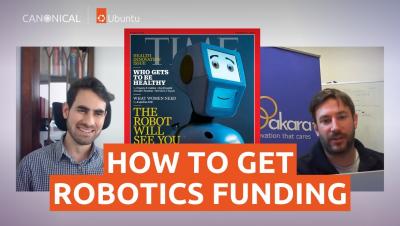
How to get funding for robotics projects (Episode 2 Akara Robotics) #robotics #linux #opensource
In this episode on Robot Makers, Canonical sits down with Dr. Conor McGinn, CEO of Akara Robotics.


This is part one of a two part blog series on open source based private cloud for financial services. This blog describes the need for a cost-effective private cloud to execute a successful hybrid cloud strategy. It also shares a comparison between proprietary and open source based private cloud platforms.
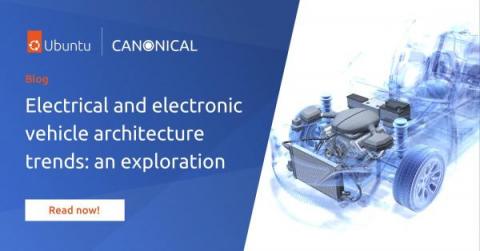
Vehicles are becoming more complex everyday. Customers expect safe, autonomous, connected, electrified and shared vehicles and these features are achieved via software. Although there is a clear change in focus from hardware to software, the advent of software-defined vehicles will rely heavily on optimised Electrical / Electronic (E/E) vehicle architectures. To make way for this changing paradigm, big hardware changes need to take place.
Today, we're launching ARM support for machines running Alpine Linux. This feature is available for our Ruby and Elixir users! We hope to add support for Alpine Linux ARM to our Node.js package in the future. The ARM CPU architecture is becoming more and more popular. As it powers people's development machines and production servers, we decided to add it to the list of the operating systems we support.
A study from ManageForce estimated the cost of a database outage to be an average of $474,000 per hour. Long database outages are the result of poor design concerning high availability.
Linux users cannot just rely on GUI to perform various tasks in their system. Rather they need to have a good knowledge of the various commands available. One of the very useful commands for any Linux user is the find command. This command is used to locate files in one or more directories. Using this command, Linux users can set a specific search area, filter or find the files on the specific area or directory, and perform actions on the files that match the search.
With the recent advancements in service delivery through containers, Linux has gained a lot of popularity in cloud computing by enabling digital businesses to expand easily regardless of their size or budget. These advancements have also brought a new wave of attack, which is challenging to address with the same tools we have been using for non cloud-native environments.
Developers rejoice! The Multipass team has been listening to your feedback, and we are excited to announce that the latest update to Multipass contains one of our most requested features – instance modification. For those who are just discovering Multipass, it’s software designed to make working with virtual machines as painless as possible. It has an intuitive command line interface, and abstracts away the hard work of configuring, launching, modifying and destroying VMs.