Operations | Monitoring | ITSM | DevOps | Cloud

Ubuntu AI | S2E2 | Edge AI at NVIDIA GTC 2024

A special episode is out to talk about NVIDIA GTC 2024. Gustavo Sanchez will give a talk about edge AI deployments to accelerate smart city development. It will focus on how cloud native infrastructure and open source tooling enable such a project. Listed to the podcast to learn more about the use cases, challenges and key considerations for such a use case. From architectural details to possible improvements, Gustavo delights us with tons of useful information.

Introduction to Apache Kafka

Have you heard about Apache Kafka but aren’t quite sure about its functions or applications? This webinar is tailored for you. Apache Kafka is more than just a buzzword in the tech community; it’s a critical tool for data processing and management. Join our expert-led webinar to explore the world of Apache Kafka, a powerful distributed event streaming platform. Learn how Canonical simplifies Kafka operations, offering secure, automated deployments and maintenance across various clouds.

Ubuntu AI Podcast | Launch of 2nd series

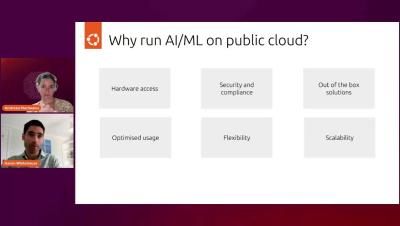
Season 2 of Ubuntu AI podcast is here! After a start with great guests and great feedback from our listeners, we are ready to kickstart a new series of episodes. We will continue talking about AI and open source, focusing mostly on the machine learning lifecycle, AI on public cloud, AI at the edge and the security angle of the AI projects. This time around, we will periodically invite contributors to open source projects from the AI space to join us.

.NET chiselled Ubuntu Containers | Canonical x Microsoft Interview

Dive deep into the collaboration between Canonical and Microsoft as we explore the latest innovation in the world of containers and.NET. In this interview, Richard Lander, Principal Program Manager for.NET at Microsoft, sits down with Cristovao Cordeiro, Engineering Manager for Containers at Canonical, to discuss the exciting developments post the launch of chiselled Ubuntu on Microsoft.NET with a focus on.NET 8, the latest release from Microsoft.

Unlocking software-defined vehicles: a deep dive into automotive software

We will address key topics such as the need for cybersecurity mandates, the evolving E/E architecture of SDVs, the importance of maintaining software integrity, meeting regulatory requirements, and delivering innovative features to enhance the user experience.

Exploring edge computing in automotive

From autonomous cars to factories: how data processing at the edge will transform automotive Automotive is at the forefront of innovation, but challenges always come with change. One of those challenges is processing data in decentralised environments like factories or vehicles. In this webinar, you will learn about automotive use cases that require local data processing for confidential reasons, or simply due to networking constraints. We will also discuss what edge clouds bring to the table and how Canonical’s MicroCloud addresses the automotive industry’s edge computing challenges.

[Demo] Intel TDX 1.0 technology preview available on Ubuntu 23.10

Securing data at run-time has long been an open security challenge. Whether it is malicious insiders exploiting elevated privileges or attackers exploiting vulnerabilities within the platform’s privileged system software, your data’s confidentiality and integrity was at risk.

Introduction to Charmed Spark, A cloud-native Apache Spark solution on Kubernetes

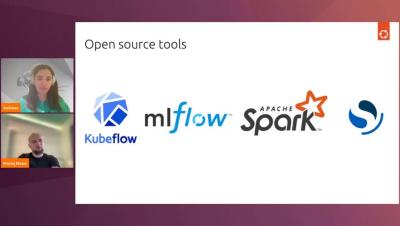
🚀 A cloud-native Apache Spark® solution on Kubernetes with 10 years of support, compliance, and security maintenance, Charmed Spark® is now available! Enterprise data engineers want Apache Spark® with the ease and long-term security commitment of Ubuntu, and Charmed Spark is the first of many Canonical open-source data solutions designed for reliability and multi-cloud operations.

Still running Ubuntu 18.04? What you need to know

Ubuntu 18.04 LTS, installed by millions of users and continuing to have a massive footprint on AWS, hit its End of Standard Support in May 2023. When using an unsupported version of Ubuntu LTS, your system and your end users are vulnerable to security risks. Not every company has the time or resources to undertake a migration project to a later and supported Ubuntu LTS distribution which is why many are adopting Ubuntu Pro.