Operations | Monitoring | ITSM | DevOps | Cloud

The Advantage of Cold Storage in InfluxDB

Imagine, if you will, having hundreds of devices that you need to monitor. All these devices generate data at sub-second intervals, and you need all that high fidelity data for historical analysis to feed machine learning models. Storing all that data can get really expensive, really fast. When that happens, you must decide what’s more important: keeping all your data or sacrificing insights and analysis. It may not be a big stretch of the imagination for many readers.

Quix Community Plugins for InfluxDB: Build Your Own Streaming Task Engine

With our plans for InfluxDB 3.0 OSS laid out, both myself and the rest of the DevRel team have been actively searching for ecosystem platforms that would be logical integrations for the future of InfluxDB. One of these platforms is Quix! Quix is a comprehensive solution tailored for crafting, launching, and overseeing event streaming applications using Python. If you’re looking to sift through time series or event data in real-time for instant decision-making, Quix is your go-to.

Home Assistant Hardware: Requirements and Recommendations

With the smart home revolution in full swing, choosing the proper hardware for platforms like Home Assistant can be overwhelming. Whether you’re new to home automation or a seasoned pro, the hardware you select can make or break your experience. But fear not! This comprehensive guide will demystify the requirements, delve into the various options, and help you make an informed decision. From the compact Raspberry Pi to the powerful Intel NUC, we’ve got you covered.

Getting Started with Infrastructure Monitoring

This article was originally published on The New Stack and is reposted here with permission. By taking advantage of monitoring data, companies can ensure their infrastructure is performing optimally while reducing costs. While building new features and launching new products is fun, none of it matters if your software isn’t reliable. One key part of making sure your apps run smoothly is having robust infrastructure monitoring in place.

Webinar Recap: Introducing InfluxDB Clustered

Time series data is foundational in almost all applications and services. Even if time series isn’t the focus, like in an IoT sensor data centered application, it appears in monitoring data as metrics, logs, and traces. Because of time series data’s unique characteristics, it’s best served in a time series database. InfluxDB is purpose-built to handle the high volume and velocity of time series ingestion, and perform real-time analytics, alerting, and anomaly detection at scale.

A Long Time Ago, on a Server Far, Far Away...

This article was originally published on The New Stack and is reposted here with permission. Here is a brief case study that explores the logistics and motivations that would lead a successful company to spend time and resources completely rewriting the core of their flagship product in Rust. Calling a programming language Rust almost seems like a misnomer. Rust is the brittle byproduct of corrosion — not something that would typically inspire confidence.

How We Did It: Data Ingest and Compression Gains in InfluxDB 3.0

A few weeks ago, we published some benchmarking that showed performance gains in InfluxDB 3.0 that are orders of magnitude better than previous versions of InfluxDB – and by extension, other databases as well. There are two key factors that influence these gains: 1. Data ingest, and 2. Data compression. This begs the question, just how did we achieve such drastic improvements in our core database? This post sets out to explain how we accomplished these improvements for anyone interested.

Build a Data Streaming Pipeline with Kafka and InfluxDB

InfluxDB and Kafka aren’t competitors – they’re complimentary. Streaming data, and more specifically time series data, travels in high volumes and velocities. Adding InfluxDB to your Kafka cluster provides specialized handling for your time series data. This specialized handling includes real-time queries and analytics, and integration with cutting edge machine learning and artificial intelligence technologies. Companies like as Hulu paired their InfluxDB instances with Kafka.

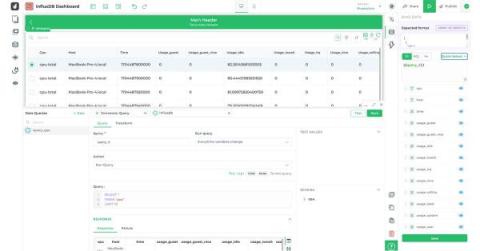
Mage.ai for Tasks with InfluxDB

Any existing InfluxDB user will notice that InfluxDB underwent a transformation with the release of InfluxDB 3.0. InfluxDB v3 provides 45x better write throughput and has 5-25x faster queries compared to previous versions of InfluxDB (see this post for more performance benchmarks). We also deprioritized several features that existed in 2.x to focus on interoperability with existing tools. One of the deprioritized features that existed in InfluxDB v2 is the task engine.