Operations | Monitoring | ITSM | DevOps | Cloud

Ansible Conditionals: Complete Guide to when Statements [2026]

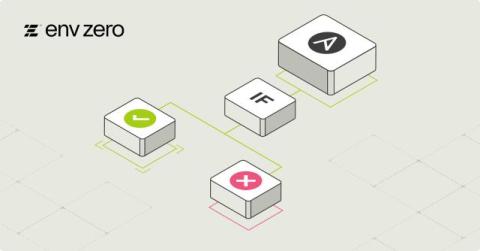
Last updated: April 2026 Playbooks that run every task every time aren't really automation. They're scripts. Real playbooks make decisions: only restart a service when its config changed, only install a package on Debian hosts, only send an alert when a prior task failed. That decision-making comes from Ansible conditionals.

Export env0 Log Data to SIEM and Monitoring Platforms [2026]

Every time Terraform runs a plan, every time an environment is deployed, every time a variable is changed, env zero generates a record. env zero log forwarding sends that record to your existing SIEM or observability platform automatically. For most teams without it configured, that record lives inside env zero and nowhere else.

Using Open Policy Agent (OPA) with Terraform: Tutorial and Examples [2026]

Infrastructure as Code (IaC) solves the provisioning problem. It doesn't solve the governance problem. You can version your Terraform configuration, run it in a pipeline, review every pull request — and still deploy an S3 bucket with public access, a VM with no encryption, or a resource that exceeds your cost budget. Nothing in the standard IaC workflow checks for those things. The reviewer has to know what to look for. And they won't catch it every time. Policy as Code changes that.

Drift Under Control: Keep Your Infrastructure Consistent with Continuous Detection, Intelligent Analysis, and Safe Remediation

In cloud-native environments, infrastructure is in constant flux. Teams move fast, leveraging Infrastructure-as-Code (IaC), ephemeral resources, and automation to iterate quickly. But speed brings a cost: configuration drift. A single manual change in the cloud console, an untracked automation script, or an out-of-band fix can cause your infrastructure to fall out of sync with code. Over time, this erodes trust, breaks pipelines, and introduces silent risk.

Introducing Code Optimizer (beta) - Better and Safer Infrastructure Code, Right Inside Your Git

Infrastructure code rarely stays clean on its own. Teams move fast, and reviews aren’t always deep or consistent. Over time, misconfigurations build up and increase the risk of outages, security gaps, or unpredictable behavior. Static scanning tools can help, but they often require setup, expertise, and don’t always reflect how infrastructure code is actually used across environments. Code Optimizer, now in beta, helps teams catch those issues earlier.

The Right Way to Deliver Infrastructure: Every Deploy Comes with Guardrails

In fast-moving organizations, developers are expected to ship quickly. Infrastructure shouldn’t be a blocker, but it can’t become a liability either. One unchecked terraform apply, a missing tag, or a misconfigured instance can turn into a surprise bill, a failed audit, or even a production outage. The most reliable way to manage infrastructure at speed is to make governance part of the delivery process.

env zero Unveils Enhanced Cloud Governance Platform to Future-Proof Infrastructure Delivery in the AI Era

env zero today announced the next evolution of its Cloud Governance Platform. Designed for the speed, scale, and complexity of the AI era, and marked by a fresh new look and feel, the enhanced env zero platform empowers enterprises to deliver infrastructure 10x faster without losing control of infrastructure governance, security, compliance and cost oversight.

Now Available: Ready-to-Use Policies - Guardrails You Can Activate Instantly

Policies are essential for maintaining secure, cost-effective, and compliant infrastructure. But writing them from scratch takes time, time most teams would rather spend on building and shipping. The intent is there. Platform teams want to enforce standards. But figuring out what to enforce, writing the logic, validating parameters, and wiring it all into workflows adds friction. Even experienced teams find themselves blocked not by policy frameworks, but by the overhead of getting started.