Operations | Monitoring | ITSM | DevOps | Cloud

Announcing our latest attacks to deal with meeting fatigue

Gremlin empowers you to proactively root out failure before it causes downtime. See how you can harness chaos to build resilient systems by requesting a demo of Gremlin. With everyone working remotely, video conference tools like Zoom have been a critical part of maintaining business continuity. It’s truly amazing that we can continue to work and connect with one another, even during a time where getting together in an office hasn’t been possible…

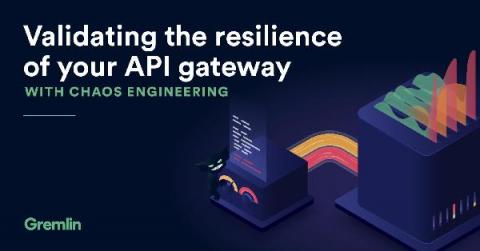
Validating the resilience of your API gateway with Chaos Engineering

Get started with Gremlin's Chaos Engineering tools to safely, securely, and simply inject failure into your systems to find weaknesses before they cause customer-facing issues. API gateways are a critical component of distributed systems and cloud-native deployments. They perform many important functions including request routing, caching, user authentication, rate limiting, and metrics collection. However, this means that any failures in your API gateway can put your entire deployment at risk.

What is fault injection?

When reading about Chaos Engineering, you’ll likely hear the terms “fault injection” or “failure injection.” As the name suggests, fault injection is a technique for deliberately introducing stress or failure into a system in order to see how the system responds. But what exactly does this mean, and how does this relate to Chaos Engineering?

Tyler Wells on building a culture of reliability at Twilio

What does reliability look like at a company that has thousands of employees and provides critical communication services to over 150,000 customers? We talked with Tyler Wells, Senior Director of Engineering at Twilio, to learn how he and his team created a culture of reliability at Twilio. He talked in depth about his experiences developing reliability goals, building reliability practices, and aligning engineering teams on these objectives.

Improve M&A success rates by testing for system reliability

Get started with Gremlin's Chaos Engineering tools to safely, securely, and simply inject failure into your systems to find weaknesses before they cause customer-facing issues. Coming out of recessions, merger and acquisition volume typically picks up as lower interest rates drop the cost of capital and Corporate Development teams begin executing on the strategies they’ve developed during the holding periods. This year has been no exception, with $350 billion spent on tech acquisitions to date.

Podcast: Break Things on Purpose | Ep. 11: Ryan Kitchens, Senior Site Reliability Engineer at Netflix

Get started with Gremlin's Chaos Engineering tools to safely, securely, and simply inject failure into your systems to find weaknesses before they cause customer-facing issues. We’re excited to kick off Season 2 of Break Things on Purpose next month. In anticipation of our next season, here’s a bonus show from our archives! Subscribe to Break Things on Purpose wherever you get your podcasts. Find us on Twitter at @BTOPpod or shoot us a note at podcast@gremlin.com!

How to make an ROI calculator and impress finance (an engineer's guide to ROI)

Get started with Gremlin's Chaos Engineering tools to safely, securely, and simply inject failure into your systems to find weaknesses before they cause customer-facing issues. Think back to the last time you wanted to purchase software for your organization. The software solves real problems and makes your team’s life easier. Then, finance delays or rejects your proposal. What’s going on?

Ensuring a smooth Kubernetes Dockershim Deprecation with Chaos Engineering

Trying to improve the reliability of your Kubernetes deployment? Start with these 5 chaos experiments. Kubernetes 1.20 is scheduled to be released next week, and this version contains a number of amazing enhancements including graceful node shutdown, more visibility into resource requests, and snapshotting volumes. But the change generating the most buzz is the deprecation of Docker as a container runtime.