Operations | Monitoring | ITSM | DevOps | Cloud

5 things you can do to improve your customer support (part 2)

From my previous blog, I’m going to continue the list of five things you can do to improve your technical service delivery to your customers (if you didn’t read the last post, you can catch up on what you missed here (link)). In the following three points, I focus on the role automation can play.
Introduction to Custom Metrics in Python with the Logz.io RemoteWrite SDK

We just announced the creation of a new RemoteWrite SDK to support custom metrics from applications using several different languages. This tutorial will give a quick rundown of how to use the Python SDK. Using these integrations, Prometheus users can send metrics directly to Logz.io using the RemoteWrite protocol without sending them to Prometheus first. Each SDK, while for a separate language, is each capable of working with frameworks like Thanos, Cortex, and of course M3DB.

GitLab GUI

Has GitKraken made my dev life easy? It’s been 6 months since I started at Pipefy as a Young Gun Tech. During these months, I have learned a lot and used various tools to streamline my work. For this post, I will talk about how I use the GitKraken Git GUI with GitLab, running on Ubuntu, because both tools have an awesome integration. So you can speed up your workflow just like me.

Contextual Information: The Missing Piece in The AIOps Puzzle and How to Fix It

AIOps as a function is steadily gaining popularity, even climbing the Gartner Hype Cycle. Today’s observability tools go beyond merely monitoring to perform proactive remediation of events and incidents. However, what many of them lack is context. For instance, consider a regular AIOps solution that identifies an anomaly in system behavior. It will raise an alarm and a remediation workflow will do its job.

Citrix Tips for Troubleshooting

I recently saw a user asking on EUC Slack “is there a Domain controller response time in ?”. Unfortunately for him, his choice of monitoring product doesn’t include such metrics. However, it did make me wonder if Citrix admins are aware of the importance of getting metrics about Domain Controllers, simply because many EUC monitoring tools fail to monitor them.

Monitoring and Alerting 101: Monitoring Best Practices

An effective monitoring system is paramount to smooth business operations. As the need for a fast, responsive software experience gains momentum, monitoring becomes an indispensable driving force. Monitoring systems enable IT teams to proactively observe the health and responsiveness of critical environments and applications. Without monitoring, organizations must depend on customers or internal departments to receive notice of system issues.

Deep Learning Toolkit 3.6 - Automated Machine Learning, Random Cut Forests, Time Series Decomposition, and Sentiment Analysis

We’re excited to share that the Deep Learning Toolkit App for Splunk (DLTK) is now available in version 3.6 for Splunk Enterprise and Splunk Cloud. The latest release includes: Let’s get started with the new operational overview dashboard which was built using Splunk’s brand new dashboard studio functionality which I highly recommend checking out. You can learn more about it in this recent tech talk which you can watch on demand.

Optimize Value of Cloudtrail Logs With Infrequent Tier

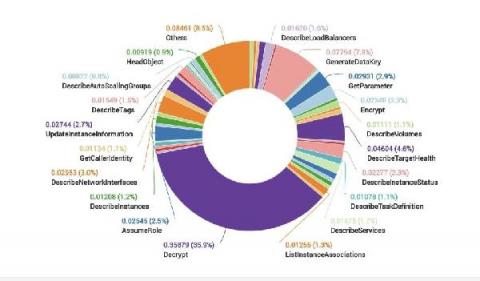
A common scenario for log analytics is that many log events are high value for real time analytics, but there are also events that are low value for analytics, but account for a very large percentage of overall log volume. Often these same low value logs are used only for ad-hoc investigations from time to time or need to be retained for audit purposes.

Log Analytics and SIEM for Enterprise Security Operations and Threat Hunting

Today’s enterprise networks are heterogeneous, have multiple entry points, integrate with cloud-based applications, offer data center delivered services, include applications that run at the edge of the network, and generate massive amounts of transactional data. In effect, enterprise networks have become larger, more complex, and more difficult to secure and manage.