Operations | Monitoring | ITSM | DevOps | Cloud

The latest News and Information on Containers, Kubernetes, Docker and related technologies.

Key Kubernetes Concepts

Cloud computing, containerization, and container orchestration are the most important trends in DevOps. Whether you’re a data scientist, software developer, or product manager, it’s good to know Docker and Kubernetes basics. Both technologies help you collaborate with others, deploy your projects, and increase your value to employers. In this article, we’ll cover essential Kubernetes concepts. There are a lot of Kubernetes terms, which can make it intimidating.

Kubernetes vs Docker: How to Choose

If you’re thinking about using containers to manage an application, there are a lot of options for technologies to use. It can be difficult to even know where to begin to make a decision. One common question is whether someone should use Docker vs Kubernetes for managing their application containers. This is a misleading question. In truth, Docker and Kubernetes aren’t competing technologies. There’s no need for them to face off.

Introduction to Rancher

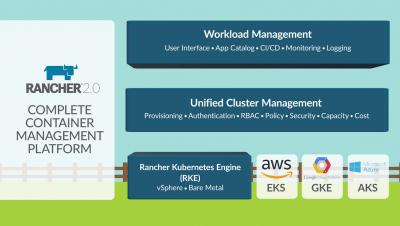
This video provides a short introduction to Rancher, an open-source container management platform that makes it easy for organizations to adopt Kubernetes. With Rancher, IT organizations can deploy, manage and secure any Kubernetes deployment regardless of where it is running. Best of all, Rancher is intuitive to use, and built to support DevOps teams, as they use containers to automate operations and move to continuous delivery.

Close the Visibility Gap for Modern Cloud Native Services with OpsRamp's Kubernetes Monitoring

With the adoption of agile microservices, enterprise IT teams have rapidly transitioned from managing pets (physical and virtual servers) to cattle (public cloud services) to now chickens (containerized infrastructure). Container platforms like Docker and container orchestration engines like Kubernetes are helping IT operators drive greater agility, portability, and flexibility for scaling, managing, and optimizing microservices architectures.

Kubernetes Co-Creator Brendan Burns: Lessons Learned Monitoring Cloud Native Systems

“I’ve run a lot of systems in production, and a lot of what has gone into the Kubernetes project came out of scars that came from running web search in production and running API services,” Brendan Burns, the co-creator of Kubernetes, said at the top of his keynote at GrafanaCon L.A.

Infrastructure Ops in 2019 - An Operating Model For Hybrid Cloud Transformation ..(2/2)

The early adopters have begun to find a great degree of success and it is now time for the more mainstream enterprise to get off the proverbial wall and begin exploring containers and other areas of the cloud-native landscape. However, there is a need to mitigate or manage the risk of adopting new technology as it does introduce a dimension of change that accompanies any transformation.

Ask Us Anything: Should I Run Prometheus in a Container?

At Grafana Labs, we field questions about best practices from customers all the time. One company recently asked whether it should run a containerized Prometheus environment rather than a VM-based one. We thought we’d share our answer here too. So: Should you run Prometheus in a container?

Learn from the Kubernetes Dungeon Masters: Managing Multiple Kubernetes Clusters

As a cloud engineering team supporting multiple development teams, we needed a Kubernetes solution to allow us to manage multiple Kubernetes clusters. Additionally, we wanted to offload the administrative overhead of managing our Kubernetes clusters to reduce our internal administrative workload. We will talk through how we've leveraged Rancher and EKS to solve our needs.