If you’ve ever run a pipeline, you’ve certainly encountered the following situation: The pipeline fails halfway through, and the cleanup script you needed at the end to tear down test infrastructure or archive the logs never gets to run. Until now, there was no built-in way in Bitbucket Pipelines to guarantee that a step always executes at the end of your pipeline, regardless of what happened before it. Today, we’re fixing that.
100M+ weekly downloads. One compromised maintainer account. A remote access trojan in two active release branches. This is a 30-minute breakdown of the Axios npm supply chain attack – how it happened, why it was hard to detect, and what any engineering team can do right now to reduce exposure. Nigel Douglas, Head of Developer Relations at Cloudsmith, is joined by Jenn Gile, co-founder of Open Source Malware, a community-driven threat intelligence platform focused on malicious open source packages.
Modern CI/CD platforms allow engineering teams to ship software faster than ever before. Pipelines complete in minutes. Deployments that once required carefully coordinated release windows now happen dozens of times per day. Platform engineering teams have succeeded in giving developers unprecedented autonomy, enabling them to build, test, and deploy their services with remarkable speed. Yet in highly regulated environments-especially in the financial services sector-speed alone cannot be the objective.
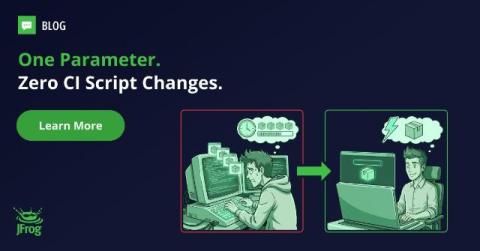
In a large-scale DevOps environment, small discrepancies lead to massive headaches. You’ve likely experienced it: a script runs perfectly on a developer’s laptop but fails in the production pipeline. You spend hours hunting for the cause, only to discover a mismatch in CLI versions. At JFrog, we know the JFrog CLI is vital to your automation, but managing it manually across thousands of users and pipelines is a hurdle that slows you down.
This guide walks through practical ways to embed cost awareness directly into CI/CD workflows so development teams can make cost-informed decisions before deployment. You’ll learn how to implement automated cost feedback loops, introduce pipeline budget guardrails, and use Harness Cloud Cost Management to align DevOps velocity with FinOps accountability.
What if you didn't have to stare at logs while your AI agent worked? In this Loop Lab experiment, Ryan Hamilton built Claude Livecaster, a tool that gives Claude a live voice to narrate long-running agentic processes like a sports commentator. The demo: six AI models (GPT, Gemini, and Claude variants) race through a CI/CD benchmark, and Claude calls the whole thing play-by-play. Rate limit hits, comeback stories, photo finishes, all of it, out loud.