Operations | Monitoring | ITSM | DevOps | Cloud

SentinelOne outage: July 10 incident went unacknowledged

July 10, 2025, SentinelOne, a leading cybersecurity platform, experienced a widespread outage that disrupted access to its admin consoles across multiple regions. The incident impacted users in Europe, North America, and beyond, preventing security teams from accessing critical management features. Despite the scale of the disruption, no official public acknowledgment or status update was issued by SentinelOne.
Google Workspace outage: July 18, 2025

Google Workspace went down again in July 2025—but if you had asked AI tools like Google’s own AI Overviews, ChatGPT, or Claude, you would have been told everything was fine. Every one of these tools incorrectly claimed that services were up and running while users across the globe were unable to connect, send messages, or even log in.

Incident IQ integration is here!

We’re excited to launch one of our most highly requested integrations: StatusGator now connects directly with Incident IQ. This powerful new integration bridges the gap between real-time service monitoring and your internal support workflow. Now, whenever someone reports an outage on your public StatusGator page, a ticket is automatically created in Incident IQ—ensuring your IT team can respond quickly and efficiently.

StatusGator now supports Microsoft Teams Workflows

We’ve updated our Microsoft Teams integration to support workflows — Microsoft’s new and recommended approach to incoming webhooks. As Microsoft evolves its platform, it is phasing out the legacy Connectors feature in favor of Workflows. At StatusGator, we’re committed to keeping up with these changes so your integrations remain reliable and future-proof.

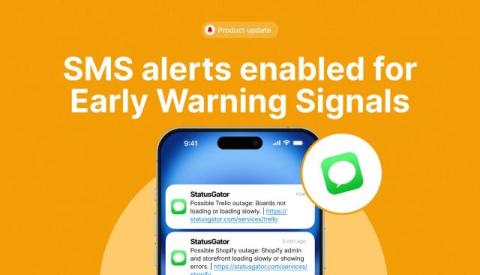
SMS alerts enabled for Early Warning Signals

When service disruptions happen, every second counts. That’s why we’re excited to announce a major update to StatusGator: Early Warning Signals are now available via SMS. Early Warning Signals have already been helping teams stay ahead of outages via email and Slack alerts — and now, with SMS support, you can get real-time notifications directly on your phone, even before incidents are publicly acknowledged.

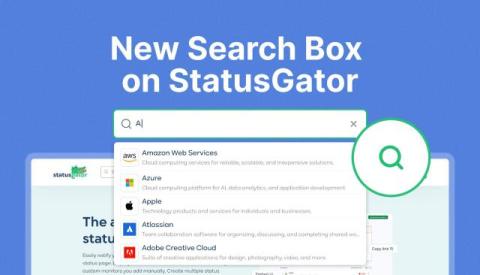
Introducing the new search box on StatusGator

Recently we hit an exciting milestone at StatusGator: 6,000+ services now tracked! To mark the occasion, we’ve made it even easier to find the apps you care about and report outages: A brand-new, lightning-fast search box is now live on the StatusGator website. It’s built right into the top navigation, accessible from any page — and works beautifully on mobile, too.

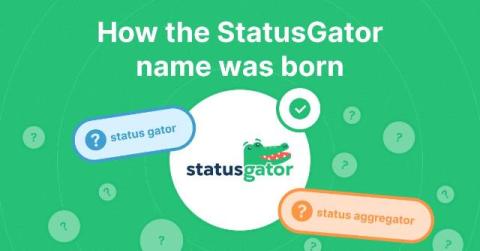
How the StatusGator name was born

More than 10 years ago, StatusGator pioneered the concept of a status page aggregator. How was the StatusGator name created? In a group chat, of course! The incubator of crazy ideas and nerdy discussions, our friendly group chat was a place where I originally discussed the product idea, validated its use cases, and solicited feedback on name concepts. I recently unearthed screenshots from the original group chat among my friends.

How OutboundSync Improved Transparency with StatusGator

OutboundSync, a powerful platform that helps marketers sync outbound sales data to CRMs like HubSpot and Salesforce, knows that transparency is key component of delivering a service that hundreds of teams rely on. And as an integration platform, OutboundSync is deeply reliant on other providers, making vendor reliability a key part of their own transparency.

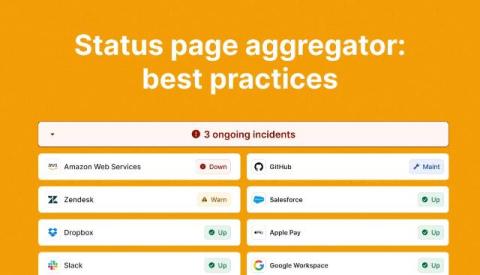
Status Page Aggregator: Best Practices and Use Cases

A status page aggregator is a powerful tool that brings together the status updates of multiple cloud services, SaaS providers, and third-party services into a single, unified view. Whether you’re tracking the health of critical dependencies like AWS, Cloudflare, or niche SaaS tools your teams rely on, a status page aggregator simplifies monitoring and helps you stay ahead of outages.

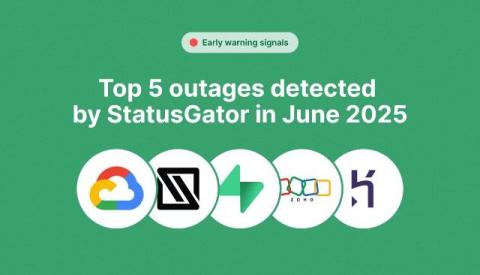
Top 5 outages detected by StatusGator in June 2025

June 2025 saw several high-impact outages across popular cloud services — from infrastructure giants like Google Cloud to developer platforms like Supabase and Heroku. For IT teams, MSPs, and developers, even short service disruptions can have ripple effects across workflows and customer experience. At StatusGator, we continuously monitor thousands of services to detect issues in real time — often before they’re publicly acknowledged.

StatusGator now monitors 6,000+ services

Today, StatusGator monitors over 6,000 cloud services and tools — a massive expansion that reflects how far we’ve come, and how deeply embedded we are in the fabric of modern infrastructure. In today’s world, your product’s reliability depends on a web of vendors — authentication providers, analytics platforms, CDNs, payment processors, communication tools, and more. At 6,000+ services, StatusGator now reflects your entire digital supply chain.