Operations | Monitoring | ITSM | DevOps | Cloud

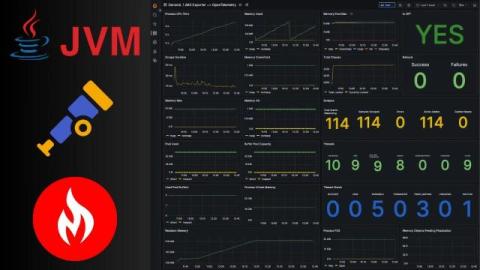
Easiest Way to Monitor Your Java Application Using OpenTelemetry

When you're running a Java application, the JVM is doing a ton of work behind the scenes but unless you're actively collecting its internal metrics, you're essentially flying blind. Fortunately, the JMX Prometheus Receiver paired with the JMX Java Exporter Agent offers one of the simplest and most effective ways to expose JVM performance data.
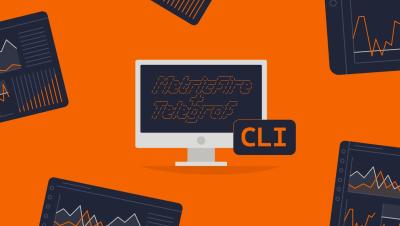
CLI Tool for Monitoring for Key System Metrics - Here's How It Works!

At MetricFire, we’re always looking for ways to make monitoring more efficient and accessible. That’s why we’re excited to introduce the MetricFire HG-CLI, our new command-line tool designed to make setting up server monitoring faster and easier than ever. Just like our Hosted Graphite service, the HG-CLI is built on open-source flexibility while focusing on simplicity, eliminating the hassle of manual configurations and streamlining the onboarding process for teams of all sizes.

How to Monitor JVM with OpenTelemetry and MetricFire

When you're running a Java application, the JVM is doing a ton of work behind the scenes but unless you're monitoring those internals, it's hard to know how your app is really performing. JVM metrics give you a window into the heart of the runtime: how much memory you're using, how often garbage collection is kicking in, how many threads are active, and where potential bottlenecks might be hiding.

Proactive Monitoring: How Engineers Use CloudWatch to Save Customers Money

At MetricFire, we love talking with engineers about their tech stacks, SRE challenges, and how they approach infrastructure monitoring. Recently, we had a great chat with Yoimer Roman from a Latin American cloud consulting company, that helps clients make smarter business decisions by leveraging AWS CloudWatch monitoring. Yoimer wears many hats: mentoring his team on all things AWS, designing custom cloud environments, and bridging the gap between technical challenges and non-technical stakeholders.

Proactive Monitoring: How DinoCloud Uses CloudWatch to Save Clients Money

At MetricFire, we love talking with engineers about their tech stacks, SRE challenges, and how they approach infrastructure monitoring. Recently, we had a great chat with Yoimer Roman from DinoCloud, a Latin American company that helps clients make smarter business decisions by leveraging AWS CloudWatch monitoring. Yoimer wears many hats: mentoring his team on all things AWS, designing custom cloud environments, and bridging the gap between technical challenges and non-technical stakeholders.

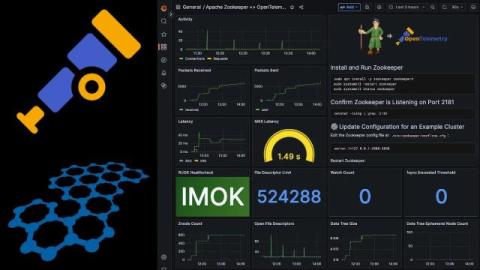
How to Monitor Apache Zookeeper Using the OpenTelemetry Collector

Apache Zookeeper is a distributed coordination tool that helps keep large-scale systems in sync. It’s the backbone for managing leader elections, service discovery, and metadata storage in projects like Kafka, Hadoop, and Elasticsearch. Think of it as a highly available traffic controller for distributed apps, ensuring everything runs smoothly.

MetricFire's CLI Tool: Easy Monitoring & Automation!

Looking for a powerful way to send and visualise metrics from the command line? Meet HG CLI, MetricFire’s official command-line tool! In this video, we’ll show you how to install, configure, and use HG CLI to manage your Hosted Graphite metrics and create dashboards, all without having to configure an agent yourself. Whether you're a DevOps engineer, SRE, or developer, this tool will streamline your monitoring workflows! Don't forget to like, subscribe, and hit the bell for more MetricFire insights!

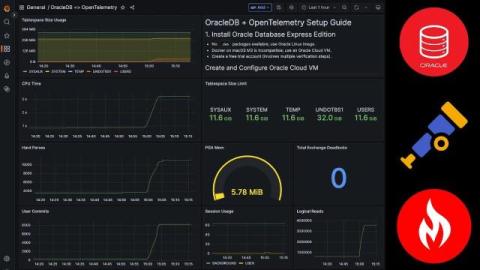
Monitor OracleDB EX with OpenTelemetry and MetricFire

OracleDB remains a top choice as a relational database management system (RDBMS), despite its strict licensing requirements. It excels at handling complex SQL queries, massive datasets, and transactional workloads, making it ideal for large Enterprise technology stacks. Its many benefits include robust indexing, partitioning, and in-memory processing to optimize query performance at scale.

Complexity Can Be Chaos

Monitoring is integral to understanding what is happening in your infrastructure, applications, or other observability projects. However, a common predicament developers can land themselves in is their observability stack becoming unwieldy and unmanageable due to a lack of streamlining and/or over-complicated code. To simplify your workload, it is important to streamline your monitoring.