Operations | Monitoring | ITSM | DevOps | Cloud

Your infrastructure Is more distributed than you think.

An eCommerce platform, a banking app, even a simple user portal depends on a web of APIs, cloud tools, hosting services, and edge networks. Each one introduces another potential point of failure. And when those dependencies break? User experience suffers. Brand trust takes a hit. Millions in revenue are at risk. That’s why leading digital businesses, especially in eCommerce and banking, are expanding visibility beyond the application stack.

Introducing Catchpoint Session Replay: See Digital Experience Through Your Users' Eyes

When was the last time you really saw what your customers experience on your site? We're excited to introduce Session Replay, a new capability in our Internet Performance Monitoring (IPM) platform that lets you step directly into the user's journey. Session Replay is so much more than a platform upgrade. It’s an opportunity to understand, fix, and even prevent the issues that lead to churn, missed conversions, and frustrated users, all from their point of view.

You don't need a real outage to find your weak spots.

Modern digital services rely on complex systems, and chaos can strike at any layer. But the most effective teams don’t wait for failure to learn. They simulate it. By introducing controlled performance degradations, you can stress your systems, test your dependencies, and uncover hidden risks without touching production. In our latest webinar, Catchpoint experts walk through how teams are building resilience through proactive, safe failure testing, and why it’s become a cornerstone of digital reliability.

How AI Turns Monitoring From "What Now?" Into "What's Next?"

It's 3 AM. Your phone starts buzzing with alerts, and you stumble to your laptop only to be greeted by a dashboard that looks like the control panel of a nuclear reactor in meltdown: Red lights everywhere. Numbers that should be green are decidedly not green. And your brain, still foggy from sleep, is asking the most fundamental question in all of IT operations: "Okay, yes, there's clearly a problem... but, now what?".

Making the invisible visible: Are your cloud firewalls and DDoS protection really working?

Every business builds strong defences to keep attackers out. Firewalls and DDoS protection serve that purpose, standing guard over company apps and websites, like knights at the castle gate keeping out trolls (not just the ones on X). But here’s the problem: those defences only work if users actually walk through the front gate. Sometimes, people find hidden paths or side doors around your walls, so the guards never see them enter.

You can't understand digital experience without monitoring from where your users actually are!

If you’re monitoring your applications, you’re missing what your customers are actually seeing. Performance issues don’t happen in a vacuum. They happen at the edges, on mobile devices, over congested networks, in last-mile dead zones. Monitoring only works when it’s aligned with reality. And reality starts at the user.

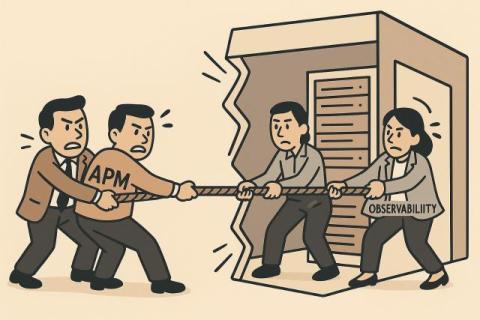
APM vs Observability: Observing beyond APM

In my previous post I made a bold, sweeping statement that APM is not - in the most specific sense - a subset of observability. Still standing by it I stand by that because words matter and - like many "monitoring engineers" (IT folks who make monitoring and observability their specialty) - I, too, bear scars from the flame-wars on Twitter back in the 2020's where we fought internecine battles over the proper definition of (and number of pillars in) “observability”.

Behind the Dashboard: How to monitor your LLM integrations

Behind the Dashboard is an ongoing series where we look under the hood of a specific Catchpoint feature. Each episode breaks down the technology itself, what’s challenging about using it for monitoring, and how we removed friction and toil to make it a valuable part of the Catchpoint platform. In this episode Leon, Mursi, and Rahul take a look at Catchpoint’s LLM monitoring capabilities, including ensuring your integrated LLMs are up and performing optimally; as well as knowing if you’re using the most effective (accurate) and economical (cheapest per query) option in your suite.

What is the Internet Stack... and why should you care?

We talk a lot about the application stack, the code and services you build. However, just as critical is the infrastructure that delivers that code to your users. That’s the Internet Stack: a complex chain of technologies and services, from DNS and BGP to CDNs and ISPs, that every digital experience depends on. It’s separate from your application stack. It’s different for every user, in every geography. And most importantly, it still impacts your users—even if you don’t directly own it.

Why it's time to move beyond APM: Monitoring from the user's perspective

For years, organizations have relied on Application Performance Monitoring (APM) as the backbone of their observability strategy. The idea was simple: collect as many logs, metrics, and traces as possible, then sift through the data to uncover insights. But as applications have shifted to the cloud and become increasingly API-driven, that model has broken down.

When metrics mislead: Inside the 2025 Retail Web Performance Benchmark

Over the past few years at Catchpoint, we’ve benchmarked the digital performance of banks, airlines, hotels, travel aggregators, GenAI platforms, athletic footwear brands, and even ad hoc events like the Super Bowl, Olympics, and Election Day. Each time, our approach focused on the technical metrics performance professionals live and breathe: DNS resolution times, Time to First Byte, page load speeds, and six other core measurements that we'd dissect, analyze, and use to rank companies.

Dashboards say green. Users say It's broken.

Your infrastructure metrics are all green. The code is clean. But support tickets are rolling in. What’s going on? The problem: traditional monitoring tools stop at your infrastructure. They don’t tell you if the user can actually complete their task. As @gerardo explains, the objective of a car is not to have the correct tire pressure or gas levels... it’s to get from point A to point B. User experience works the same way. What’s the point of having green metrics when your users are not experiencing the same thing?