Operations | Monitoring | ITSM | DevOps | Cloud

Building Oh Dear's new design: Implementing the design

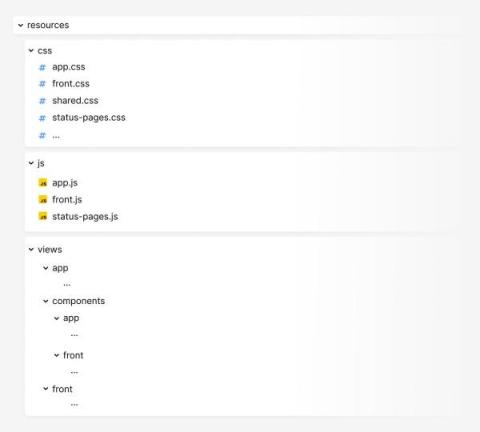
In the previous blog post I gave an introduction about the project setup for the redesign of the new Oh Dear frontend. In this blog post I would like to show you how we are implementing the redesign of the Oh Dear frontend. Feel free to provide feedback on the design choices and statements made in this and future blog posts. We’d love to hear what you think of it.

Building Oh Dear's new design: Project setup

We are currently rebuilding the Oh Dear website and application frontend. The goal is to go next level in aesthetics and user experience. The Oh Dear redesign will be launched later this year. In this post, you'll read more about the project setup and tools used. This is the first blog post of a series that will share progress and the knowledge gained along the way.

You can now monitor the health of your application and server

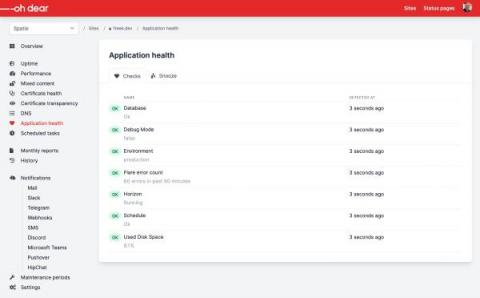
We're proud to announce that we have added a major new feature to Oh Dear: Application Health monitoring. Using Oh Dear, you can now monitor various aspects of your application and server. This way, you could get alerts when: You can monitor any aspect of your app that you want.

You can now customise how we handle redirects

A good deal of sites redirect visitors to a specific more relevant page. Think, for instance, of a site that redirects you from / to a page in a relevant language, for instance /en or /nl. A single redirect is often not a problem, but having multiple redirects in a chain can hinder your site's user experience. Modern browsers also limit the number of redirects.

Let's Encrypt DST Root CA X3 certificate set to expire

If you've been using Let's Encrypt for a while, you may have noticed that their certificates are signed by a root certificate titled DST Root CA X3. That root certificate is set to expire in a few hours. Any certificates still signed by that root will no longer be valid. But luckily, that shouldn't form a problem for most Let's Encrypt users. For a while now, new SSL issuances by Let's Encrypt have issued certificates against DST Root CA X3 (the one that is about to expire) and ISRG Root X1.

Monitoring password protected sites using Oh Dear

Keeping an eye on your site and sending you a notification when it goes down is one of the core features of Oh Dear. Under the hood, we'll send a request to your site and take a look if the response code is in the 200-299 range, which is the default response code range to indicate that everything is ok. Some of our users are monitoring password protected sites. In such cases, the web server might reply with status code 401 (unauthorised).