[Webinar] Five cloud cost management strategies that work
Your cloud cost management strategy should do more than just eliminating inefficient spending. In this webinar we tell you how you can benefit with a cloud cost management tool.


All storage devices, whether on-premises or in the cloud, are used to store or maintain data in a server. To organize files based on usage and perform read/write operations, the disk is divided into separate portions called partitions. A partition can contain the entire disk space or some of it. Disk usage gives the amount of space used by the storage device to read/write an operation.
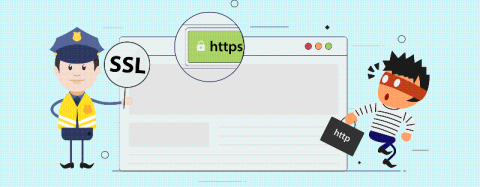
HTTP, which stands for Hypertext Transfer Protocol, is a communication protocol used by your browser to connect to the web server of the site you're looking for. When HTTP data transfer between the browser and the web server is shared via unencrypted hypertext, anybody connected to your network can intercept the data you're transferring. To combat this, it's best to switch to HTTPS, the more secure extension of HTTP. You can't verify data integrity with HTTP
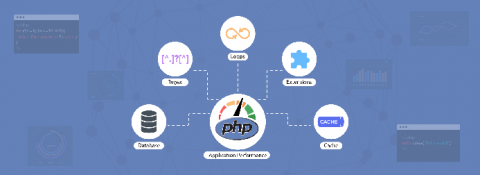
With its open-source nature, PHP has evolved into one of the most popular languages among web developers. According to w3techs, 78 percent of websites across the globe use PHP as their server-side language. Even amongst the top 1,000 ranked sites, PHP is dominant, being used by more than 50 percent of them.