Operations | Monitoring | ITSM | DevOps | Cloud

The Place Where Modern Operations & Technology Come Together

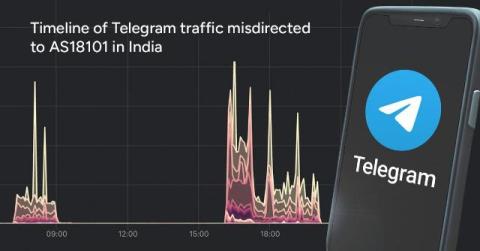
When Local Blocks Go Global: The India-Telegram BGP Incident
Yesterday’s leak of a BGP hijack intended to block Telegram in India is the latest routing mishap best described as intentional, but also accidental — a pattern dating back to Pakistan Telecom’s infamous hijack of YouTube in 2008, in which a domestic block escaped containment and disrupted the service worldwide.

How Kentik Catches Bad AI Answers
Hear how Kentik uses AI to validate AI and catch 90%+ of bad networking answers before users ever see them.
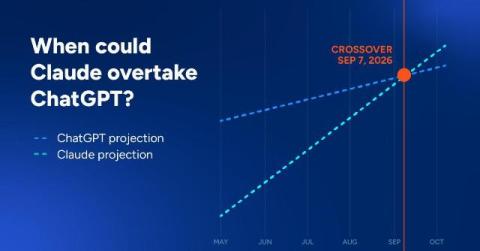
Shifting Streams and AI Surges: What Our Data Reveals About the OTT Landscape
OTT data from early 2026 shows streaming hierarchies holding steady while AI platforms reshuffled rapidly. Claude has substantially increased traffic since January, overtaking Gemini, and is on pace to challenge ChatGPT by fall. Doug Madory digs into the data in this new analysis.

The "Single Pane of Glass" Is Dead - What Network Teams Actually Need Is Intelligence
The infrastructure industry spent two decades chasing a single pane of glass. The future looks different: domain-expert AI platforms that reason deeply within their own data, connected through tool chaining when problems cross boundaries.
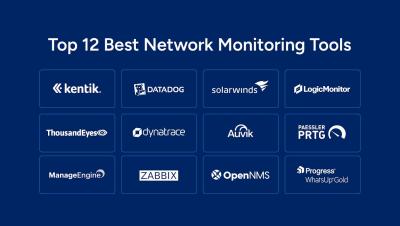
Best Network Monitoring Tools for 2026 (Top 12 Compared)
In 2026, the best network monitoring tools are Kentik, Datadog, SolarWinds NPM, LogicMonitor, Cisco ThousandEyes, Dynatrace, Auvik, Paessler PRTG, ManageEngine OpManager, Zabbix, OpenNMS, and WhatsUp Gold — spanning four overlapping categories: network intelligence platforms, full-stack observability, digital experience monitoring (DEM), and traditional network performance monitoring (NPM), including open-source tools.

Your AI Strategy Has a Blind Spot: The Network
Enterprises are pouring billions into GPUs and AI compute, but most are overlooking the infrastructure that connects it all. Justin Ryburn, field CTO at Kentik, makes the case that the network is the most underestimated variable in whether AI initiatives succeed or fail.
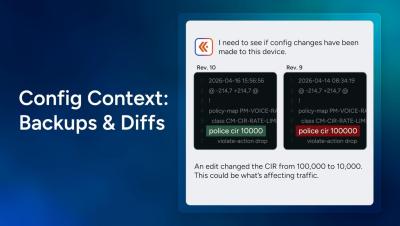
AI Diagnostics in Kentik NMS (Network Monitoring System)
Network problems are easy to spot. Proving root cause is the hard part — and it’s where most of MTTR gets burned. Kentik’s new AI diagnostics in the Network Monitoring System (NMS) close the gap between detection and diagnosis by bringing three capabilities directly into Kentik AI Advisor.
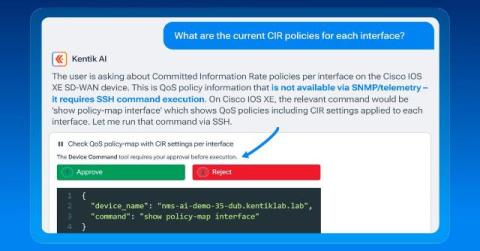
Accelerating MTTR with Faster Root Cause Diagnosis: AI Advisor Now Supports On-Demand Connectivity, Config Context, and Device Diagnostics
Knowing something is broken is easy. Figuring out why is hard. Introducing three new, native AI diagnostic capabilities in the Kentik Network Intelligence Platform to accelerate root cause analysis and keep your network running better.
That's Not a Job for an LLM: The Right Way to Apply AI to Network Operations
LLMs have sucked all the oxygen out of the AI conversation — but AI is much more than just LLMs, and network engineers have been using AI techniques (machine learning, statistics, fuzzy logic, expert systems, neural networks) for decades. So what should LLMs be doing in network operations, what shouldn't they be doing, and how do agentic AI architectures fit in?