Operations | Monitoring | ITSM | DevOps | Cloud

Observability-OSS vs Paid vs Managed OSS with Hosted Graphite

Observability is a critical aspect of modern software development and infrastructure management. It involves the ability to gain insights into the internal workings of your systems, applications, and services through monitoring and collecting relevant data. With the increasing complexity of technology stacks and the need for real-time visibility, observability has become a fundamental requirement for businesses across various industries.

Monitoring Machine Learning

I used to think my job as a developer was done once I trained and deployed the machine learning model. Little did I know that deployment is only the first step! Making sure my tech baby is doing fine in the real world is equally important. Fortunately, this can be done with machine learning monitoring. In this article, we’ll discuss what can go wrong with our machine-learning model after deployment and how to keep it in check.

Heroku Monitoring: What To Look For In Your Addons

Heroku is a cloud-based platform that supports multiple programming languages. It functions as a Platform as a Service (PaaS), allowing developers to effortlessly create, deploy, and administer cloud-based applications. With its compatibility with languages like Java, Node.js, Scala, Clojure, Python, PHP, and Go, Heroku has become the preferred choice for developers who desire powerful and adaptable cloud capabilities.

What is Graphite Monitoring?

Today we are going to touch up on the topic of why Graphite monitoring is essential. In today’s current climate of extreme competition, service reliability is crucial to the success of a business. Any downtime or degraded user experience is simply not an option as dissatisfied customers will jump ship in an instant. Operations teams must be able to monitor their systems organically, paying particular attention to Service Level Indicators (SLIs) pertaining to the availability of the system.

Graphite vs Prometheus

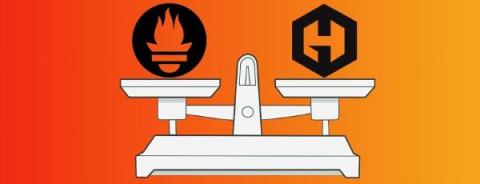
Graphite and Prometheus are both great tools for monitoring networks, servers, other infrastructure, and applications. Both Graphite and Prometheus are what we call time-series monitoring systems, meaning they both focus on monitoring metrics that record data points over time. At MetricFire we offer a hosted version of Graphite, so our users can try it out on our free trial and see which works better in their case.

Monitoring Kubernetes tutorial: Using Grafana and Prometheus

Behind the trends of cloud-native architectures and microservices lies a technical complexity, a paradigm shift, and a rugged learning curve. This complexity manifests itself in the design, deployment, and security, as well as everything that concerns the monitoring and observability of applications running in distributed systems like Kubernetes. Fortunately, there are tools to help developers overcome these obstacles.

Cloud monitoring vs. On-premises - Prometheus and Grafana

Prometheus and Grafana are the two most groundbreaking open-source monitoring and analysis tools in the past decade. Ever since developers started combining these two, there's been nothing else that they've needed. There are many different ways a Prometheus and Grafana stack can be set up.

Heroku Monitoring: Visualization and Understanding Data

Data visualization is a way to make sense of the vast amount of information generated in the digital world. By converting raw data into a more understandable format, such as charts, graphs, and maps, it enables humans to see patterns, trends, and insights more quickly and easily. This helps in better decision making, strategic planning, and problem-solving. Visualization and understanding data are critical in platform-as-a-service (PaaS) offerings like Heroku.

Monitoring virtual machines with Prometheus and Graphite

Virtual machines give you a flexible and convenient environment where people can access different operating systems, networks, and storage while still using the same computer. This prevents them from purchasing extra machines, switching to other devices, and maintaining them. This helps companies to save costs and increase task efficiency. Although using VMs for everyday tasks may be enjoyable, ensuring consistent performance and performing maintenance can be daunting.