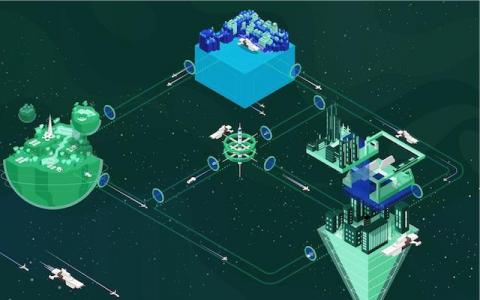
Rancher Online Meetup - June 2021 - Provisioning Bare Metal Nodes With Harvester and Tinkerbell
Learn how Harvester, SUSE's new HCI platform, can be deployed across bare metal notes with the Tinkerbell provisioning engine.


We are happy to share the v0.3.0 release of Rancher Desktop. This release brings more stability, some new features, and a fresh look to the UI. This screenshot shows the preferences screen while in dark mode on Mac. In the lower left corner the status when performing an action is now displayed. This status will tell you when Rancher Desktop needs to download something, such as a version of Kubernetes you have now used before, or when another step is happening.
For those of us who need to get applications running in Kubernetes, having Kubernetes on the desktop is incredibly useful. When we want to focus on our applications, it’s especially useful when Kubernetes is easy to use. This is where Rancher Desktop comes in. Rancher Desktop provides easy-to-use Kubernetes and container management (something we’ll look at in a moment) for Mac and Windows. Having Kubernetes isn’t enough.
It has been five months since we announced project Harvester, open source hyperconverged infrastructure (HCI) software built using Kubernetes. Since then, we’ve received a lot of feedback from the early adopters. This feedback has encouraged us and helped in shaping Harvester’s roadmap. Today, I am excited to announce the Harvester v0.2.0 release, along with the Beta availability of the project!
Containers and Kubernetes have changed the way we operate applications. This has been a boon for Site Reliability Engineers (SREs) and DevOps professionals who handle infrastructure management. Yet, it has come at a cost to many who develop and operate applications. Their experience has become more complicated and cumbersome.
Whether you’re new to the cloud native space or an accomplished practitioner, you’re probably aware that there are many Kubernetes distributions to choose from. Maybe you’ve heard about the challenges of getting up and running with Kubernetes. Guess what? It doesn’t have to be hard. This blog provides an introduction to K3s, a lightweight CNCF-certified Kubernetes distribution. We’ll look at what makes K3s different from other Kubernetes distributions.
Security has always been a wide and complex topic. A recent survey from StackRox about the state of containers and Kubernetes security provides some interesting data on these topics. In this blog post, I’ll dive into some of the findings in that survey and introduce you to Kubewarden, an open source policy engine. A staggering 66 percent of the survey participants do not feel confident enough in the security measures they have in place.
You probably can’t believe I’m asking that question. It’s like showing up to a party and immediately asking about the afterparty. Is it really time to look for the exit? No…but yes. We used to deploy apps on systems in data centers. Then we moved the systems to the cloud. Then we moved the apps to containers. Then we wrapped it all in Kubernetes for orchestration, and here we are. Each advance in technology unlocks doors we couldn’t reach before.