
Why Real-Time Network Monitoring Is Critical for Modern Business Resilience
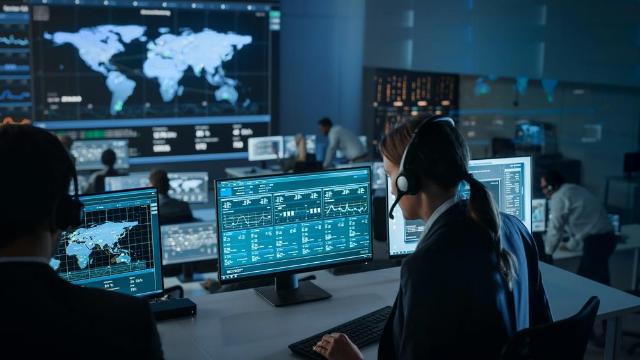
Image Source: depositphotos.com
Business operations are more interconnected and technology-driven than ever before. Networks form the backbone of communication, data exchange, and service delivery. A single failure can disrupt productivity, weaken customer trust, and even result in financial losses.
Real-time network monitoring has emerged as a key strategy for businesses that want to maintain resilience. Rather than reacting to problems after they occur, organizations can anticipate disruptions, identify threats, and act before they escalate. This proactive approach supports not only technical stability but also overall business continuity.
The Shift from Reactive to Proactive Monitoring
Traditional network monitoring relied heavily on reactive measures. IT teams would often discover issues only after users reported slow performance, downtime, or errors. By then, the damage was already done—lost sales opportunities, decreased employee productivity, or frustrated customers.
Real-time monitoring transforms this approach by continuously analyzing performance metrics, traffic flows, and security signals. This constant vigilance ensures that even minor anomalies are detected and addressed before they cause significant disruption.
The shift is about staying ahead of risks rather than scrambling to repair damage after the fact. In the context of modern business, where every minute of downtime can impact reputation, this shift is vital.
Building Resilience Through Data Visibility
Resilience is not only about bouncing back quickly but also about minimizing the impact of potential issues. Real-time network monitoring offers deep visibility into data traffic, bandwidth usage, and device performance.
This visibility helps IT teams answer crucial questions:
- Which parts of the network are under the most strain?
- Are there suspicious traffic patterns that could signal a cyberattack?
- How are critical applications performing under varying loads?
By answering these questions continuously, businesses maintain the agility to adapt to changing conditions. Whether it is scaling resources during high demand or defending against external threats, visibility enables informed decisions that safeguard operations.
Integration Across Business Tools
Modern companies depend on multiple platforms that extend beyond IT infrastructure. Collaboration tools, cloud applications, and customer-facing platforms are all interconnected. A failure in one system can quickly cascade across the business.
This is why integrating monitoring with broader systems is essential. For example, email marketing platforms can experience delays if network performance falters. A slow or disrupted campaign could harm customer engagement, reduce open rates, and impact conversions.
With real-time network monitoring, IT teams can ensure that these platforms operate reliably, supporting seamless communication with customers. Businesses not only avoid technical issues but also protect the quality of their outreach and marketing campaigns.
Supporting Critical Business Applications
Every department relies on specific applications to function effectively. Finance teams depend on secure payment systems, sales teams rely on CRM tools, and operations teams need logistics platforms. Network interruptions can disrupt all of these.
Take customer engagement tools as another example. If email marketing platforms or customer support chat systems are inaccessible due to latency or downtime, customer trust quickly erodes. Even short interruptions can make a brand appear unreliable.
Real-time monitoring ensures that application performance is prioritized, traffic is routed efficiently, and bottlenecks are minimized. By actively managing the health of critical systems, businesses preserve both customer confidence and operational continuity.
Enhancing Cybersecurity Defense
Cybersecurity threats are among the most pressing risks for modern businesses. Attackers exploit vulnerabilities in networks to steal data, disrupt services, or demand ransoms.
Real-time network monitoring strengthens defense by identifying suspicious activity early. Unusual spikes in traffic, unauthorized login attempts, or unrecognized devices can be flagged immediately. Early detection allows security teams to intervene before attacks cause major damage.
Monitoring also supports compliance with data protection regulations. By maintaining detailed logs and records, businesses can demonstrate due diligence and quickly address audit requirements.
Ensuring Employee Productivity
In hybrid and remote work environments, employee productivity depends on reliable access to applications and communication tools. A slow or unstable network can disrupt meetings, delay projects, and frustrate teams.
Real-time monitoring helps businesses optimize bandwidth, prioritize critical applications, and reduce latency. For remote employees, this means fewer interruptions and smoother collaboration. For employers, it translates to higher efficiency and better morale across teams.
Reducing Downtime Costs
Downtime is expensive. Lost transactions, delayed projects, and reputational damage all add up quickly. Research consistently shows that the cost of downtime can reach thousands—or even millions—of dollars per hour, depending on the industry.
Real-time monitoring minimizes downtime by ensuring that issues are identified at the earliest possible stage. Automated alerts notify IT teams immediately when anomalies occur, enabling rapid intervention.
By reducing downtime, businesses not only save money but also reinforce their reputation for reliability. Customers and partners are more likely to trust companies that demonstrate resilience under pressure.
Enabling Smarter Resource Allocation
Networks are constantly evolving, with demand fluctuating based on business needs. Real-time monitoring provides valuable insights into where resources are most needed.
For example, monitoring can reveal that certain applications consistently consume disproportionate bandwidth. Armed with this knowledge, IT teams can adjust priorities, invest in capacity upgrades, or balance loads more effectively.
This smarter allocation ensures that resources are used efficiently, reducing waste while maximizing performance. Businesses benefit from smoother operations and more predictable infrastructure costs.
Aligning IT with Business Strategy
One of the biggest advantages of real-time network monitoring is that it bridges the gap between IT performance and business goals. When systems operate seamlessly, business strategies—from customer engagement to revenue generation—are supported.
IT teams no longer operate in isolation. Instead, they contribute directly to strategic objectives by ensuring continuity, enabling scalability, and supporting innovation. Monitoring becomes a critical component of aligning technology investments with long-term business resilience.
Preparing for the Unexpected
Disasters and disruptions can strike without warning. Natural events, power outages, or sudden cyberattacks all pose risks. Business resilience depends on preparing for these possibilities in advance.
Real-time network monitoring plays a central role in disaster preparedness. By identifying vulnerabilities, enabling rapid responses, and maintaining detailed logs, monitoring ensures that businesses can recover quickly when disruptions occur.
This proactive preparedness reduces recovery times, protects data, and safeguards customer relationships even in challenging circumstances.
Future-Proofing the Business
As businesses continue to adopt emerging technologies like artificial intelligence, IoT devices, and cloud-based services, network complexity will only increase. Without proactive monitoring, the likelihood of bottlenecks, vulnerabilities, and outages grows significantly.
Real-time monitoring ensures that businesses can scale confidently. By continuously analyzing performance and adapting to new demands, organizations create a foundation for sustainable growth.
It also prepares companies for regulatory changes and evolving customer expectations. As resilience becomes a competitive differentiator, businesses with strong monitoring practices will stand out as reliable and trustworthy partners.
Real-time network monitoring is more than a technical necessity—it is a cornerstone of modern business resilience. By shifting from reactive fixes to proactive oversight, companies protect their operations, strengthen cybersecurity, and ensure that critical applications run smoothly.
The benefits extend beyond IT. Reliable systems support employee productivity, safeguard customer trust, and enable strategic initiatives. From protecting email marketing platforms to ensuring financial transactions remain secure, monitoring is woven into every aspect of modern business continuity.
Resilience requires more than the ability to recover. It requires the foresight to anticipate risks, the agility to respond quickly, and the stability to maintain trust in the face of uncertainty. Real-time network monitoring delivers all three, making it indispensable for businesses determined to thrive in an increasingly unpredictable world.