Operations | Monitoring | ITSM | DevOps | Cloud

Inside Rootly On-Call: Schedules, Escalations & Alerts, End to End

Paging people shouldn’t be the hard part of incident response. In this walkthrough, we tour the Rootly On-Call platform end to end and show how teams set up on-call that’s reliable, fair, and easy to manage. Whether you’re moving off another paging tool or setting up on-call for the first time, this video shows how Rootly brings on-call and incident response together in one place.
How he tripled the support team thanks to AI (and is hiring more)

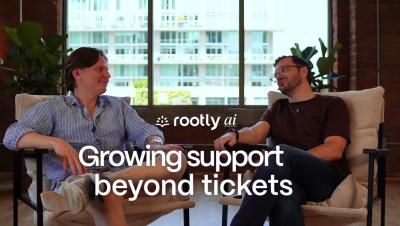
Gideon got promoted earlier this year to Head of Technical Support and Customer Service. Since then, he’s 3x’d the team (and is hiring for 5 more roles). But if you look around, support and success teams have been disproportionately impacted by layoffs in recent months (PagerDuty, Atlassian, Weekday, etc.). Why are is Gideon hiring instead of using AI? Turns out every support engineer and CSM at Rootly uses AI heavily.

Your next internal developer platform is a library of agent skills

What happens when AI agents become direct users of your infrastructure? Michael Kutsch, Staff SRE and Team Lead for Cloud Foundations at PostHog, argues that the next internal developer platform may be a library of agent skills. Instead of forcing every task through a portal, his team is giving agents structured context, reusable workflows, and deterministic scripts they can call when reliability and governance matter.

Your AI agents are lost: give them a graph

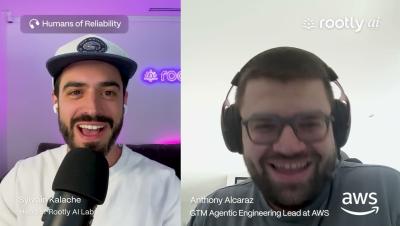
The biggest limitation facing enterprise AI agents may not be the model. It may be the context surrounding it. Anthony Alcaraz, Senior AI/ML Portfolio Growth Manager at AWS and co-author of O'Reilly's *Agentic GraphRAG*, joins Humans of Reliability to explain why reliable agents need more than a vector database and a large context window. They need structured knowledge they can navigate, memory they can prune, constraints they can follow, and feedback loops that help them improve.

AI vs. AI: from alert fatigue to agentic cybersecurity

AI is transforming cybersecurity on both sides of the battlefield. Attackers can now launch highly personalized phishing campaigns at scale and build malware capable of making autonomous decisions. At the same time, security teams are using AI agents to investigate alerts, reduce noise, and respond to threats faster. In this episode of Humans of Reliability, we speak with Nir Soudry, Head of R&D at 7AI, about the shift from alert fatigue to agentic cybersecurity.

They stopped shipping features for half a year, now they're thriving

When incidents pile up fast enough, every part of the company bleeds: support is fielding angry customers, AEs are on apology calls, and engineering is burning cycles on retrospectives instead of shipping. For Eran Kampf (VP of Engineering at Twingate, Co-founder Monday.com) where the product is the network, that was the moment he made a call most engineering leaders won't: stop all feature work for a quarter and fix reliability.