Today we are releasing oh-dear-api-examples a brand-new open-source repository on GitHub. It curates bite-size scripts, helpers and ideas for helping you bulk-manage your Oh Dear account via the API.
Clients expect transparency - especially when things go wrong. But manually updating a status page during an incident or maintenance window slows you down when speed matters most. Oh Dear’s status pages are more than just a pretty uptime dashboard. They’re fully API-driven and designed to scale with your workflow. Whether you manage five client sites or five hundred, you can create, update and sync status pages as needed. Here’s how to do it.
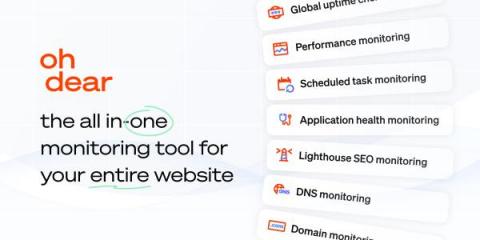
Managing dozens (or hundreds) of client sites can quickly become chaotic without the right tools. Whether you're running an agency, internal platform team or dev shop, visibility and control are everything. That's where Oh Dear comes in. Oh Dear is an all-in-one monitoring service that gives you a unified dashboard for uptime checks, performance monitoring, broken link detection, SSL and domain expiry alerts, scheduled task validation and more.
The past few months, we’ve working on improving our uptime check. We proud to announce that this improved check is now available for all users. You don’t have to do anything to get it (unless you are not subscribed to Oh Dear, in that case your should subscribe to Oh Dear ), all our users now have it enabled by default. In this blogpost, I’d like to give an overview of the changes and some background why we changed some things.
On the first of every month we generate an extensive PDF report for every site. This report contains a summary of all check results for the month and is a snapshot available to you and your team via email and the Oh Dear dashboard. We keep the report history so each month can be viewed in a browser or downloaded as a PDF. This report can also be emailed to any email address - not just team members - perfect for keeping your customers informed.
Every minute of website downtime cost large organizations an average of $9,000. That’s half a million dollars every hour, damn. And that’s just the average. If your organization heavily relies on your website to do business, that cost can increase even further. Needless to say, preventing website downtime is a top priority.
We’ve added a new option to log in to Oh Dear: passkeys! When logging in using a passkey, you don’t have to type an email or password, and you won’t be redirect to a third party for logging in. It’s also super fast.
No one likes to admit it but we all hit snooze on the morning alarm every now and then. The same goes for Oh Dear alerts - sometimes you know that link deep in the docs will get fixed eventually but right now you're busy working on something else. Getting reminded every hour isn’t always helpful. Since April 2020, Oh Dear has allowed you to temporarily silence alerts for any check.
Every website manager knows that feeling when you look at your inbox only to find a customer notifying you that a core page of your site is down. The worst part of it all, you don’t know how long that page has been down for. If you’ve yet to experience that, count your blessings. Well, unless you decide to opt for a website monitoring solution before it happens to you. With website monitoring, you can ensure every page on your site is up and running at all times.