Operations | Monitoring | ITSM | DevOps | Cloud

How Can ITSM Integration Help Your Business Right Now?

Integrating your ITSM platform with other third-party apps to sync with one another, sharing data or events that occur in one of them, is called ITSM Integration. By implementing the ITSM strategies, many businesses have realized the need to connect it with other applications and data sources such as HR, customer service, security, and IT. ITSM integration is essential to getting the best out of a potentially complex and disjointed service strategy.

Why is it so important for MSPs to have zero trust in the digital age?

The pandemic may have accelerated the need for enterprises of all sizes to move towards digital transformation, but the need for cyber security has existed since before. However, with new actors or hackers, malicious software has also evolved and expanded the cyber threats to a larger attack surface. While enterprises need robust digital solutions, implementing them may make your enterprise more vulnerable to security threats.

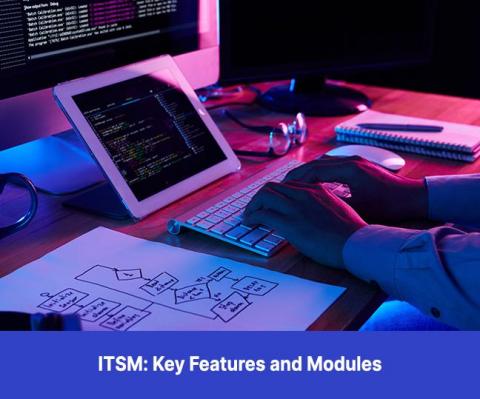
ITSM: Key Features and Modules

ITSM refers to IT Service Management, which simply encapsulates the activity performed by an organisation to maintain sustainable information technology infrastructure. It is designed to streamline IT services workflow and thus, increase productivity. Furthermore, it includes the set of IT policies, processes, and practices to pull it together in order to align the IT services with the business needs and objectives.

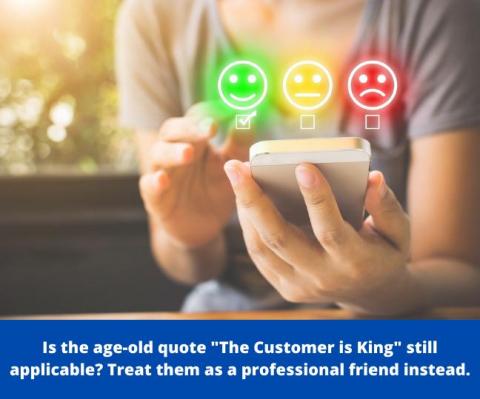
Is the age-old quote "The Customer is King" still applicable? Treat them as a professional friend instead.

Have we often heard phrases like ‘The Customer is King’ and ‘The Customer is Always Right? These phrases have undoubtedly been around for a while but are they still pertinent in this dynamic sales and marketing environment? When you refer to your customers as kings, you inherently place them on a pedestal, a place of high regard. And more often than not, this can cause issues. As yourself, would you be able to relate to a king or a friend?

Looking to invest in an asset monitoring solution? Here are 7 niche solutions you should check out.

As businesses grow, the support teams often struggle to keep up with increasing workloads. There is often more than one issue, service request, or customer query that needs resolving, and the staff can be under-equipped to attend to them in real-time. Hence, it is vital to ensure that your IT support staff should be able to maintain high levels of productivity, swiftly address customer demands, and efficiently manage all incoming support requests.

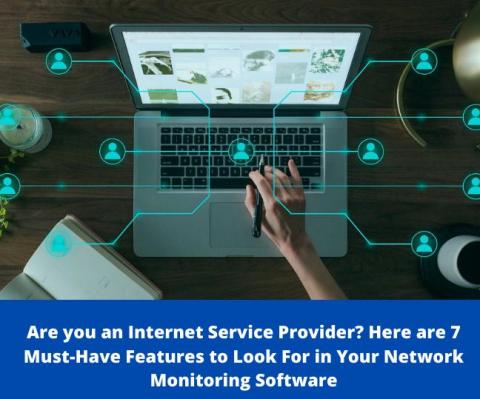
Top 7 Key Features Your Network Monitoring Software Should Have

With the covid-19 pandemic, the demand for broadband communication services has soared and experienced a 60% increase in internet traffic compared to before the crisis However, with prolonged times spent at our homes during the lockdown, continuous network connectivity has become the need of the hour for the entire world.

Would you like to build a Customer Success team? Here's all you need to know about it.

Chances are you have a marketing team to draw in new sales, a content team to put out interesting content, and a sales team to close new customers. But do you have a team to ensure that your customers are happy? After all, happy and loyal customers make a successful business. And this is why you need a Customer Success team.

Looking to invest in an asset monitoring solution? Here are 7 niche solutions you should check out.

Before the pandemic, assets were managed through a spreadsheet or a register and were managed manually by the Asset Manager/IT Agent (in some cases). When the pandemic forced people to work out of their homes, assets management became complex. Manual allocation of assets, monitoring software licenses and upgrades, and keeping track of assets were tedious. It became impossible to manage remote assets without using an asset management solution.

A killer guide to understanding what to expect from your MSP partner

With the constant shifts in the IT landscape, your IT teams must remain agile and adaptable. While it can be incredibly beneficial for a large organization to have in-house IT talent who can manage your IT infrastructure, many are unaware of how difficult it is to maintain that expertise. Whenever you’re responsible for minimizing the downtime of your business-critical services, you need to consider whether your in-house IT resources are up to the job.

Is customer success the responsibility of a single team or the whole organization??

Let’s admit it, we all know that it’s a customer’s world. Today, everything is available to customers at the click of a button. Can you believe that there was once a time when there was just one service provider? Now, as many players have entered the market, it’s no longer sufficient to provide a single service. And if you don’t keep up with your customer’s needs, they’ll just move on to the next company.