Whether you are an all-in vibe coder or AI skeptic, you probably know that most software developers are now incorporating AI into their day-to-day process.
Infrastructure teams manage not only servers and cloud resources, but also complex network environments. Routers, switches, and firewalls…often from multiple vendors with many models and versions. The devices require a consistent configuration and strict compliance enforcement to meet enterprise requirements.
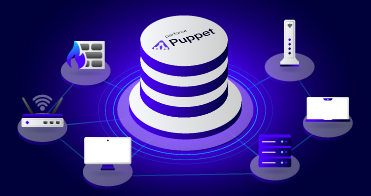
Infrastructure automation is evolving… and so is Puppet! While Puppet has long been known for its strength in Day 2 operations through agent-based desired state configuration, Puppet also extends across Day 0 and Day 1 tasks. With Puppet Edge, you can target network devices alongside your existing infrastructure, enabling your teams to manage more scenarios, more devices, and more workflows. All from a single platform.
The launch of Puppet Edge this week could not have been more timely. Within a day of its general availability, Cisco disclosed a vulnerability in its IOS and IOS XE software, followed almost immediately by an Event Response detailing two additional critical-severity CVEs affecting its firewalls.
Speed vs security has long been treated as an impossible choice: move fast and risk instability, or stay safe and fall behind. For DevOps, DevSecOps, and Governance, Risk, and Compliance (GRC) leaders, that tension often plays out between the demand to ship updates quickly and the need to maintain airtight security and compliance.
The rate at which vulnerabilities are being exploited is on the rise. The VulnCheck company, which specializes in vulnerability intelligence, found that in Q1 2025, 28.3% of vulnerabilities were exploited within 1 day of CVE disclosure. Keeping your systems up to date is more important than ever. The reality is that many security teams are running scans and then exporting to giant spreadsheets, which are “tossed over the wall” to the Operations team with little context.
The gap between security operations and IT operations poses significant risk. It’s increasingly clear that DevOps leaders, IT managers, and enterprise teams face an uphill battle to manage growing threat complexity, endless patches, and compliance requirements while operating in silos. Bridging this gap is essential to effectively manage risks and enhance operational efficiency.
Since announcing changes to our OSS plans as well as introducing the new licensing starting with PDK 3.5.0, the team has received questions from the community around how the changes will affect them. In this article, we’ll highlight some helpful resources about how you can develop and contribute to modules on the Forge and ensure compatibility with Puppet Core and Puppet Enterprise.
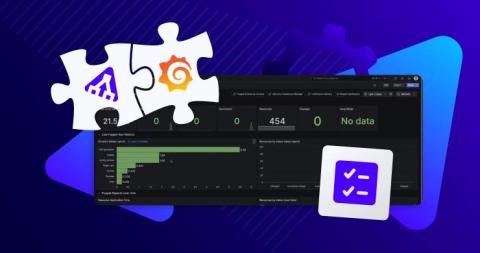
When you manage complex IT infrastructure, it becomes critical to use tooling to understand what’s happening across all of your systems in terms of performance, reliability, and compliance. Monitoring key indicators manually is simply no longer possible at that scale. Puppet has long been known as a solution for managing large environments and collecting a vast amount of data about your infrastructure, but accessing and visualizing that data in a meaningful way can be a challenge.
AI has emerged as a defining force in modern technology, spearheading transformation across industries. Yet, despite its promise to revolutionize workflows and unlock unprecedented efficiency, most DevOps organizations face significant hurdles in adopting AI safely and effectively. Concerns about complexity, scalability, and governance hold many decision makers back.