Operations | Monitoring | ITSM | DevOps | Cloud

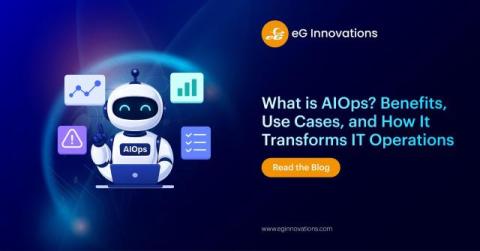
What is AIOps? Benefits, Use Cases, and How It Transforms IT Operations

Decades ago, IT operations was relatively simple, with a few components such as client, server, network, and the static environments. IT teams relied on manual analysis to manage these systems. Over time, however, IT operations has evolved significantly, driving the adoption of AIOps technologies.
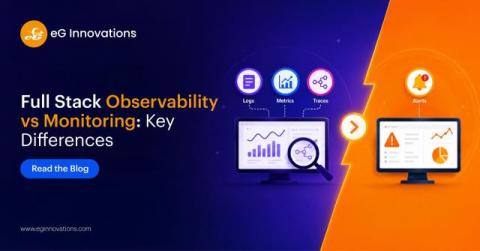
Full Stack Observability vs Monitoring: Key Differences

Traditional monitoring tracks system health by collecting data such as metrics and logs, this data is checked to see if a system is behaving as expected and alerts are raised if errors or anomalous data values are found. This works well in stable, predictable environments, but modern IT systems are far more complex and dynamic. In distributed architectures like microservices and cloud-native platforms, predefined alerts usually aren’t enough to explain why a failure is happening.

Digital Employee Experience Monitoring: Why It Matters for Hybrid Workforces

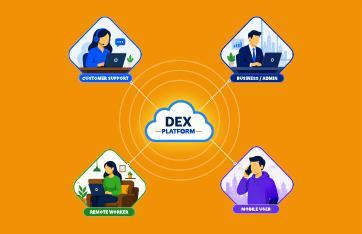
As enterprises embrace hybrid work models, SaaS-driven technology stacks, and highly distributed digital workplaces, employee experience has become inseparable from business performance.For years, IT investments were focused for customer-facing digital journeys, and internal systems were not a priority. However, the scenario has changed. Today, every employee relies on a complex and interdependent chain of endpoints, networks, cloud services, identity platforms, and business applications.

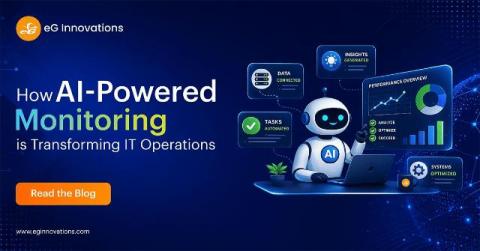
How AI-Powered Monitoring is Transforming IT Operations

Every monitoring vendor on the market now has an AI story. AIOps has moved from category buzzword to standard line-item in IT operations strategy, and the reasoning is sound: as infrastructure spreads across cloud, hybrid, microservices, and virtualized platforms, the volume and velocity of operational data has outrun what human teams can process. AI-powered monitoring is the obvious answer.

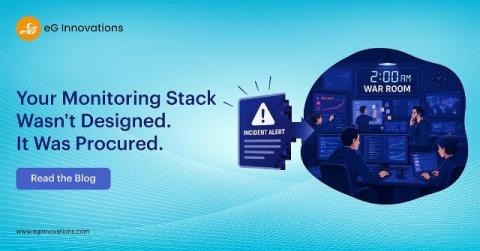
Your Monitoring Stack Wasn't Designed. It Was Procured.

The 2am war room hasn’t gone anywhere. Ten years after Gartner coined the term AIOps, the platforms are bought, the licenses are renewed, the dashboards are live — and serious incidents still get resolved by engineers paging across multiple consoles, trying to work out where the fire actually is. MTTR has barely moved. Alert fatigue hasn’t eased. The outcomes the category promised, in most enterprises, have not arrived. Matt Lowe’s recent article on AIOps names the shortfall well.