Operations | Monitoring | ITSM | DevOps | Cloud

Introducing Honeycomb Intelligence Canvas

Canvas is an AI-guided workspace inside Honeycomb that combines an AI assistant with an interactive notebook for visualizing query results and traces. You can ask a natural language question about your data and Canvas will immediately start exploring your traces, through multiple queries and other tools, to find the right next steps. Instead of having to write each query yourself, Canvas automatically proposes relational queries, comparisons, and visualizations that explain why an SLO fired or what changed after a deploy.

Meet Canvas: Your AI-guided Workspace Within Honeycomb

Modern systems are wonderfully capable, but relentlessly complex. Debugging across microservices, frontends, and cloud edges often means switching between five or more tools, trying to stitch together “what changed” and “why it broke.” Honeycomb’s wide events model has proven to be a superpower for taming that complexity, by allowing you to easily observe and query end-to-end traces without worrying about how much granular data you attach to your events.

Introducing Anomaly Detection: Your Early Warning System for Service Health

Modern engineering teams face a persistent challenge: knowing when something goes wrong before their customers do. With microservices architectures sprawling across dozens or hundreds of services, creating comprehensive alerting becomes an overwhelming task. You're left playing whack-a-mole with manual alert configurations, often missing critical issues or drowning in false positives.

Introducing Honeycomb Intelligence Anomaly Detection

Modern teams face a persistent challenge: knowing when something goes wrong before their customers do. With architectures sprawling across dozens or hundreds of services, creating comprehensive alerting becomes an overwhelming task. You're left playing whack-a-mole with manual alert configurations, often missing critical issues or drowning in false positives. Today, we're excited to announce our solution to this challenge: Anomaly Detection (currently in alpha), Honeycomb's proactive approach to understanding and acting on service health.

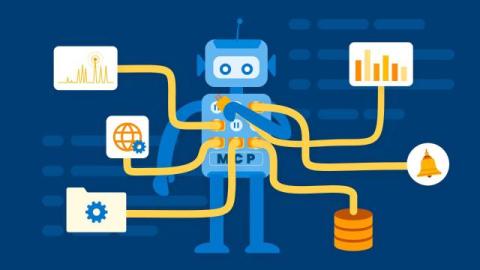
Introducing Honeycomb Intelligence MCP Server - Now GA!

In the months since we launched our public beta, we’ve been hard at work making Honeycomb MCP more useful and capable for agents and human operators alike. Our goal with this project has been, from the start, to allow AI to engage in the same kind of investigatory loops that we guide users towards. Many of the new features are designed expressly with this in mind, the most exciting of which is BubbleUp, now available in.

Honeycomb MCP Is Now In GA With Support for BubbleUp, Heatmaps, and Histograms

If you’ve been following my public journey with LLMs this year, it probably won’t surprise you to learn that this blog post is an announcement about the general availability of Honeycomb’s hosted MCP server. I want to share a few updates about what’s new in the GA release, discuss some interesting learnings from building it, and share examples of how we’re using MCP internally. First: if you're still in the dark about MCP and AI agents, go read the earlier blogs I linked.

Sharpening My React Hooks Knowledge With ChatGPT

I’m a product engineer at Honeycomb. While my work spans the stack, I’m currently focused on deepening my frontend expertise. To support this, I’ve been using ChatGPT as a study assistant. It’s helped me break down complex topics with clear explanations, real-world examples, and—critically—interactive practice. The most effective formats I’ve found.

Evaluate and Improve Your Site's Web Performance With Honeycomb for Frontend Observability

As an engineer on Honeycomb’s frontend platform team, I’m constantly trying to understand and improve our web performance. And I have a whole lot of questions. I tried answering these types of questions without Honeycomb in the past, and it was difficult and time consuming. It used to take me days to identify performance issues and their causes, let alone fix them and confirm that they improved web performance for some subset of users.

How Product Managers Can Benefit From Honeycomb

Observability tools like Honeycomb are built for engineers, not PM teams… but that doesn’t mean there’s no benefit to having your PMs in Honeycomb. Whether it’s debugging a weird customer issue or tracking how a feature is used in the wild, observability gives PMs something traditional product tools can’t: real-time answers with full context, down to a single user.