Operations | Monitoring | ITSM | DevOps | Cloud

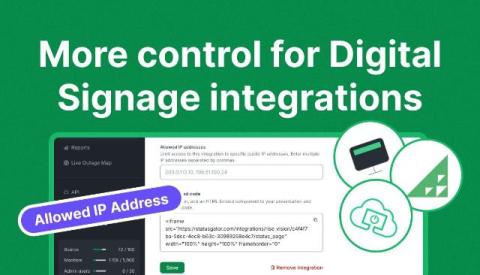
More control for Digital Signage integrations

We’ve made a small but useful update to our Digital Signage integrations in StatusGator. You can now configure Allowed IP addresses for your digital signage integrations. This lets you restrict access to specific public IP addresses – for example, the network used by screens in your office, operations center, or other shared space. Simply add one or more IP addresses when configuring the integration, and StatusGator will limit access accordingly.

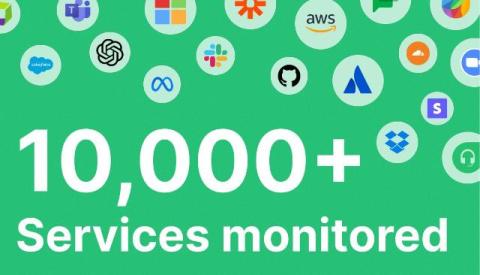
10,000+ services and counting: the biggest monitoring catalog anywhere

StatusGator now monitors more than 10,000 services. Cloud platforms, AI tools, payment providers, communication apps, developer infrastructure, school software, business SaaS: if your team depends on it, there is a good chance we are already checking its status page. We started in 2015 with a few hundred providers and one idea, that nobody should have to keep multiple vendor status pages bookmarked to find out why the office suddenly cannot log in.

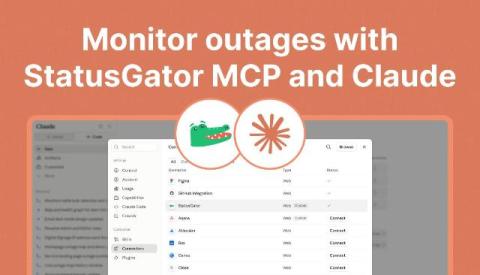
Monitor outages with StatusGator MCP and Claude

When a service your organization depends on stops working, you need to know whether the problem is internal or caused by a third-party provider. Connecting StatusGator to Claude gives you a faster way to find out. You can ask Claude what is down, investigate provider incidents, review affected components, and analyze historical uptime using data from your StatusGator account.
Sponsored Post

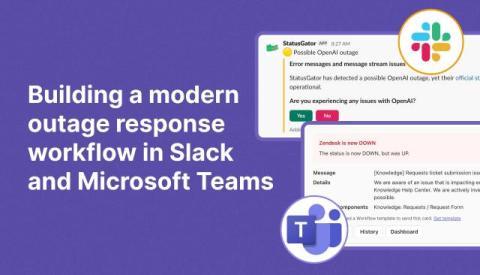
Building a Modern Cloud Outage Response Workflow in Slack and Microsoft Teams

On May 7 and 8, 2026, a thermal event in a single AWS data center hall knocked out power to EC2 instances and EBS volumes in a single Availability Zone in us-east-1. Within hours, more than 150 cloud services went down, including Coinbase, Reddit, HubSpot, and Atlassian's suite of tools, Jira, Confluence, and Trello among them. For teams without a structured cloud outage response workflow, the next several hours looked familiar: Slack DMs asking "is it down for you too?", tab-switching between status pages, and incident commanders repeating the same update in three different channels.