Operations | Monitoring | ITSM | DevOps | Cloud

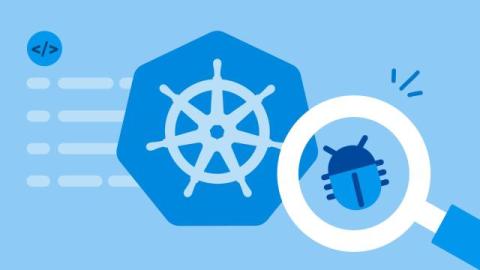
The Guide to Kubernetes Debugging

Kubernetes is widely used for deploying, scaling, and managing systems and applications and is an industry standard for container orchestration. Google engineers originally developed Kubernetes as an open-source project. Its first release was in September 2014, and since then, it has matured into a graduate project maintained by the Cloud Native Computing Foundation (CNCF). With the complexities of scale and distributed systems, debugging in Kubernetes environments can be difficult.

Building a Simple Synthetic Monitor With OpenTelemetry

Using server-side telemetry to understand what’s going on inside your system is incredibly valuable, but what about the responsiveness the user actually sees? In this post, I’ll cover what synthetic monitoring is and show an example of how you can create a simple monitor using OpenTelemetry, .NET, and an Azure function. If you only want to see how it’s built, skip ahead to building a synthetic monitor.

How Much Should I Be Spending On Observability?

I recently wrote an update to my old piece on the cost of observability, on how much you should spend on observability tooling. The answer, of course, is “it’s complicated.” Really, really complicated. Some observability platforms are approaching AWS levels of pricing complexity these days.

New Feature: Manage Your session.id in Honeycomb's Web SDK

The session.id field is special in Honeycomb for Frontend Observability. It’s a default option for filtering and grouping, and it’s the basis for session timeline analysis (in Early Access). Now you can control how session.id is set. In prior releases (< 0.15.0) of the Honeycomb Web SDK, we used our own UUID generator for session.id, and it was not accessible outside of the Web SDK itself. As of version 0.15.0, we give you full control.

Data Strategy for SREs and Observability Teams

In Honeycomb’s Customer Architects team, we work with the full spectrum of team, scope, and budget sizes. “The data isn’t valuable enough” is something we’re always dismayed to hear, but we hear it often enough. The thing is, as much as we want it to not be true, no product or tool can magically maximize the value of your telemetry data—at least not without gobs of human input, oversight, and review.

How Much Should I Be Spending On Observability?

In 2018, I dashed off a punchy little blog post in which I observed that teams with good observability seemed to spend around ~20-30% of their infra bill to get it. I also noted this was based on absolutely no data, only my own experiences and a bunch of anecdotes, heavily weighted towards startups and the mid-market tech sector. This post should have ridden off into the sunset years ago. To my horror, I have seen it referenced more in the past year than in all preceding years combined.

MCP, Easy as 1-2-3?

Seems like you can’t throw a rock without hitting an announcement about a Model Context Protocol server release from your favorite application or developer tool. While I could just write a couple hundred words about the Honeycomb MCP server, I’d rather walk you through the experience of building it, some of the challenges and successes we’ve seen while building and using it, and talk through what’s next. It should be pretty exciting, so strap in!

Honeycomb Acquires Grit: A Strategic Investment in Pragmatic AI and Customer Value

We’re excited to share that Honeycomb has completed our first-ever acquisition: we’re joining forces with Grit, bringing on board not only a strong team, but also compelling technology that supercharges our ability to deliver on our mission: to bring observability to every software engineer. This is a strategic move that will help us deepen the value we deliver to customers and accelerate our vision for what modern observability can and should be.

Observability: It's Every Engineer's Job, Not Just Ops' Problem

For years, organizations have used the term “observability” as an evolution of monitoring, a discipline practiced by operations teams to understand whether production software was working. I’ve been annoyed by this—not because it’s philosophically wrong, but because it diminishes the importance of observability as a generalized software engineering practice.

How Does 'Vibe Coding' Work With Observability?

You can’t throw a rock without hitting an online discussion about ‘vibe coding,’ so I figured I’d add some signal to the noise and discuss how I’ve been using AI-driven coding tools with observability platforms like Honeycomb over the past six months. This isn’t an exhaustive guide, and not everything I say is going to be useful to everyone—but hopefully it will clear up some common misconceptions and help folks out.