Operations | Monitoring | ITSM | DevOps | Cloud

Database Administration Made Easy With dbForge Edge

Simplify database administration across multiple platforms with dbForge Edge. This video shows how dbForge Edge helps you handle performance tuning, backups, security, and migrations across multiple database systems. Optimize SQL performance Automate database backups Manage users and permissions Migrate databases in minutes.

SSIS Data Flow Components 4.0: Ready for Visual Studio 2026, SQL Server 2025, and Beyond

We are excited to announce the release of SSIS components Data Flow Components version 4.0, an update that delivers expanded compatibility with the latest development tools and database platforms. Version 4.0 introduces full support for Visual Studio 2026 and Visual Studio 2026 Insiders, ensuring developers can seamlessly adopt Microsoft’s newest IDE while continuing to work with familiar workflows.

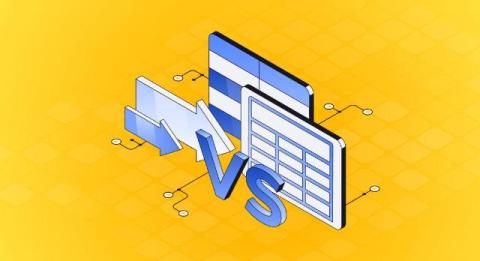
DataReader vs DataSet: A Guide to Connected and Disconnected Data Access

DataReader and DataSet are two significant data access models that can greatly impact the performance, scalability, and responsiveness of your.NET application. The connected model, powered by DataReader, keeps a live connection open and streams data forward-only to maximize speed and minimize memory usage. The disconnected model, implemented through DataSet, takes the opposite approach. It loads data into memory so you can edit and reuse it without constant database interaction.

How dbForge Edge Helps With Database Administration

Looking for a way to simplify database administration across multiple database systems and cloud services? In this video, you’ll learn how dbForge Edge helps DBAs, developers, and data architects manage databases more effectively across SQL Server, MySQL, MariaDB, Oracle, PostgreSQL, Amazon Redshift, and other platforms.

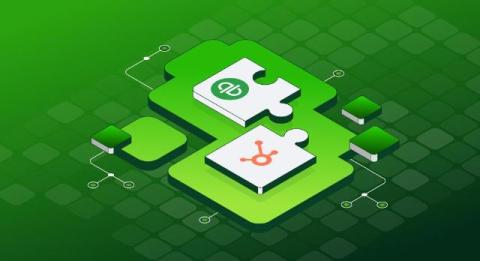
HubSpot and QuickBooks Integration: Best Practices for 2026

HubSpot QuickBooks integration is now a core operational requirement as data silos continue to disrupt workflows across 82% of enterprises. It addresses a critical failure point between CRM and accounting, where disconnected systems fragment customer, invoice, and revenue data. In practice, this separation often leads to duplicated customer data, invoice corrections, and revenue reports that lag behind real activity.

How to Use PostgreSQL AI for Query Writing and Optimization

PostgreSQL AI is gaining attention as SQL complexity increases in production environments. It addresses a common problem: extended queries that accumulate joins, nested logic, and edge cases. Without AI assistance, these queries are often harder to write and review, driving 20–40% of developer time into debugging. In practice, these challenges affect PostgreSQL users in different ways.

C# Equivalent of the TINYINT Data Type in SQL

TINYINT is one of the simplest numeric data types you can ever work with in SQL databases. It stores small numeric values, saves space, and is commonly used for flags, statuses, and boolean-like fields. But the moment you bring C# into the picture, things get intriguing. There is no TINYINT keyword in C#, and no one-to-one mapping you can use. Instead, you are left asking an important question: What is the correct C# equivalent of the TINYINT data type in SQL?

HubSpot and Slack Integration: Best Practices for 2026

HubSpot Slack integration has become essential for the 238,000 companies on HubSpot and the 42 million users active on Slack each day. However, the native connector offers only limited functionality. Notifications often get buried, CRM updates remain locked inside HubSpot, and reporting still relies on manual exports. Worse, it lacks workflow customization and bidirectional updates leaving teams without the visibility and flexibility they need. This guide shows how to move past those limits.