Operations | Monitoring | ITSM | DevOps | Cloud

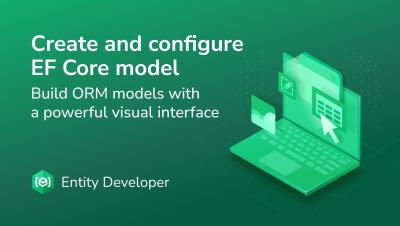
Build EF Core Models Visually with Entity Developer - No More Manual Mapping!

Want to simplify your EF Core development? Discover how Entity Developer — a powerful visual ORM tool from Devart — helps.NET developers design, generate, and maintain EF Core models faster and with fewer errors. In this video, you’ll learn how to: Entity Developer works as both a standalone app and a Visual Studio plugin, giving you flexibility across any development environment. With support for EF Core, NHibernate, and LinqConnect, it's your all-in-one solution for ORM design in.NET.
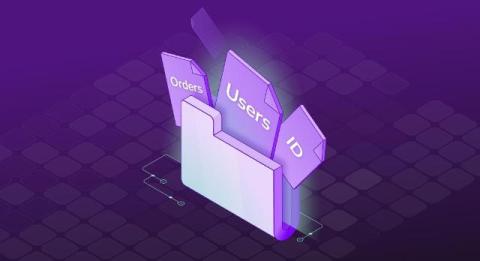
Database Naming Standards: SQL Conventions for Tables, Columns, and Keys

SQL naming conventions are often at the root of database headaches. One careless name like temp1 or new_table can lead to broken queries, failed deployments, and hours of avoidable debugging. To prevent this, teams need clear, enforceable naming standards: rules they can rely on as databases evolve. Many organizations also turn to purpose-built SQL Server IDEs to apply the standards programmatically, visualize relationships, and manage schema changes across environments.

dotConnect for Oracle: Powerful .NET data access with full ORM support

Elevate your.NET development with dotConnect for Oracle — a high-performance ADO.NET data provider built for enterprise-grade Oracle data access. In this video, discover how dotConnect for Oracle streamlines database connectivity, boosts developer productivity, and enables robust, scalable applications across the.NET ecosystem. What you’ll see: Whether you're building enterprise applications or high-throughput data services, dotConnect for Oracle delivers the performance, flexibility, and reliability your projects demand.

TOP Salesforce Integration Tools

Looking to streamline your business workflows and boost Salesforce capabilities? In this video, we explore the top Salesforce integration tools that help connect Salesforce with the most popular apps like DBeaver, Power BI, Excel etc. Whether you're a developer, admin, or business leader, these tools can help you automate tasks, improve data flow, and enhance productivity.

AI for Data Analytics: Unlocking the Power of Data Insights

According to McKinsey, 78% of organizations have implemented AI in at least one core function, with data analytics leading that transformation. AI no longer supports analytics from the sidelines; it now directs how data is queried, modeled, and delivered. It forecasts outcomes, detects anomalies, and reveals real-time insights, often before a dashboard loads. For SQL developers and DBAs, this marks a new phase in data work.

SQL Server AI Guide: Best Tools, Benefits & Use Cases

SQL Server AI marks the beginning of a new era for data-driven businesses. What was once thought of as a future prediction is now actively transforming database management. With outstanding features like natural language processing, predictive analytics, and automated error handling, managing data with artificial intelligence in SQL Server is faster, easier, and better. If you are a database developer, data analyst, or DBA, using SQL Server AI is no longer optional; it’s a productivity necessity.

How to Use AI for MySQL: Optimizing Queries and Database Management

Imagine telling your database to get the best five customers by order from six months ago, and you get a well-optimized query instantly. Zero coding. No Googling syntax. Just results. Welcome to the future of database management with MySQL AI. MySQL Artificial Intelligence is a strategic solution transforming the traditional method of managing databases.

How to Create a Database from Scratch: A Step-by-Step Guide

Knowing how to create a database is no longer just a backend task; it’s a core skill for building systems that perform under pressure and scale with complexity. With global data volumes expected to reach 175 zettabytes by 2025, developers must design systems that turn raw information into something meaningful, accessible, and usable. But what does that look like in practice? How do you go from raw data requirements to a reliable schema? Which engine should you choose?

Top NetSuite Connectors in 2025 and How Businesses Use Them

NetSuite connectors unlock the real power of your ERP by bridging gaps between systems, data, and decisions. According to McKinsey, only 1 in 5 companies capture more than half the expected value from their ERP investments. The missing link? Integration. Core modules alone are not enough. Today’s ERPs must serve as connected command centers, linking systems, syncing data, and supporting real-time decision-making. NetSuite is no exception.