Operations | Monitoring | ITSM | DevOps | Cloud

The Place Where Modern Operations & Technology Come Together




KubeCon Europe 2026: AI Is Shipping Code Faster Than Orgs Can Govern It
KubeCon + CloudNativeCon Europe 2026 recently brought the cloud native community to Amsterdam. We were there all week bouncing between the booth, a Braintrust event with engineering leaders from across the community, and more hallway conversations than we can count. One talking point dominated the week: AI is shipping code faster than most engineering orgs can govern it. It also became clear that we weren't the only ones talking about this challenge.
A Tour of Cortex
Get a guided tour of Cortex, the Engineering Operations Platform built to help teams improve operational maturity and reduce developer friction. This video covers the core features of Cortex: the Catalog, Scorecards, Initiatives, engineering metrics, and Workflows. Each one maps to the three things any great EngOps platform needs to do: provide clarity, drive improvement, and remove friction. Ready to see it in action? Visit our website: cortex.io Book a custom demo: cortex.io/demo.

QA, AI, and the return of the adversarial mindset
The best QA engineers are always asking themselves (and others around them) what might break. When engineering teams shifted to agile delivery, that mindset largely moved out of dedicated roles and into the background. Automated testing took over the repetitive work, developers owned quality end-to-end, and velocity improved. What didn't carry over was the habit of looking at a feature and asking how a real user, an edge case, or unexpected load might expose it.

Feature Friday: How to Track GitHub Copilot Adoption with Cortex Scorecards
Are you getting the most out of your GitHub Copilot investment? In this week's, Cortex Engineer Aaron Warrick demonstrates how to turn "AI adoption" from a buzzword into a measurable metric. Using the CQL (Cortex Query Language) Query Builder, you can now pull real-time GitHub Copilot data into your service maturity scorecards. In this video, we cover: How to use the new AI Tools Analysis in the CQL Query Builder.

Rob Zuber on quality, metrics, and what it means to move in the right direction at CircleCI
In this episode of Braintrust, Cortex co-founder and CTO Ganesh Datta sits down with Rob Zuber, CTO at CircleCI. Rob shares how the industry's move away from dedicated QA has cost teams more than they realize, and explains how AI is changing what good software quality actually looks like.

Feature Friday: Using Entity Relationship Types to Map the Perfect March Madness Bracket
Can an EngOps Platform help you win your family March Madness pool? It’s that time of year again, and the stakes are high. Despite watching hundreds of hours of basketball, we're tired of losing bets to a mom who barely follows the sport. This year, we’re leveling the playing field using Cortex. In this, we’re moving beyond microservices to show you the power of Entity Relationship Types. Watch as we take a chaotic tournament bracket and turn it into a structured, navigable engineering ecosystem.
What is operational excellence?
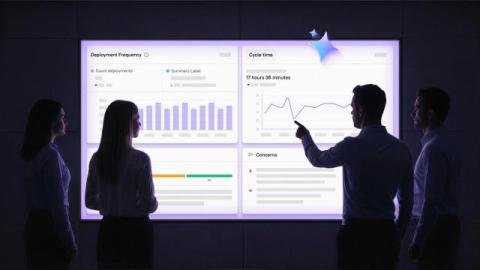
Engineering teams are great at innovating and delivering products, but the work that's required to maintain them over time and keep them running well tends to get deprioritized. Planning processes are designed to move features forward, not to catch whether those features are generating too many alerts, degrading in performance, or creating compliance exposure over time. As a result, that class of work accumulates quietly.
Always Audit Ready: Streamlining SOC 2 & ISO Compliance with Cortex
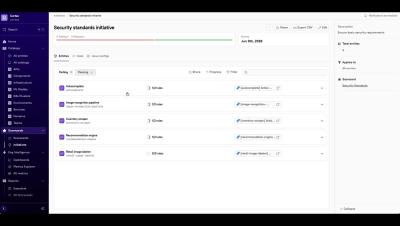
Stop dreading your next audit. If you’ve ever survived a SOC 2, ISO, or regulatory audit, you know the drill: weeks of manual data pulling, hunting for owners, and frantic spreadsheet updates. In this video, we show you how Cortex transforms compliance from a painful annual event into a continuous, automated process. What we cover: The "Audit Scramble" vs. "Always Ready": Why manual snapshots fail and how a living service landscape keeps you compliant 365 days a year.
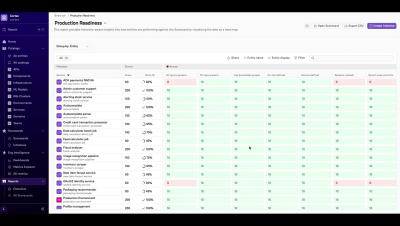
Is Your Org Ready for Peak Season? How to Automate Production Readiness with Cortex
Stop relying on hope as a production readiness strategy. Whether it’s Black Friday, tax season, or a major product launch, engineering leaders need to know—with 100% certainty—if their systems can handle the load. In this video, Becka demonstrates how Cortex replaces manual, time-consuming readiness reviews with a continuous, automated framework. What we cover: The Readiness Gap: Why manual self-reporting and static spreadsheets fail during high-traffic periods.
Cortex and Syntasso join forces to bridge the gap between automation and visibility
I've spent a lot of time talking to platform teams who feel like they're running in circles. They build incredible automation to speed up service delivery, but even when it's running perfectly, nobody actually knows what's happening across the organization. It's hard to see who owns which service or if those services even meet basic company standards. Automation's a great start, but it usually hits a wall when you try to scale it.

The platform engineering playbook for velocity, quality, and AI readiness at SIXT
Cortex co-founder and CTO Ganesh Datta sits down with Boyan Dimitrov, CTO at SIXT. Boyan shares how SIXT went from releasing software once or twice a month to nearly 10,000 deployments per month, and explains the platform engineering philosophy that made it possible.
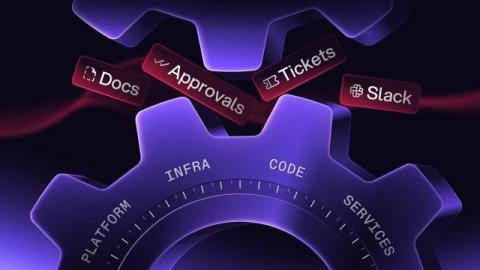
How to stop guessing where developer friction lives
Most platform teams know friction is a problem. They also struggle to figure out exactly where that friction lives. Developers lose time in ways that rarely show up on a roadmap. In many organizations, creating a new service can require multiple approvals and several Slack threads. Spinning up infrastructure can mean filing a ticket and waiting days. Onboarding to a new codebase involves a scavenger hunt through stale Confluence pages. None of these feel like emergencies in isolation.
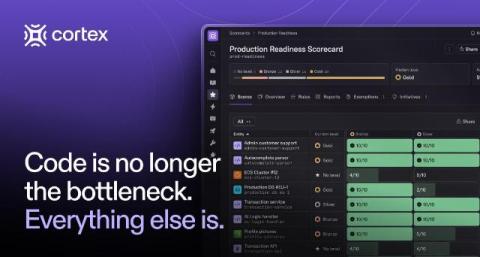
What is engineering operations? A guide to the discipline transforming software teams
Engineering teams are writing more code than ever. AI coding tools have made individual developers dramatically more productive, yet most organizations report moving only about 20% faster than before. The real constraint has always been the operational fabric surrounding the act of writing code. The processes, standards, visibility, and coordination that determine whether hundreds of engineers and thousands of services ship reliable software at speed have always been where the real work happens.
Introducing Cortex as the Engineering Operations Platform
Software Engineering is once again being forced to evolve. We are entering the era of infinite code where the cost of writing code tends to zero. The data tells us that companies are only moving 20% faster than when humans wrote code by hand. We’re writing orders of magnitude more code than ever, yet our processes are barely keeping up with what we had before. The chaos and complexity is only being amplified by this new shift in how we work as developers.