Operations | Monitoring | ITSM | DevOps | Cloud

Why Observability Isn't Enough for AI Coding Agents

Observability platforms collect pre-instrumented logs, metrics, and distributed traces to monitor production systems and surface failures to human engineers. The adoption of AI into engineering has led observability providers to offer those same signals to agents. This is often packaged as AI observability, but the signals themselves were designed around a human investigation loop. AI coding agents work faster, consume data differently, and need feedback as they work rather than after deployment.

Runtime Aware PR Review: Validate Changes in Live Production

Runtime PR review means validating a code change against live variable state, real execution paths, and downstream service behavior before the merge decision. Not after a checkout regression exposes what the diff missed. As AI coding agents ship PRs faster than any reviewer can mentally simulate execution, static analysis and CI leave a structural gap that only runtime evidence can close. This article explains what that gap looks like, why it recurs, and how to close it with runtime context code review.

Why CI/CD Pipelines Miss Runtime Failures

CI/CD pipelines do four things: it builds code, runs tests against mocked dependencies, lints for style violations, and scans for known vulnerability patterns. What it cannot do is validate how that code behaves under real users, real service responses, and real runtime constraints that staging was never configured to reproduce. That entire class of failure clears every gate cleanly and surfaces only in production.

Kubernetes Monitoring: Datadog Alert to Lightrun Root Cause

Datadog Kubernetes monitoring tells an SRE team what failed, which pod failed, and when. It does so within seconds of the alert firing. The investigation then stalls at the same point every time: nothing in the dashboard layer can prove why a specific request behaved the way it did inside a running JVM at the moment of failure. Variable values, feature flag evaluations, and code branches are never captured.

Why Your Agentic Workflow Succeeds and Still Gets It Wrong

Agentic workflows are reshaping how engineering teams operate, fetching context, synthesizing decisions, and shipping results across systems without human intervention. But the same design that makes them powerful adds risk in production. Agents do not crash when they hit bad data; they synthesize around it, substituting a stale value, an empty page, or a missing field for the result they were supposed to capture.

Autonomous Error Remediation in Cursor with Lightrun MCP

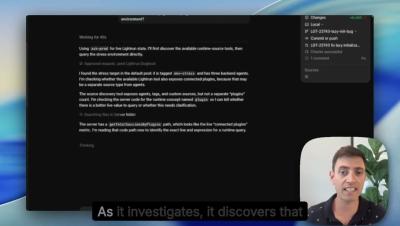
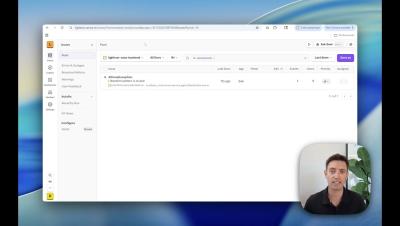
Lightrun's Gidi Freud demonstrates how your AI coding agent can now investigate and fix production errors, autonomously. Watch how Cursor, guided by Lightrun's Error Remediation skill, picks up a Sentry error, instruments the live service with a runtime snapshot, captures real evidence, and opens a validated PR for approval.