Operations | Monitoring | ITSM | DevOps | Cloud

Live Runtime Investigation in Claude Code with Lightrun MCP

In this video, Lightrun’s Dan Putman demonstrates what happens when Lightrun MCP is integrated within Claude Code. See how, once activated, Claude can ask specific questions about what services it can see and instrument in order to perform a deep investigation in production to get to a validated root cause analysis without the friction of redeploying or switching contexts.
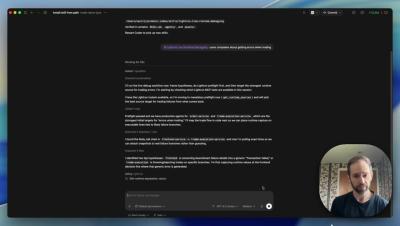
Debug Live Production Apps in Codex with Lightrun MCP

Lightrun’s Dan Putman demonstrates the power of the latest Lightrun MCP skill. Watch how your AI code agent can now debug live applications directly in production. By connecting OpenAI's Codex to real-time runtime data via the Lightrun MCP, engineers can now generate and validate hypotheses using live telemetry and snapshots, without breaking flow. Ready to bring runtime context to your AI agents?

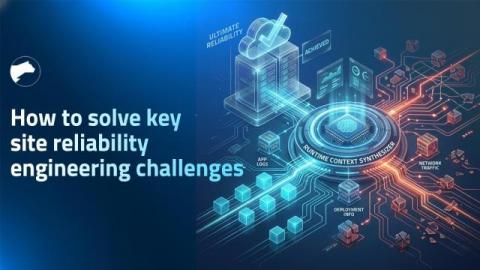
How to solve key site reliability engineering challenges

Modern site reliability engineering challenges stem from the difficult requirement of confirming why complex systems fail in ways staging cannot replicate. While observability tools signal failures, and AI SREs reason over data, they leave observability gaps regarding the actual state of running code. By utilizing runtime context, teams capture live execution data to accelerate production debugging, resolving incidents in minutes without requiring manual redeploy cycles.

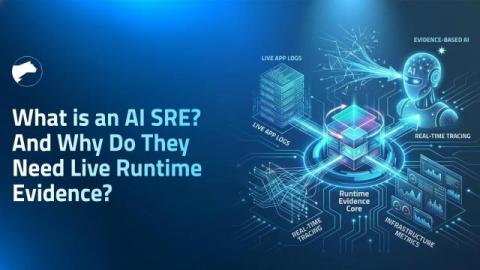
What Is an AI SRE? And Why Do They Need Live Runtime Evidence?

AI SREs are autonomous systems that handle incident triage, root cause analysis, and remediation by correlating logs, metrics, traces, and code signals. However, as they rely on pre-configured telemetry, the critical execution details of a specific failure, such as variable state and code paths, can often be missed. As a result, they either force users into manual redeploy loops or make inferences from partial data, diagnosing issues using probability rather than proof.

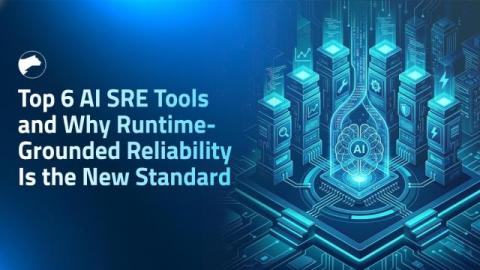
Top 6 AI SRE Tools and Why Runtime-Grounded Reliability Is the New Standard

AI SRE tools accelerate incident detection, root cause analysis, and remediation across distributed production systems. They ingest telemetry signals, including logs, metrics, traces, alerts, and deployment history, to correlate anomalies, narrow fault domains, and reduce manual triage. This guide breaks down the top AI SRE tools in 2026 and helps you choose the right one based on your team’s biggest bottleneck, whether that is faster triage, deeper root cause analysis, or runtime-level validation.

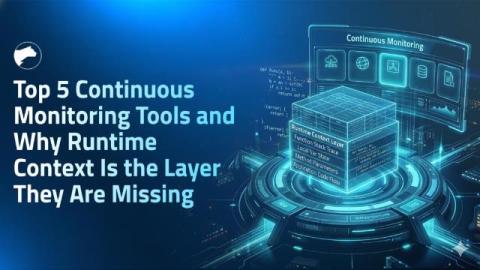
Top 5 Continuous Monitoring Tools and Why Runtime Context Is the Layer They Are Missing

Continuous monitoring tools track system health, performance, and behavior in real time across production environments. For a deeper understanding of how this fits into modern DevOps practices, see this guide on continuous monitoring and its impact on DevOps. They collect logs, metrics, and distributed traces across the infrastructure and application layers, giving engineering teams visibility into how their systems are running, where anomalies occur, and when something needs immediate attention.