Operations | Monitoring | ITSM | DevOps | Cloud

Reducing Alert Noise with Composite Alerts in Hosted Graphite

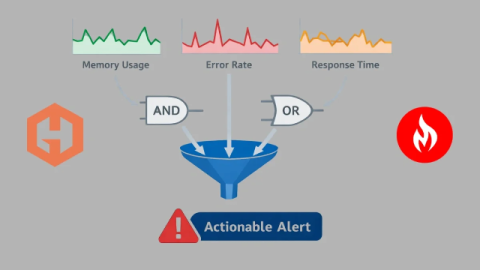
Traditional alerts are simple by design: if a metric crosses a threshold, fire an alert. While that simplicity makes alerts easy to configure, it also leads to alert noise, because single metrics rarely tell the full story and often trigger during non-actionable conditions. Hosted Graphite Composite Alerts solve this by allowing you to combine multiple alert conditions using logical expressions like AND (&&) and OR (||).

Easy Guide for Connecting VictoriaMetrics to a Grafana Data Source

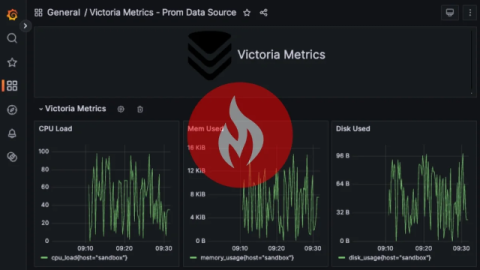
VictoriaMetrics is a fast, cost-efficient, and highly scalable time-series database designed as a drop-in replacement for Prometheus storage. It is widely used for collecting, storing, and querying metrics at scale, while remaining lightweight enough to run as a single binary or container. Because it is fully Prometheus-compatible, VictoriaMetrics supports standard PromQL queries and integrates seamlessly with Grafana.

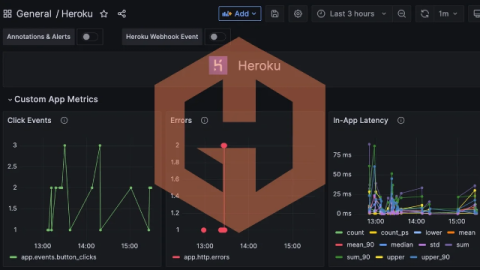
Heroku Monitoring Add-ons 2026 and Hosted Graphite

Monitoring performance of Heroku applications helps improve user experience. This blog post covers Heroku monitoring add-ons and explores why Hosted Graphite is the best choice in 2026. We'll discuss the benefits and setup process of the Hosted Graphite add-on. We'll also discuss future trends in Heroku monitoring.

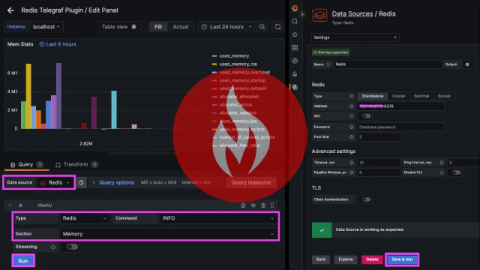
Easy Guide for Connecting Redis to a Grafana Data Source

Redis is a widely used in-memory data store, commonly deployed as a cache, session store, message broker, or fast key-value database. Because Redis often sits on the critical path of an application, having visibility into its behavior (memory usage, client connections, command throughput, cache efficiency) is essential for troubleshooting and performance tuning.

Guide to Sending Custom Metrics From Your Heroku Application

Heroku makes it easy to deploy and operate applications without managing servers, but understanding how your application behaves internally still requires instrumentation. Platform metrics like CPU usage, memory consumption, and router request/status counts are useful, but they don’t tell you how long your code takes to run, when your app throws errors, or whether users are interacting with key features.

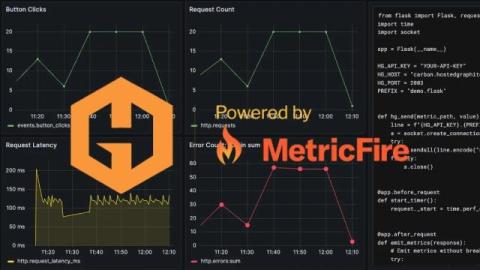
Sending Custom Application Metrics to MetricFire's Hosted Graphite

In this article, we’ll show how easy it is to send custom application metrics directly to MetricFire's public carbon endpoint. We’ll build a small Flask application, emit a handful of practical metrics, and generate local traffic to demonstrate how quickly meaningful data can flow from your code to your dashboards.

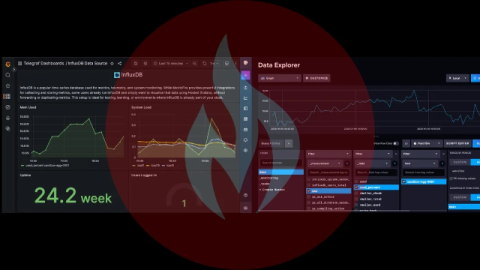
Easiest Way to Connect InfluxDB to a Grafana Data Source

InfluxDB is a widely used time-series database designed for storing and querying metrics, events, and telemetry data. It’s commonly used for infrastructure monitoring, application instrumentation, and IoT-style workloads where time-based data is central. In many environments, InfluxDB already exists as part of the monitoring or data collection pipeline, and the primary need is simply to visualize that data effectively.