Operations | Monitoring | ITSM | DevOps | Cloud

The vendor trap: why your next outage won't be your fault-but will be your problem

Today’s enterprises don’t run on singular self-contained systems—they’re intricate webs of interdependence: cloud services, APIs, CI/CD tools, DNS, CDNs, SASE vendors, identity management providers, cloud interconnects, ISPs, SaaS applications, application components, microservices, etc. A recent industry survey found that 84% of organizations suffered operational disruption from third-party risk incidents, with 66% facing adverse financial impact.

You don't control most of the infrastructure your digital services rely on.

However, your customers still expect a flawless experience, every time. The complexity of modern architectures (CDNs, DNS, APIs, cloud platforms) means that even “simple” applications can break in ways you don’t see coming. So how do you stay ahead of issues you don’t even own? By monitoring the digital delivery chain as your users experience it, across networks, geographies, and third-party dependencies, and catching performance degradations before they become business problems.

Every second of digital downtime has a cost.

When a site disruption hits, businesses face immediate and visible fallout: customer churn spikes, and revenue takes a direct hit. If customers can’t transact, your bottom line suffers, plain and simple. This insight comes from a recent Forrester survey commissioned by Catchpoint, where respondents revealed the real business impacts of Internet disruptions.

From SEO to AEO: Why Web Performance Is the Key to AI Search Success

Search isn’t what it used to be. The way people discover information online is shifting. Instead of clicking through search results, many now ask AI answer engines like ChatGPT and Perplexity to do the research for them. In March 2025, 13.1% of Google desktop searches featured AI Overviews— doubling from over 6% in January, according to Semrush analysis of 10+ million queries.

If you want to monitor reality, you have to monitor your users' perspective.

Not from your data center. Not from your internal network. Not from your controlled environments. Real users are on hotel Wi-Fi, public LTE, spotty networks, global cloud providers. To understand their experience, your monitoring needs to reflect their reality: location, device, network, context.

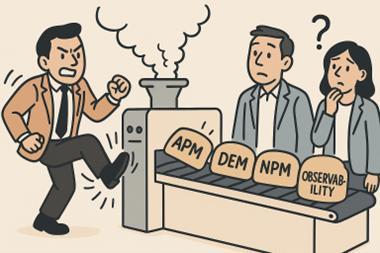
APM vs observability: why your definitions are broken

Recently I was asked to offer my opinions on Application Performance Management (APM) and Observability (o11y) - how they overlap, compete, and conflict. I was just one of several folks who's ideas were solicited, so (understandably) some of my thoughts were left out of the original article. HOWEVER, I'm never one to let good words (or at least a lot of words) go to waste, so I thought I'd pull them together here.

Nothing about today's Internet stays in one place... so why does your monitoring?

Users are mobile. Apps are elastic. Traffic shifts constantly across clouds, ISPs, and geographies. Monitoring needs to adapt to that reality. You need visibility that moves with your users and your applications, wherever they go, however they connect. The Internet is now your application fabric. And your monitoring strategy should reflect that!

Ten Minute Troubleshooting: Meet (and Monitor) Users Where They Are

What do you do if your monitoring, APM, and synthetic tools tell you an application is up, but the users say it’s not? A good first question is to ask where your monitoring tools are located relative to both the users and the application itself. In this episode Mursi helps Leon identify his “red-light, green light” issue and adjust his monitoring to do a better job showing the REAL user’s experience.

Behind the Dashboard - Catchpoint Traceroute

Behind the Dashboard is an ongoing series where we look under the hood of a specific Catchpoint feature. Each episode breaks down the technology itself, what’s challenging about using it for monitoring, and how we removed friction and toil to make it a valuable part of the Catchpoint platform. In this episode Leon, Brandon, and Sergey take a look at “traceroute” tests – a feature that may seem humble and unassuming, but has unexpected power and utility when it comes to identifying performance issues with your site, service, or application.