Operations | Monitoring | ITSM | DevOps | Cloud

MTTR Demystified: Mean Time to Recovery, Repair, or Respond?

You might have heard of MTTR or MTBF. They are all important factors that make up incident management. Incident management refers to all the managerial processes behind bringing a site back to its uptime when it suddenly encounters any unplanned fault. And that is precisely why managing them is important. We must keep our site up-to-date so that downtimes are reduced, and customers can access any information with the least wait time.

Diving into Observability Platform: OpenTelemetry vs Datadog

Imagine you're leading a team of engineers responsible for monitoring and optimizing the performance of a cloud-based application used by millions of users worldwide. As the application continues to scale, you recognize the pressing need for a robust observability solution to learn about its distributed architecture. In this scenario, you're faced with an essential decision: choosing between OpenTelemetry and Datadog for distributed tracing and observability.

Integrating OpenTelemetry Instrumentation with FastAPI

What do we gain when we integrate OpenTelemetry with FastAPI? Integrating OpenTelemetry with FastAPI offers many benefits that greatly improve the observability and monitoring capabilities of applications built on this high-performance web framework. By integrating OpenTelemetry's instrumentation capabilities into FastAPI projects, you can understand your applications' inner workings, enabling them to monitor, analyze, and optimize performance.

Server Health and Health Checks: A Beginner's Guide

Why do we go for server health checkups? Well, think of it like this: just as we schedule regular checkups for ourselves to make sure we're healthy and functioning optimally, our servers need the same level of care. After all, they're the backbone of our digital infrastructure, tirelessly handling requests, serving data, and keeping our applications running smoothly.

Part 3: Infrastructure Monitoring Tools

From networking and servers to databases and applications, the infrastructure is the backbone of an organization's operations. With the rise of digitalization, the need for reliable and efficient infrastructure has become more important than ever. Whether it be transportation systems, communication networks, or energy grids, infrastructure plays a vital role in keeping our society functioning smoothly.

OpenTelemetry Collector - A Beginner's Guide

In the fast-pace world of technology, keeping an eye on how well our applications are doing is crucial. Indeed, opentelemetry offers a comprehensive framework designed to capture the nuances of software applications. At the core of this framework lies the opentelemetry Collector, responsible for aggregating, processing, and exporting telemetry data. Why is this important?

What is MongoDB? Its Architecture and Monitoring

Ever wondered how popular websites manage millions of users and interactions without crashing? The answer lies in MongoDB, a NoSQL database, document-based model. This is particularly useful for applications like social media platforms, where users can have multiple posts, comments, and interactions. MongoDB is also highly scalable, able to handle large amounts of data and traffic by distributing the workload across multiple servers.

Prometheus vs. Elasticsearch

In the field of data management, Prometheus and Elasticsearch are popular names. They have proved to be quite effective when coming to monitoring applications and websites and providing reliable feedback. While Prometheus offers metrics monitoring at a good level, Elastic Stack is a comprehensive platform offering complete collection, storage, and analysis of data from start to finish. This and a few other minor differences sets these two monitoring solutions apart.

A Guide to Log4j for Logging in Java

Log4j is a logging framework for Java, facilitating the systematic recording of runtime information in software applications. Developed by the Apache Software Foundation, Log4j has become a standard tool in Java development since its inception in 1996. Its primary purpose is to generate log messages that provide insights into the application's execution, aiding developers in debugging, monitoring, and analysing software behaviour.

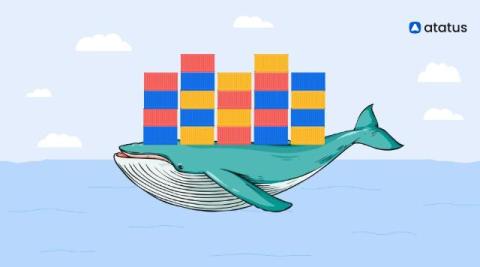
Docker Logging: Effective Strategies for Docker Log Management

Docker is a platform that makes creating, deploying, and running containerized applications easier. Containerization is a lightweight and portable application deployment technique involving packaging an application and its dependencies inside a container. A container is a standalone, executable software package that includes everything needed to run a piece of software, including the code, runtime, system tools, libraries, and settings.