Operations | Monitoring | ITSM | DevOps | Cloud

Smooth mocking with the Elasticsearch Node.js client

A classic problem that every backend developer has faced during their work is testing an application that uses a database. A perfectly valid solution is to use the real database for testing your application, but you would be doing an integration test, while you want a unit test. There are many ways to solve this problem. You could create the database with docker, or use an in-memory compatible one, but if you are writing unit tests that can be easily parallelized this will become quite uncomfortable.

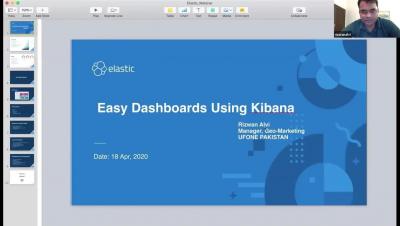
Virtual Meetup: Building a COVID-19 Dashboard for Non-Programmers + Inside the COVID-19 data

This session comprises of two talks by community members, catering to audience of varying tech skills. Talk 1: Building a COVID-19 Dashboard for Non-Programmers We will use Kibana to build a Covid-19 dashboard using the "Upload CSV" feature. The dashboard will feature tables, bar charts, line graphs and pie charts. We will use existing publicly available data and show easy it is to build and share dashboards

SEMplicity: Scaling Large ECE Deployments

From the trenches: what does it really take to scale up a large Elastic security log deployment? Elasticsearch for enterprise security log storage & management is a hot topic today. Specular gains in performance, functionality and cost are ready for harvest. But what exactly does it take to create a large Elastic log storage infrastructure? This talk will present war stories related to at 150,000 events per second Elastic log storage implementation with 2 month retention built at a large commercial client.

Virtual Meetup: Elastic Workplace Search-Finding Where That Document Went

Supporting employees in a work from a home environment can be challenging. Do they have access to these systems? Can they locate the documents they need? This would be easier if documents are centrally located. In most organizations, documents can live in services like Dropbox, Goole Drive, and or Github. In this virtual meetup, I will show you how to create a search box between these different services and finally solve the question.. "Where did that document go?"

Free online Elastic Stack and Elasticsearch training: Anytime, anywhere, on-demand

We are offering a variety of on-demand Elastic training courses for free — featuring 11 titles that span observability, security, and Elastic Stack administration. If you haven’t tried one of our self-paced courses yet, now is the perfect time to find out why so many people have shifted their learning preference from in-class to online. Our on-demand courses provide the same immersive learning experience found in the classroom, but delivered in a convenient, remote environment.

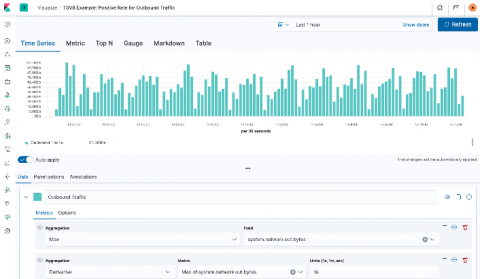
Visualizing observability with Kibana: Event rates and rate of change in TSVB

When working with observability data, a good portion of it comes in as time series data — things like CPU or memory utilization, network transfer, even application trace data. And the Elastic Stack offers powerful tools within Kibana for time series analysis, including TSVB (formerly Time Series Visual Builder). In this blog post, I’m going to attempt to demystify rates in TSVB by walking through three different types: positive rates, rate of change, and event rates.

How to design your Elasticsearch data storage architecture for scale

Elasticsearch allows you to store, search, and analyze large amounts of structured and unstructured data. This speed, scale, and flexibility makes the Elastic Stack a powerful solution for a wide variety of use cases, like system observability, security (threat hunting and prevention), enterprise search, and more. Because of this flexibility, effectively architecting your deployment’s data storage for scale is incredibly important.

Virtual safety: How to teach your kids cybersecurity best practices

Confession: I am a security practitioner. I am also a mom. What I am not is a homeschool teacher. Earlier this year, I spoke to the 5th- and 6th-grade classes at my son’s Innovation Day about cybersecurity. I discussed what it means to be a cybersecurity practitioner and how the practice of cybersecurity affects everyday life.

Generating MITRE ATT&CK® signals in Elastic SIEM: Sysmon data

Many mature security teams look to the MITRE ATT&CK® matrix to help improve their understanding of attacker tactics, techniques, and procedures (TTPs) and to better understand their own capabilities relative to these common adversarial approaches. With the release of Elastic Security 7.6, Elastic SIEM saw 92 detection rules for threat hunting and security analytics aligned to ATT&CK.