Operations | Monitoring | ITSM | DevOps | Cloud

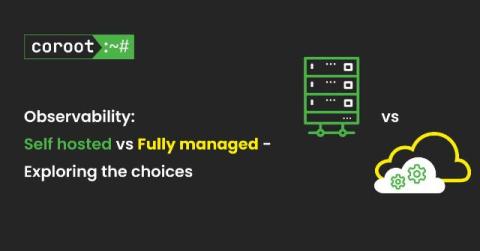
Observability: Self Hosted vs Fully Managed - Exploring the choices

You are running a complex, mission-critical application, and you understand you need an advanced Observability solution to efficiently troubleshoot and proactively prevent issues. Yet you have a choice to make—should you choose a “Fully Managed” SaaS solution such as Datadog, Newrelic, or Dynatrace, or should you pick an Open-Source solution that you can host yourself?

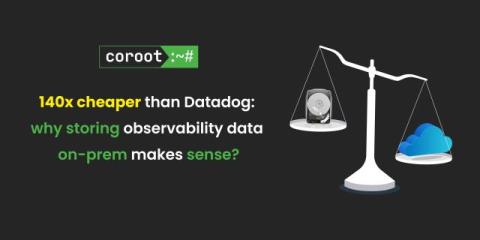
140x cheaper than Datadog: why storing observability data on-prem makes sense

I’ve heard this story many times from production engineers: ‘We use tools like Datadog and NewRelic, but to keep costs from skyrocketing, we’re only monitoring our most critical services. We’re storing just 10% of our logs and traces and only the metrics we consider essential. It’s a frustrating situation. Engineers want full visibility across their systems, but cloud storage costs make it impossible to monitor everything.

Coroot: The Ultimate eBPF Observability Platform. #observability #devopstools #monitoringtool

Explore the benefits of using Coroot for system monitoring, alerting, and inspection. Watch the full "Zero-Instrumentation Observability with eBPF" webinar, and learn from Peter Zaitsev. Coroot is an open source observability platform that helps engineers fix service outages and even prevent them. It continuously audits telemetry data to highlight issues and weak spots in your services. Quick setup, no code required.

Coroot's Approach to eBPF and OpenTelemetry. #observability #monitoringtool #shorts #devopstools

Discover how Coroot's passive approach to eBPF can provide valuable insights without impacting your system. Coroot is an open source observability platform that helps engineers fix service outages and even prevent them. It continuously audits telemetry data to highlight issues and weak spots in your services. Quick setup, no code required.

Beyond Metrics: The Power of eBPF for Deep System Understanding. #observability #monitoringtool

Discover how eBPF can provide unparalleled visibility into your Kubernetes clusters. Watch the full webinar: "Zero-Instrumentation Observability with eBPF" with Peter Zaitsev. Coroot is an open source observability platform that helps engineers fix service outages and even prevent them. It continuously audits telemetry data to highlight issues and weak spots in your services. Quick setup, no code required.

Beyond Profiling: The Importance of Runqueue Latency. #observability #devopstools #profiling

Get tips on choosing the right eBPF-based tool for your Kubernetes environment. Watch the full webinar: "Zero-Instrumentation Observability with eBPF", learn from Peter Zaitsev. Coroot is an open source observability platform that helps engineers fix service outages and even prevent them. It continuously audits telemetry data to highlight issues and weak spots in your services. Quick setup, no code required.

Zero-instrumentation observability based on eBPF

Zero-Instrumentation Observability with eBPF Are you struggling to achieve comprehensive system observability without the burden of instrumentation? Join Peter Zaitsev for a webinar that will revolutionize your approach. Discover how eBPF, a powerful technology, can provide zero-instrumentation observability, allowing you to: Coroot is an open source observability platform that helps engineers fix service outages and even prevent them. It continuously audits telemetry data to highlight issues and weak spots in your services. Quick setup, no code required.

eBPF Linux Command Line Tools

eBPF is a powerful technology used by many observability solutions, including Coroot. While web-based observability tools like Coroot are invaluable, there’s a specific class of eBPF tools that often go overlooked (besides Brendan Gregg of course): eBPF Linux Command Line Tools. These tools are essential for diving deep into complex performance issues. But first – why would you need those at all if you have convenient observability focused web applications?

runqlat and runqslower - eBPF command line tools

In this blog post we will look at runqlat and runqslower commands. They are available in both BCC and bpftrace tool collections. One of the core functions of Linux operating system is to schedule processes across available CPUs. When service gets a request, Linux typically will need to schedule the process, processing that request to run on one of CPUs. This might be very quick process if idle CPU is available or it can take significant time, if all CPUs are currently busy running different processes.